
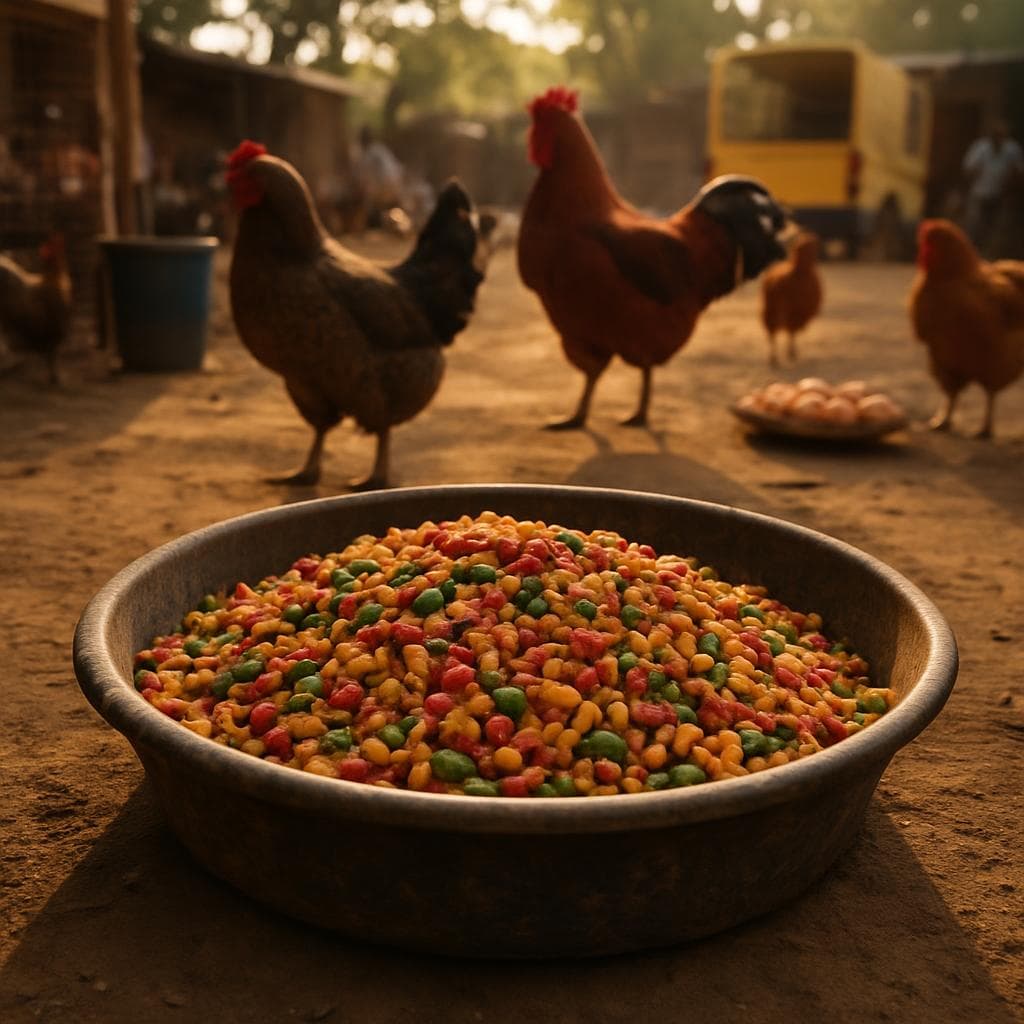
The feed transition is a delicate moment in poultry farming, as it can affect the health and productivity of your poultry. Whether you are switching from one feed to another to meet specific nutritional needs or to improve the quality of your production, it is essential to proceed with care.
When to change feed?
The timing of the feed transition depends on several factors: the age of the poultry, their health status, and production goals. Here are some situations where it is wise to change feed:
- Change of growth stage: When your poultry reach a certain age, their nutritional needs evolve. For example, day-old chicks require a protein-rich feed to promote their growth, while adult poultry need a balanced diet to maintain their weight and egg production.
- Improvement of feed quality: If you find a higher quality feed that better meets the needs of your poultry, it is time to consider a transition.
- Health issues: In cases of diseases or digestive disorders, it may be necessary to change to a more suitable feed, often more easily digestible.
How to carry out the transition?
To successfully transition feed without stress, follow these steps:
- Planning: Before changing feed, develop a plan. Identify the new feed and ensure it is suitable for the category of poultry you are raising.
- Gradual mixing: Do not abruptly change feed. Introduce the new feed gradually by mixing the two types of feed. For example, start with 25% of the new feed and 75% of the old for a few days, then move to 50/50, and finally to 100% of the new feed. This method allows the poultry to adapt smoothly.
- Observation: During the transition, closely monitor the behaviour and health of your poultry. Ensure they are eating well and that there are no signs of stress or digestive disorders.
- Hydration: Ensure that your poultry have access to clean, fresh water at all times, especially during the transition. Good hydration aids digestion and the overall well-being of the animals.
- Consultation: If you have any doubts or notice problems, do not hesitate to consult a veterinarian or poultry nutritionist. They can provide you with personalised advice based on the specific needs of your farm.
Conclusion
Successfully transitioning feed is essential to maintain the health and productivity of your poultry. By planning carefully and proceeding step by step, you will minimise stress and promote a successful adaptation. Be attentive to the needs of your poultry and do not hesitate to seek advice if necessary. By taking these measures, you ensure a healthy and productive farm. Act today to optimise the nutrition of your poultry and guarantee their well-being.
--- *Source: NEXTEKCI — In-house expertise — summary and analysis by NEXTEKCI.*