
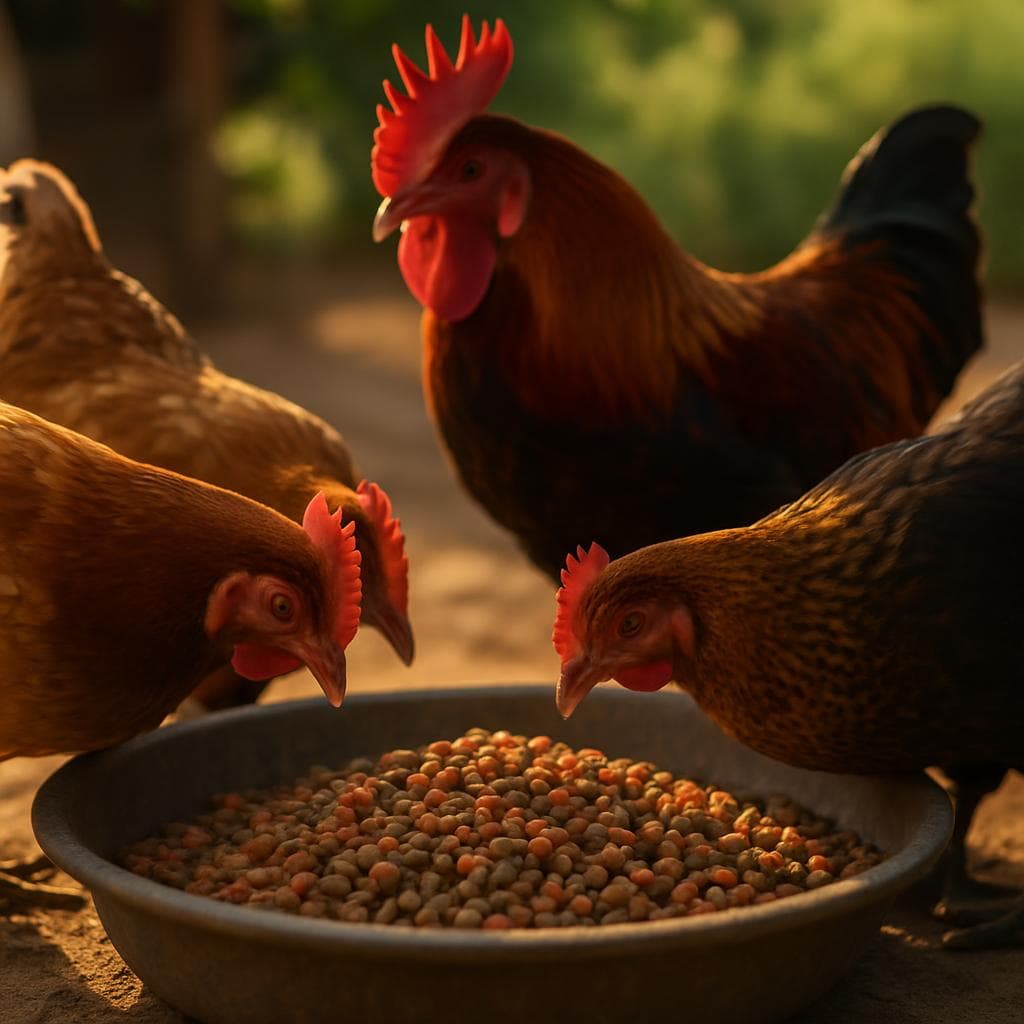
The feed transition is a crucial step in poultry farming, whether it involves day-old chicks, laying hens, or broilers. A poorly managed change can lead to digestive disorders, a drop in performance, and even economic losses. Here are some practical tips for successfully making this transition without stress.
When to change feed?
The ideal time to change feed depends on several factors, including the age of your poultry and their stage of growth. In general, it is advisable to start the transition when the poultry reach a certain weight or at the age when they begin to require specific nutrients. For example, for day-old chicks, a change can be considered around 3 to 4 weeks, when their digestive system is sufficiently developed to digest richer feeds.
How to proceed with the transition?
- Plan the transition: Establish a schedule. The transition should ideally extend over a period of 7 to 10 days. This allows the poultry to gradually get used to the new feed.
- Mix the feeds: Start by mixing the old feed with the new feed. A ratio of 75% old feed and 25% new feed is a good starting point. As the poultry get used to it, you can reverse the proportions.
- Monitor behaviours: During the transition, closely observe the behaviour of the poultry. Are they active? Are they eating well? Signs of stress or refusal to eat may indicate that the transition is too rapid.
- Ensure hydration: Water is essential, especially during a feed change. Make sure your poultry always have access to fresh, clean water to avoid dehydration.
- Avoid sudden changes: A sudden change in feed can cause digestive disorders. Avoid introducing other changes (such as a change in environment or management style) at the same time as the feed change.
- Integrate additives if necessary: In some cases, adding probiotics or digestive enzymes can help facilitate the transition and reduce the risk of digestive disorders. Consult a veterinarian for recommendations tailored to your situation.
Conclusion
Successfully transitioning feed requires patience and good observation. By following these practical tips, you can minimise stress for your poultry and ensure their health and performance. Remember that every farm is unique, so adapt these recommendations to your own conditions. For personalised advice and feed prices, feel free to contact us on WhatsApp. Take care of your poultry and ensure their well-being at every stage of their growth.
--- *Source: NEXTEKCI — In-house expertise — summary and analysis by NEXTEKCI.*