
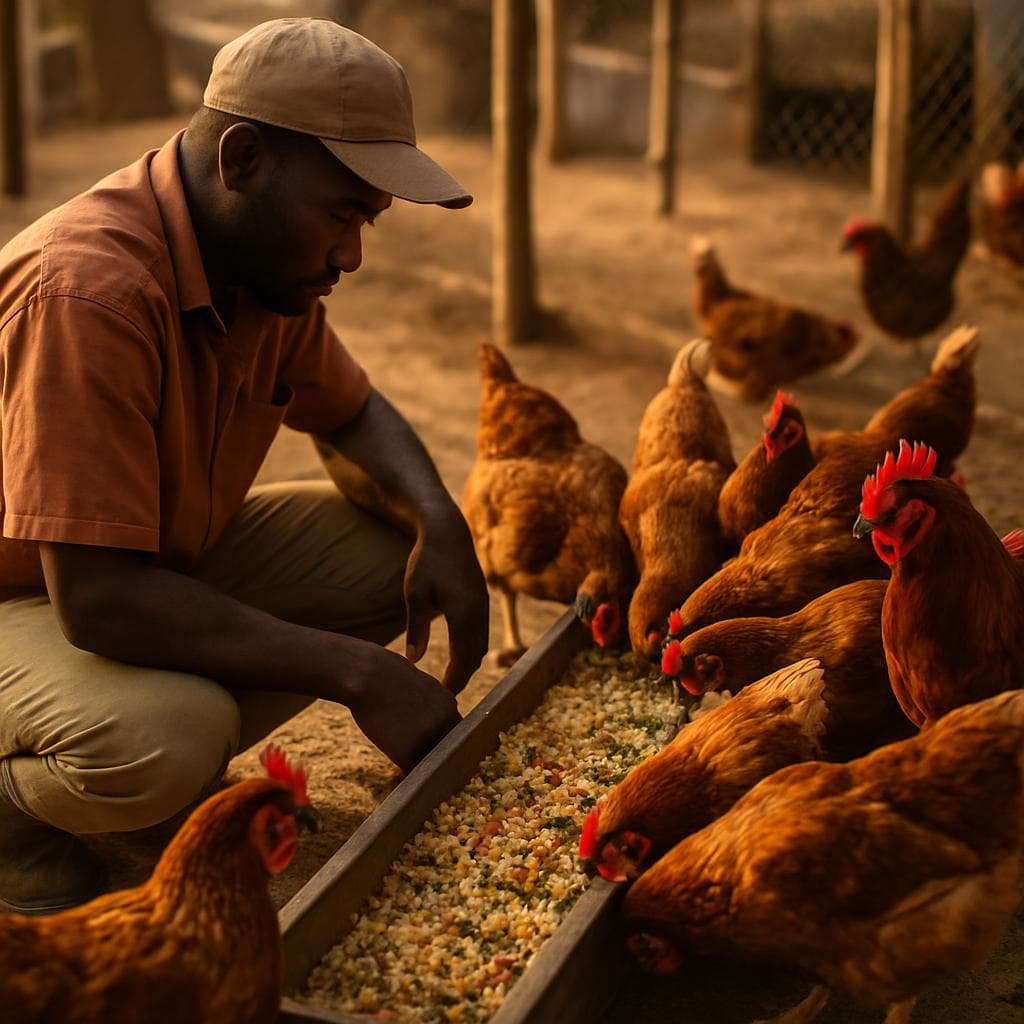
The dietary transition is a crucial step in poultry farming. A poorly managed change can lead to digestive disorders and affect the growth of the animals. Here are some practical tips for successfully making this transition without stress.
1. Choose the right time
It is best to plan the dietary transition during periods of lower stress, such as when the poultry are in a stable growth phase or after a health treatment. Avoid changing the diet during extreme heat or illness, as this could exacerbate the animals' stress.
2. Gradually introduce the new feed
The key to a successful transition lies in gradualness. Start by mixing the old feed with the new feed in proportions of 75% old and 25% new. This method allows the poultry to get used to the new taste and texture of the feed. After a few days, you can adjust the proportions to 50/50, then to 25% of the old feed and 75% of the new.
3. Observe the behaviour of the poultry
During the transition, it is essential to closely monitor the behaviour and health of the poultry. Look for signs of stress, such as ruffled feathers, a decrease in appetite, or abnormal behaviours. If you notice any problems, slow down the transition and revert to a higher proportion of the old feed before resuming the process.
4. Ensure good hydration
Water is an essential element during the dietary transition. Ensure that your poultry always have access to clean, fresh water. Good hydration helps prevent digestive disorders and promotes better nutrient absorption.
5. Assess the quality of the new feed
Before proceeding with a change, check the quality of the new feed. Ensure that it meets the specific nutritional needs of your poultry based on their age and stage of development. Inferior quality feed can compromise the health of the animals and hinder their growth.
6. Consult a veterinarian or nutritionist
If you have doubts about the choice of the new feed or how to proceed, do not hesitate to consult a veterinarian or poultry nutritionist. They can provide you with personalised advice tailored to your situation and your poultry.
Conclusion
The dietary transition is an important step in poultry farming. By following these practical tips, you can minimise stress for your animals and ensure their health and well-being. Take the necessary time to make this transition and do not hesitate to seek help if needed. By acting cautiously, you ensure the prosperity of your farm in Côte d'Ivoire.
--- *Source: NEXTEKCI — In-house expertise — summary and analysis by NEXTEKCI.*