
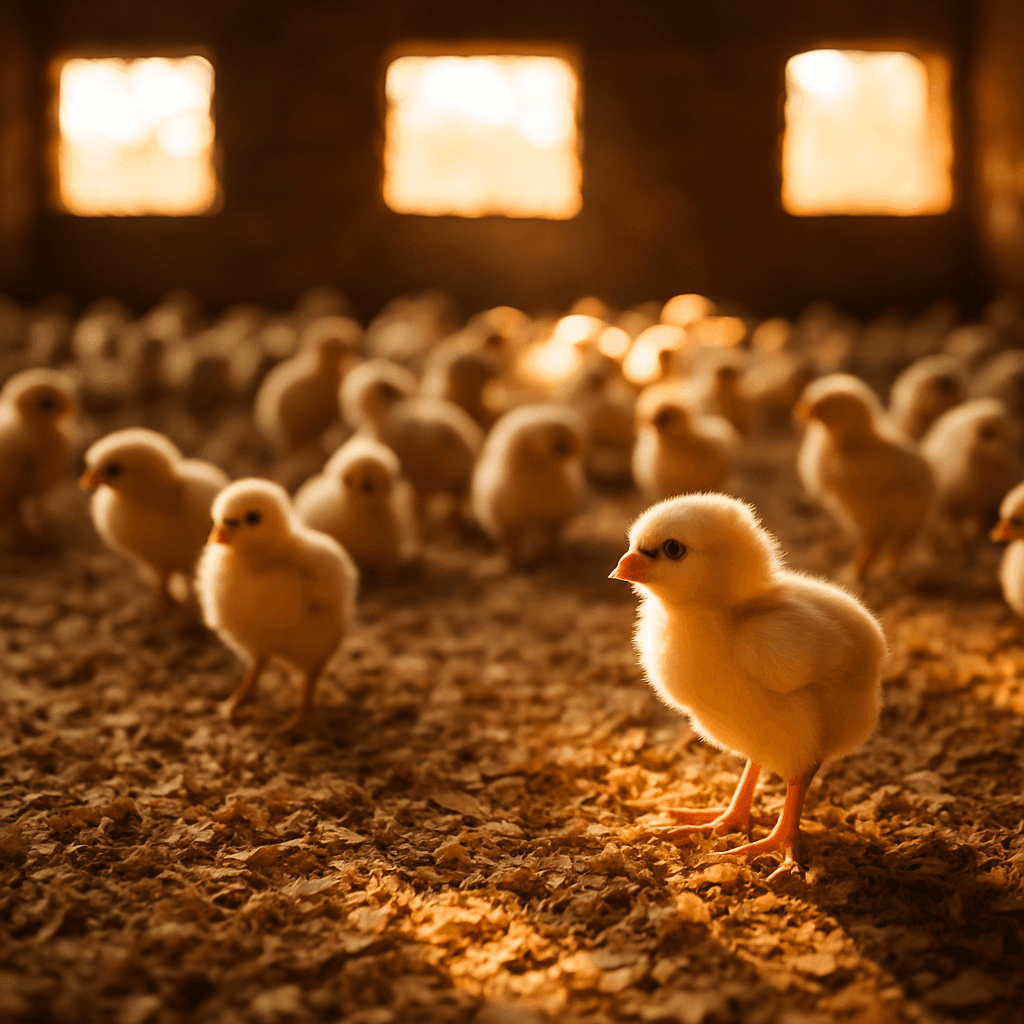
There is a lot of talk about heat and water, but litter is the third silent pillar of a good start. It insulates your chicks from the ground, absorbs moisture, and conditions the health of their legs and respiratory tracts. Here’s how to choose and manage it well.
The three qualities of good litter
The NEXTEKCI rule can be summed up in three words: dry, clean, non-toxic.
- Dry: damp litter cools the chicks from the ground and promotes health issues;
- Clean: no mould, no remnants from a previous batch, no accumulated droppings;
- Non-toxic: no chemically treated, varnished, or painted materials.
Which material to choose?
The benchmark mentioned in the NEXTEKCI guide: untreated white wood shavings. They absorb well, insulate from the ground, and remain comfortable for the chicks' legs.
To be avoided at all costs:
- Dusty materials, which irritate the respiratory tracts;
- Wet materials or those stored outdoors in the rain;
- Chemically treated woods (painted pallets, varnished wood, sawdust of dubious origin).
The application: uniform and generous
The litter must uniformly cover the floor of the brooder, with no bare spots where the chicks would touch the cold ground. Prepare it before the arrival of the batch, along with the heat, drinkers filled with warm water, and starter feed: everything must be ready when the boxes arrive.
Be mindful of the timing after disinfection: if the room has just been disinfected, ventilate it completely before laying the litter and installing the chicks.
Maintenance: a daily check
Throughout the first week, the litter must remain dry. Incorporate it into your daily routine:
- check the areas around the drinkers, which are the first to become damp;
- remove or replace wet or soiled parts;
- take the opportunity to observe the behaviour of the batch: litter where the chicks distribute themselves well is also a sign of good temperature.
Litter and legs: the direct link
Damp, dusty, or treated litter: all risks for the legs and breathing, reminds the NEXTEKCI guide. Healthy legs in the first week mean a flock that moves, drinks, eats, and grows properly.
Any doubts about the material available in your area or the condition of your litter? Send a photo on WhatsApp to +225 05 44 83 27 79: the NEXTEKCI team will give you a quick and free opinion.