

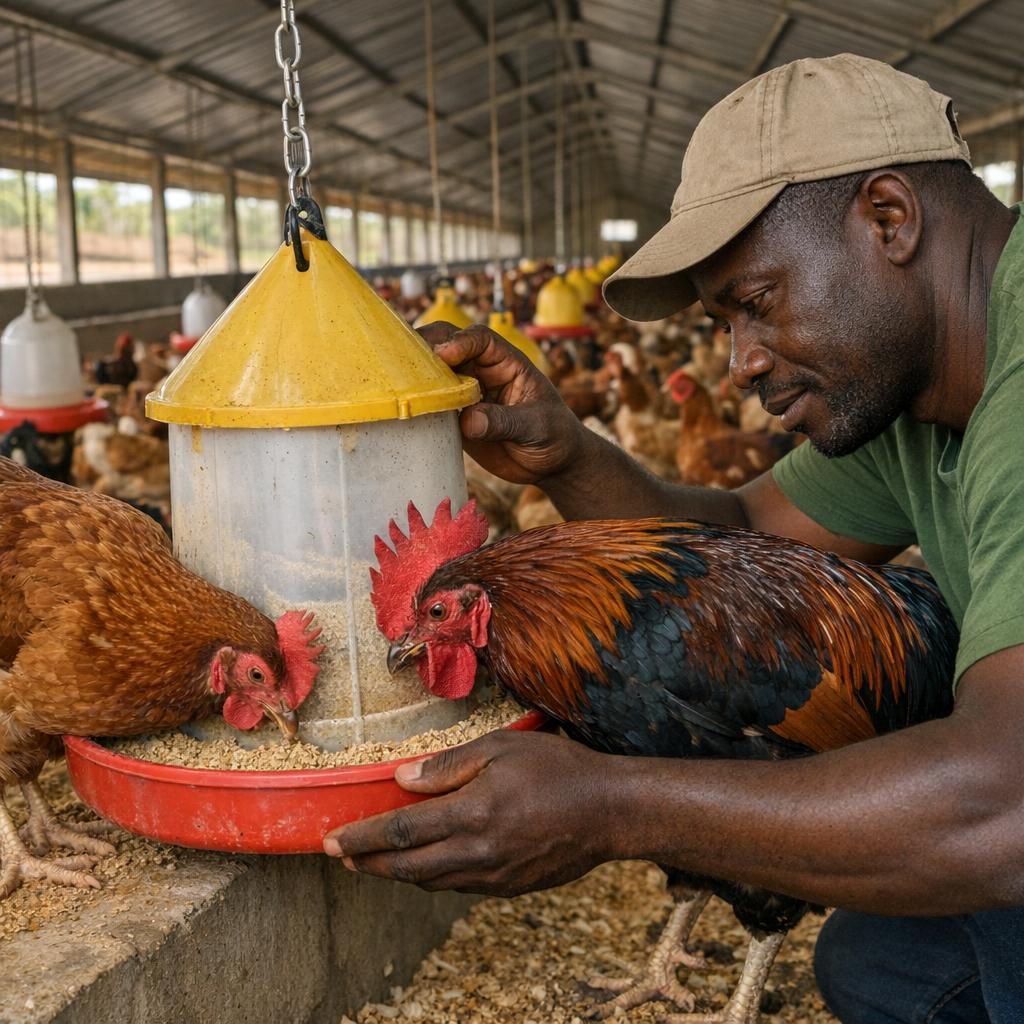
Observe before making changes
Around the feeders, look each day for signs of waste: feed scattered on the floor, piles beneath the edges, a tipped-over feeder, or damp, sticky litter. Note where the losses are greatest and when they occur. Localised spillage may indicate a feeder that is poorly adjusted, overfilled or placed in a thoroughfare.
Observe the birds too. If they scratch at the feeder, climb into it or jostle to reach the feed, the setup needs adjusting. Conversely, if some cannot eat easily, check access and the distribution of the equipment.
Adjust the height and fill level
Adjust the height of the feeders to the size of the poultry: the edge should remain accessible, at back height when the birds are standing normally. Readjust it as they grow. A feeder placed too low may be scratched at or trampled; too high, and it becomes difficult to reach.
Avoid filling the feeders to the brim. Put in an amount that allows the birds to feed without the feed spilling over when they move. Moderate filling, checked more often, also makes it easier to spot a problem. Distribute the feeders around the poultry house to limit crowding and allow the birds to move around.
Check the condition and placement
Make sure the supports are stable and the feeders do not tip over. Regularly check the edges, hangers and adjustment mechanisms. A loose part or damaged equipment can cause repeated losses.
Place the feeders on a dry, level area, away from busy thoroughfares and drinkers. Spilled water damages the feed and encourages damp litter. Remove soiled or clumped feed and keep the area clean: feed collected from the floor may be contaminated by litter and droppings.
Monitor the flock's habits
At each feeding, observe the amount consumed and what is left over, without arbitrarily restricting access to feed. Sudden changes can have several causes; take notes and ask a poultry farming professional for advice if the situation persists.
To take action today, walk around your poultry house, identify areas where feed is being wasted, then first correct the height, fill level and stability of the feeders. Next, check the result at subsequent feedings: regular observation helps keep feed clean and better manage poultry farming practices.
--- *Source: NEXTEKCI — In-house expertise — summary and analysis by NEXTEKCI.*