
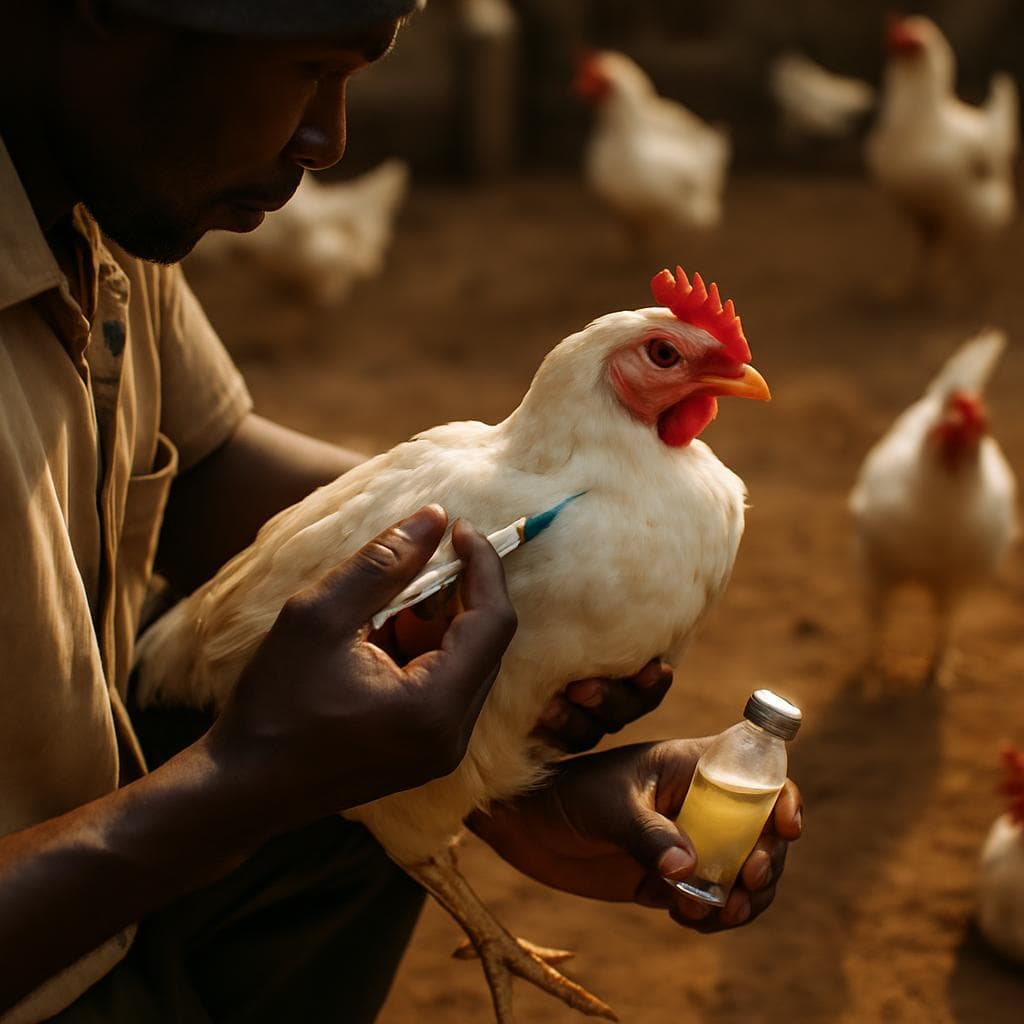
Vaccination of broilers is a crucial step in ensuring the health of poultry and optimising production in Côte d'Ivoire. Avian diseases can cause significant losses, both economically and in terms of productivity. It is therefore essential to establish a rigorous vaccination programme tailored to the specificities of local poultry farming.
Why vaccinate?
Vaccination helps prevent several common diseases in broilers, such as Newcastle disease, infectious bronchitis, and coryza. By protecting your poultry, you reduce the risk of outbreaks, which translates into better growth, improved feed conversion, and ultimately, increased profitability.
Developing a vaccination programme
A vaccination programme should be developed taking into account the age of the poultry, the health risks in the region, and veterinary recommendations. Here is an example of a vaccination schedule for broilers in Côte d'Ivoire:
- At 1 day: Vaccine against Newcastle disease (this vaccine is often administered ocularly or nasally).
- At 7 days: Vaccine against infectious bronchitis. This helps protect young poultry against this respiratory disease.
- At 14 days: Vaccine against avian coryza, which is a bacterial infection that can affect the health of poultry.
- At 21 days: Booster of the Newcastle disease vaccine to strengthen immunity.
- At 28 days: Vaccine against Gumboro disease, which targets a highly contagious viral disease.
Vaccination practices
- Adherence to schedules: It is crucial to adhere to vaccination schedules to maximise the effectiveness of the vaccines. A well-followed schedule ensures that the poultry receive optimal protection.
- Storage conditions: Vaccines must be stored under appropriate conditions, usually in a refrigerator, to maintain their effectiveness. Always check the expiry date before administering a vaccine.
- Correct administration: The method of administration must be followed for each type of vaccine. Adequate training for the personnel responsible for vaccination is essential to avoid errors.
Monitoring and evaluation
After vaccination, it is important to monitor the health of the poultry. Signs of disease or adverse effects should be noted and reported to a veterinarian. Regular monitoring allows for adjustments to the vaccination programme if necessary and ensures good health within the flock.
Conclusion
For a broiler farmer in Côte d'Ivoire, establishing an effective vaccination programme is an essential step in ensuring the health of their poultry and optimising production. By following a rigorous schedule and adhering to best practices, you can reduce the risks of diseases and improve the profitability of your farm. Do not hesitate to consult a veterinarian to tailor your vaccination programme to the specific needs of your farm. Act today for the health of your flock!
--- *Source: NEXTEKCI — In-house expertise — summary and analysis by NEXTEKCI.*