
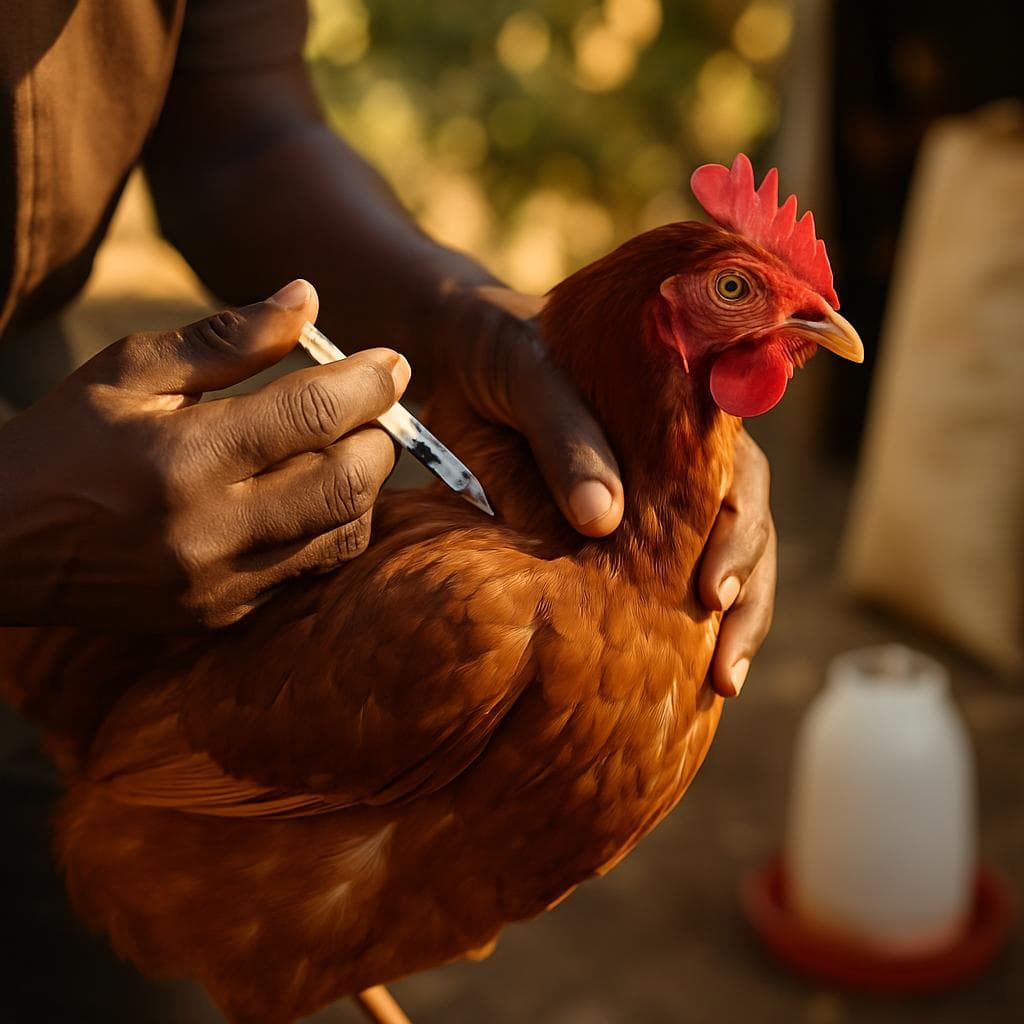
Vaccination of laying hens is a crucial step to ensure their well-being and maximise their egg production. A well-structured vaccination programme helps prevent many diseases that can affect the health of poultry and, consequently, the profitability of your farming. Here is an overview of the vaccinations to consider, from day 1 until the start of laying.
Days 1 to 7: The first vaccinations
Upon their arrival at the hatchery, the chicks must be protected against certain diseases. On day 1, it is recommended to vaccinate against Marek's disease, a common viral infection. This vaccine is administered by subcutaneous injection.
On day 7, vaccination against infectious bronchitis is often advised. This virus can cause respiratory problems and affect the growth of the birds. There are different strains of vaccines, and it is important to choose one that is suitable for your region and the circulating strains.
Week 3: Strengthening immune defences
At three weeks of age, it is advisable to vaccinate the chicks against Newcastle disease. This viral disease is highly contagious and can cause significant losses. Vaccination is generally done intranasally or by drops in the water.
Week 6: Additional vaccines
At six weeks, a booster vaccination against infectious bronchitis may be carried out, depending on the chosen vaccination programme. Additionally, it is possible to introduce a vaccine against infectious coryza, which can affect the respiratory health of poultry.
Weeks 8 to 12: Preparation for laying
About a month before the start of laying, it is essential to vaccinate the hens against salmonellosis. This bacterial disease can be transmitted to humans through the consumption of contaminated eggs. Vaccination is generally done by injection.
Week 16: Final vaccinations
Before the start of laying, vaccination against avian influenza may be considered, especially if you are in a high-risk area. This helps protect your farm against potential outbreaks.
Practical tips
- Monitoring vaccinations: Keep an accurate record of all vaccinations administered, including dates and types of vaccines used. This will facilitate monitoring the health of your poultry.
- Veterinary consultation: Do not hesitate to consult a veterinarian to adapt the vaccination programme to the specificities of your farm and local health risks.
- Optimal living conditions: Ensure that your poultry live in a healthy environment, with good ventilation and access to clean water, which will strengthen their immunity.
Conclusion
Vaccination is an essential investment for the health of your laying hens. By following a rigorous vaccination programme, you can minimise the risks of diseases and maximise the productivity of your farm. Take the necessary steps now to protect your poultry and ensure the profitability of your poultry farming operation in Côte d'Ivoire.
--- *Source: NEXTEKCI — In-house expertise — summary and analysis by NEXTEKCI.*