
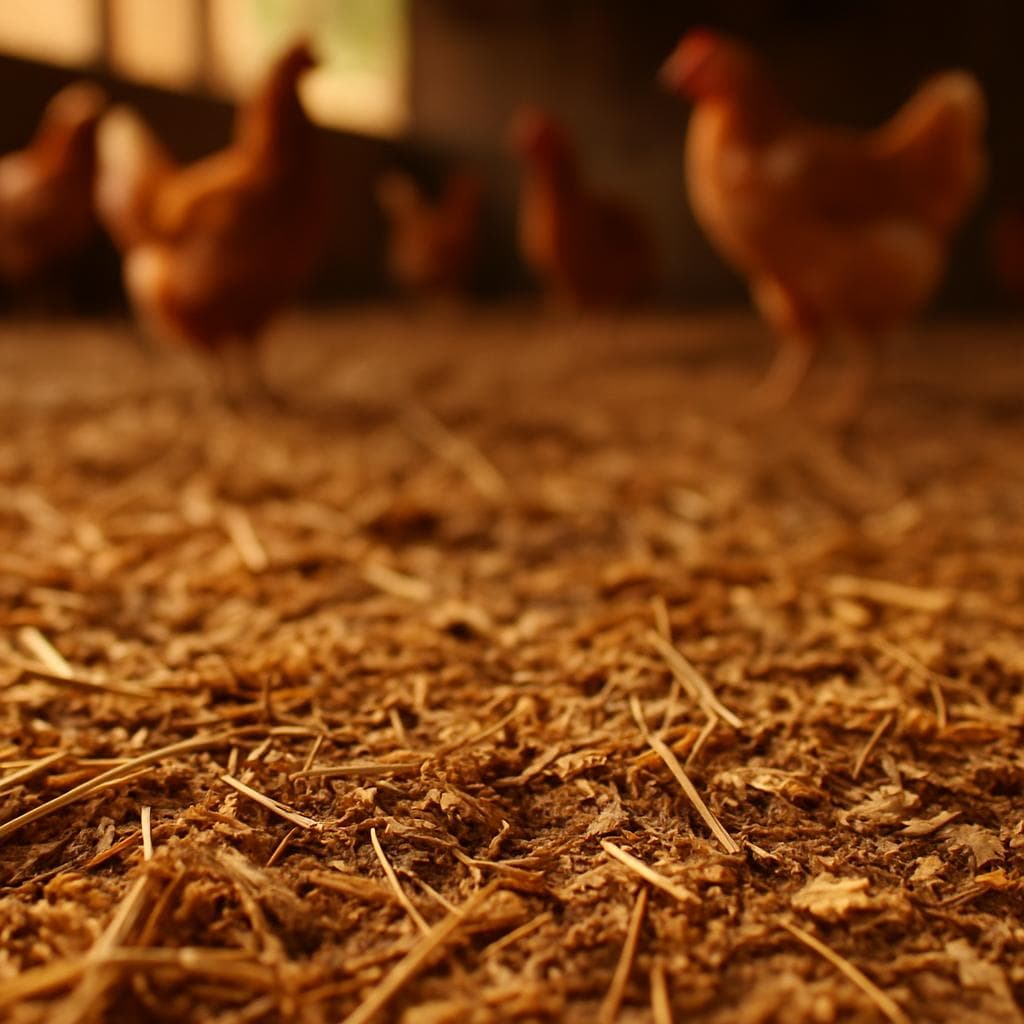
The litter in the chicken coop plays a crucial role in the well-being of poultry and the management of the rearing environment. In Côte d'Ivoire, several materials can be used to make this litter, each having its advantages and disadvantages.
Materials available in Côte d'Ivoire
- Straw: Straw is one of the most commonly used materials. It is readily available and offers good absorption capacity. However, it is important to ensure that it is clean and free from mould.
- Wood shavings: Shavings, often derived from wood processing, are also an option. They are absorbent and help control odours. Nevertheless, care should be taken to choose untreated shavings to avoid any health risks for the poultry.
- Sand: Sand can be used, especially in dry areas. It allows for good ventilation and helps control humidity, but it must be cleaned regularly to prevent the accumulation of droppings.
- Dry manure: Dried manure can be a good alternative, especially if mixed with other materials to improve absorption. This also allows for recycling waste from the farming operation.
Thickness of the litter
The thickness of the litter is a key factor to consider. Generally, a thickness of 10 to 15 cm is recommended to ensure good absorption of droppings and maintain a comfortable environment for the poultry. Litter that is too thin can lead to excessive humidity and an increased risk of diseases. It is therefore essential to regularly monitor the condition of the litter and add materials if necessary.
Maintenance of the litter
The maintenance of the litter is equally important. Here are some practical tips:
- Regular cleaning: It is advisable to remove droppings and soiled parts of the litter every day. This helps prevent diseases and control odours.
- Ventilation: Ensure that the chicken coop is well-ventilated. Good air circulation reduces humidity and promotes a healthy environment.
- Renewal: Replace the litter when necessary. Depending on the size of the chicken coop and the number of poultry, a complete renewal may be needed every 4 to 6 weeks.
- Monitoring humidity: Keep an eye on the humidity of the litter. If it becomes too damp, this can encourage the development of harmful bacteria and fungi.
Conclusion
In summary, choosing the right material, maintaining adequate thickness, and ensuring regular maintenance of the litter are essential steps to guarantee the health and well-being of your poultry. By applying these tips, you will contribute to an optimal rearing environment. Feel free to adapt these recommendations to your specific situation and consult local experts for additional advice. Take care of your litter, and it will take care of your poultry!
--- *Source: NEXTEKCI — In-house expertise — summary and analysis by NEXTEKCI.*