
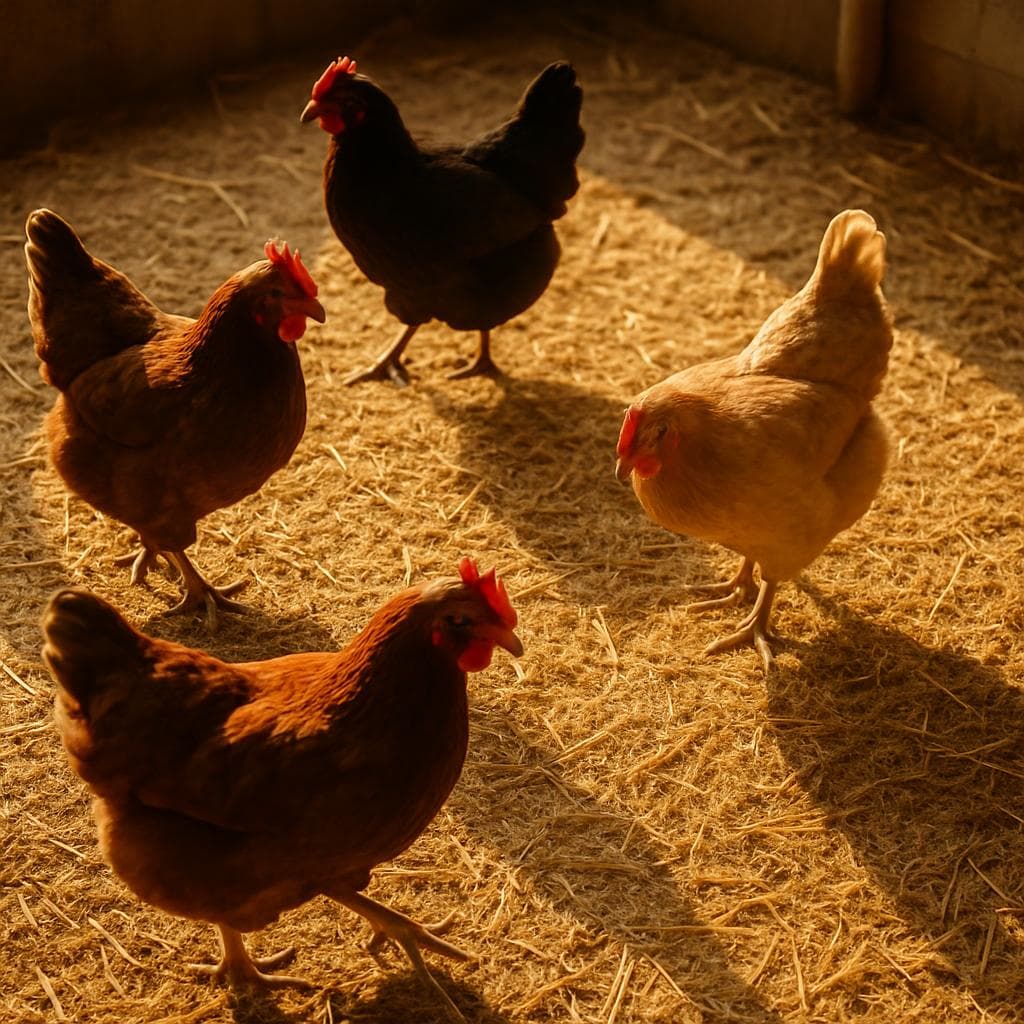
The litter in the chicken coop plays a crucial role in the well-being of the poultry and the management of the poultry farming operation. A good choice of materials, adequate thickness, and regular maintenance are determining factors to ensure a healthy and productive environment.
Materials available in Côte d'Ivoire
In Côte d'Ivoire, several materials can be used for the litter in chicken coops. Here are some commonly available options:
- Straw: Straw is a traditional and widely used material. It is easily accessible and offers good absorption capacity. However, it is important to ensure that it is clean and free from mould.
- Cocoa husks: Cocoa husks are an excellent choice for farmers living near plantations. They are lightweight, absorbent, and help reduce odours in the chicken coop.
- Wood shavings: Shavings are another effective material, but care must be taken to ensure they come from untreated wood. They are highly absorbent and help maintain a dry environment.
- Composted manure: Using composted manure can also serve as litter. This choice has the advantage of enriching the soil with nutrients, but it must be well-composted to avoid diseases.
Thickness of the litter
The thickness of the litter is a key element to consider. Generally, a thickness of 10 to 15 cm is recommended to allow for good absorption of droppings and moisture. Litter that is too thin can compact quickly and not provide a comfortable environment for the poultry. Conversely, litter that is too thick can become difficult to clean and promote the accumulation of ammonia.
Maintenance of the litter
Regular maintenance of the litter is essential to prevent health problems in the poultry. Here are some practical tips:
- Regular cleaning: It is important to remove droppings and debris every day or every two days. This reduces the accumulation of bacteria and odours.
- Renewal of the litter: Once a week, add a new layer of litter to maintain thickness and absorption. This helps keep the chicken coop clean and dry.
- Monitoring humidity: Regularly check the humidity of the litter. If it becomes too moist, it is best to completely replace the litter to avoid health problems related to moisture.
Conclusion
To ensure the health and well-being of your poultry, it is essential to pay particular attention to the litter in your chicken coop. Choose suitable materials, maintain adequate thickness, and ensure regular maintenance. By following these tips, you will help create an environment conducive to the growth and productivity of your poultry. Do not hesitate to inquire about the prices of materials by contacting local suppliers via WhatsApp to optimise your choices based on your budget and specific needs.
--- *Source: NEXTEKCI — In-house expertise — summary and analysis by NEXTEKCI.*