
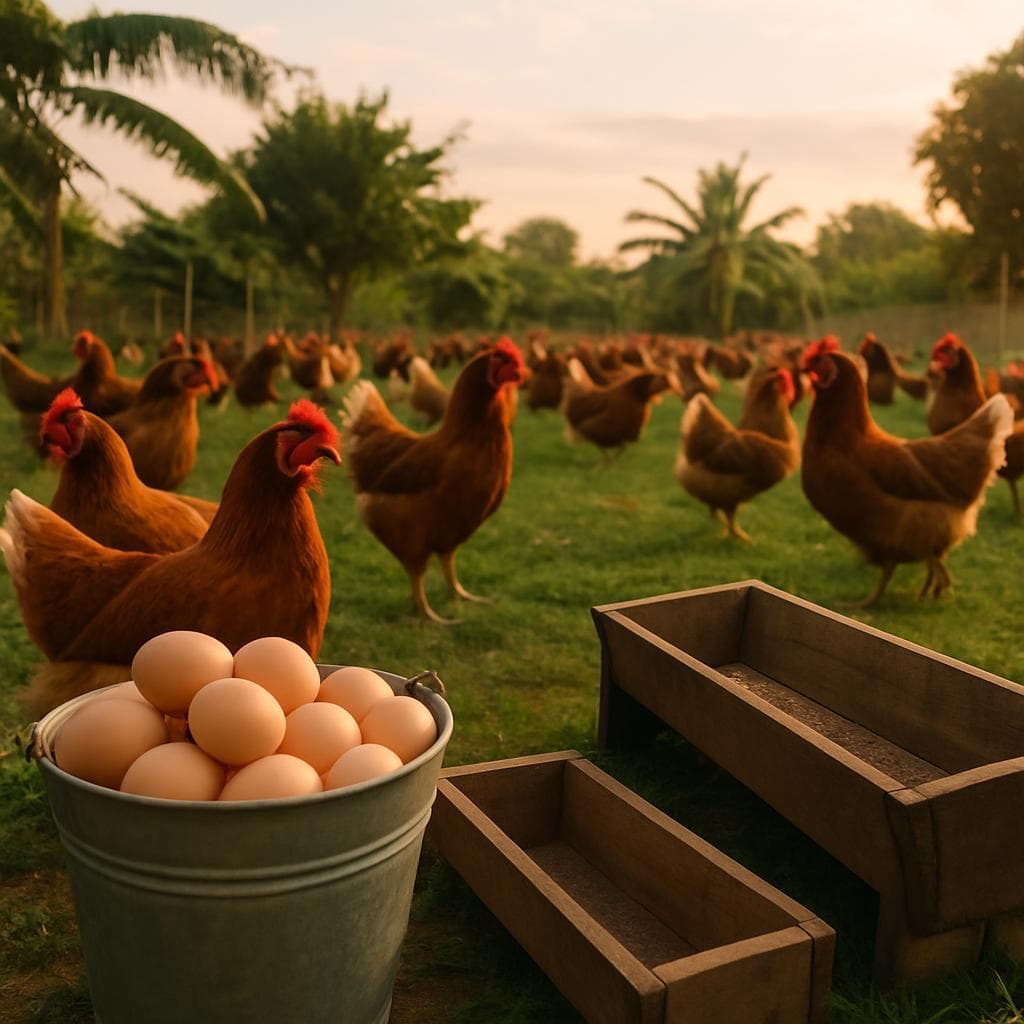
Poultry farming of layers is a lucrative activity for many poultry farmers in Côte d'Ivoire. However, to maximise egg production, it is crucial to understand the laying curve, the peak of production, and the right time for culling the birds.
The laying curve
The laying curve is a graph representing egg production over a given period. It generally shows a gradual increase in production, reaching a peak before declining. Laying hens begin to lay eggs at around 18 to 20 weeks of age, with a gradual increase in egg production. For farmers, it is essential to monitor this curve in order to anticipate feeding needs and rearing conditions.
The peak of production
The peak of production for layers generally occurs between 28 and 36 weeks of age. At this stage, a hen can lay an egg almost every day. To optimise this period, it is recommended to ensure a balanced diet, rich in protein and calcium, as well as adequate lighting. Good lighting stimulates egg production by mimicking natural light conditions.
Feeding management
To maximise production during the peak, it is crucial to provide quality feed. The feed must contain the necessary nutrients to support egg production. Furthermore, it is important to ensure that the layers have constant access to clean, fresh water, as hydration plays a key role in egg production.
Culling layers
Culling is the process of replacing laying hens that are no longer profitable. Generally, layers begin to lose their productivity after 72 weeks. It is important to plan culling to avoid a significant drop in production. Farmers should regularly assess the performance of their hens and establish a culling schedule.
Conclusion
In summary, for a profitable poultry farming of layers in Côte d'Ivoire, it is essential to understand the laying curve, optimise the peak production period, and wisely plan the culling of the birds. By implementing these practical tips, you can improve the profitability of your farm and ensure a consistent egg production. Stay attentive to the needs of your hens and adapt your farming practices accordingly to ensure the success of your poultry activity.
--- *Source: NEXTEKCI — In-house expertise — summary and analysis by NEXTEKCI.*