
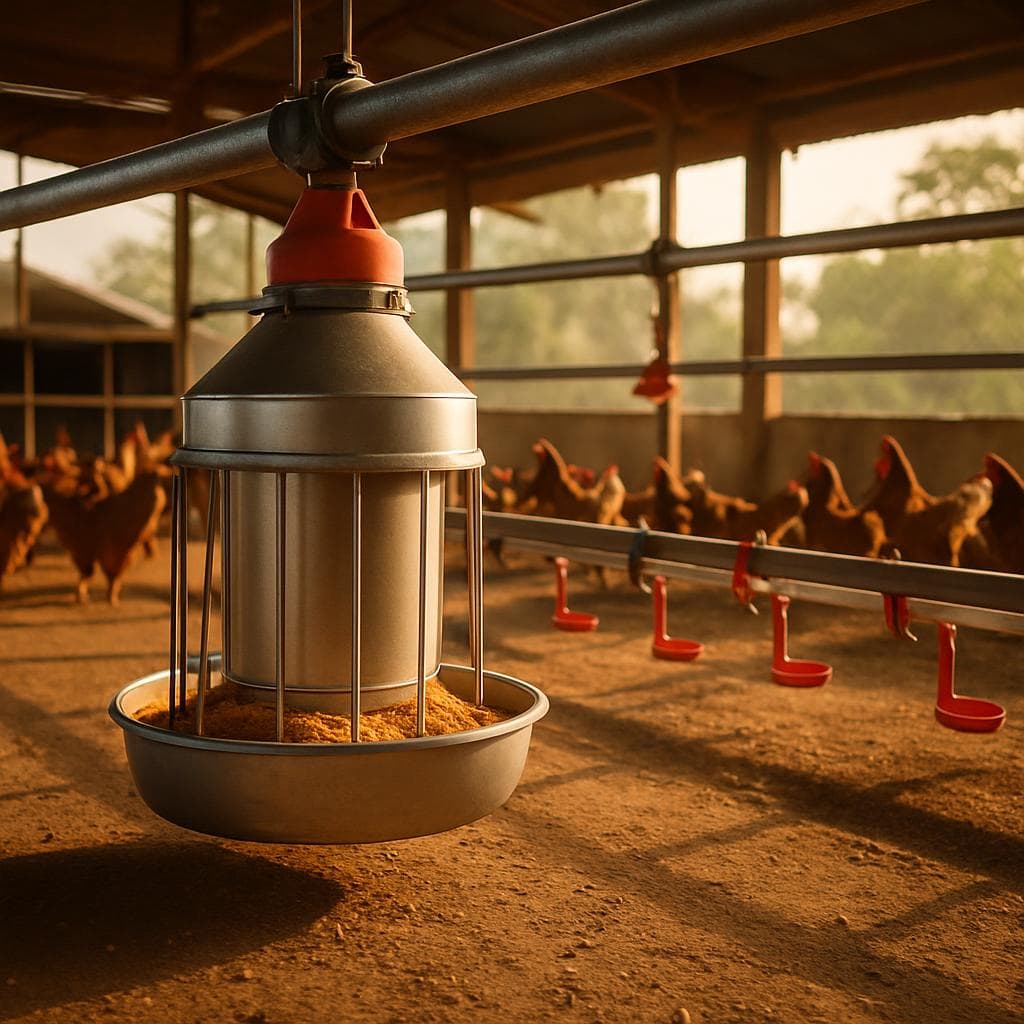
Poultry farming, particularly of free-range chickens, is a sector in full evolution, and the automation of poultry facilities is a trend that deserves the attention of farmers in Côte d'Ivoire. Recently, a project in France highlighted the efficiency of automated Landes huts, which allowed a family of farmers to significantly optimise their production.
These huts, designed to be mobile, allow for the movement of poultry from one place to another, which promotes better pasture management and reduces parasitic pressure. In Côte d'Ivoire, where climatic conditions can vary, this flexibility could offer a considerable advantage. Indeed, moving poultry to less utilised areas can contribute to the health of the animals and the quality of the meat.
The automation of farming systems, such as feeding, watering, and waste management, is another essential aspect to consider. By integrating modern technologies, farmers can reduce the time spent on daily tasks, allowing them to focus more on the strategic management of their operation. Furthermore, these automated systems can contribute to better regulation of farming conditions, thus promoting the growth and health of the poultry.
Another interesting point to highlight is the profitability of these investments. Although the initial setup of an automated system may seem costly, the returns on investment can be quick due to increased productivity and reduced labour costs. In Côte d'Ivoire, where labour can be a limiting factor, automation could enhance the profitability of poultry operations by optimising resources.
However, it is crucial for farmers to carefully assess their specific needs before adopting such technologies. Each operation is unique, and what works for a farm in another country may not be directly applicable in Côte d'Ivoire. Farmers must therefore consider various factors, such as the size of their operation, the types of poultry raised, and the resources available.
In conclusion, the example of automated Landes huts offers interesting prospects for poultry farmers in Côte d'Ivoire. Automation can not only improve the efficiency and profitability of operations but also contribute to better resource management. For Ivorian farmers, it is essential to stay informed about innovations and to evaluate solutions that can be adapted to their local context, in order to maximise their production and ensure the sustainability of their activity.
--- *Source: Réussir Volailles — summary and analysis by NEXTEKCI.*