
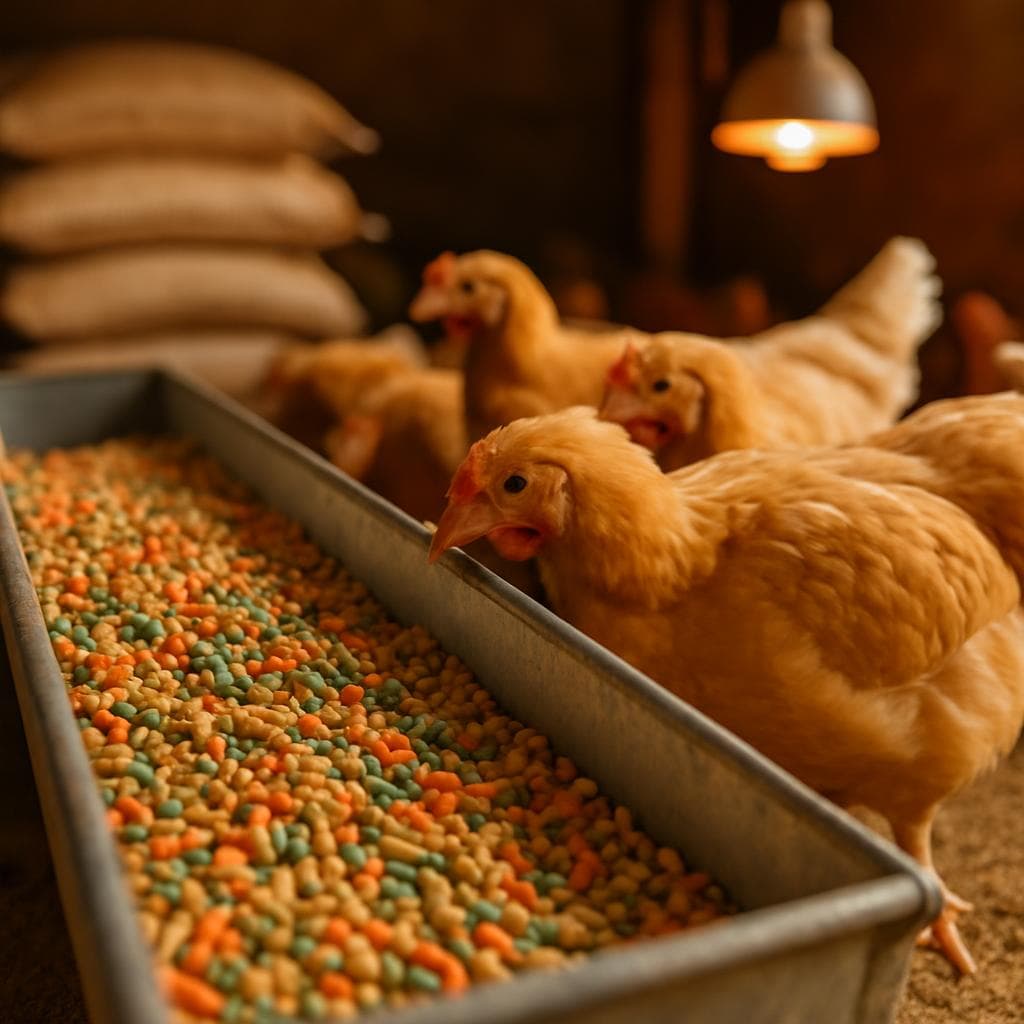
Feeding broilers is a determining factor for their growth and health. For Ivorian farmers, understanding the nutritional needs at each stage of the birds' lives is essential to maximise production and profitability.
Starter Phase
The starter phase begins as soon as the day-old chicks arrive until about 3 weeks. During this period, the nutritional needs are very high, as the chicks must quickly develop their immune system and muscle growth. It is recommended to use a starter feed rich in protein and vitamins. Farmers must ensure that the chicks have constant access to clean, fresh water, which is crucial for their health and development.
Grower Phase
From 3 to 6 weeks, the broilers enter the grower phase. At this stage, their diet must be adjusted to support their bone and muscle development. A grower feed with a good balance of protein, carbohydrates, and minerals is necessary. Farmers should also monitor the birds' feeding behaviour: regular and sufficient consumption is an indicator of their well-being. In parallel, it is advisable to maintain good hygiene in the shelters to prevent diseases that can affect the appetite and growth of the birds.
Finisher Phase
The finisher phase generally extends from 6 weeks until slaughter. The feeding during this period must be energy-rich to promote fattening. Farmers can introduce specific finisher feeds, which contain high levels of carbohydrates and fats. This helps to optimise the weight of the birds while maintaining good meat quality. It is also important to continue providing sufficient water and to ensure that the birds have a comfortable environment, which can influence their food consumption.
Practical Tips
- Regular Monitoring: Weigh the broilers regularly to adjust the feed rations according to their growth.
- Diversification of Feeds: Incorporating local ingredients into the diet, such as maize or cassava residues, can reduce costs and improve nutrition.
- Consulting Experts: Do not hesitate to consult nutritionists or veterinarians for personalised advice on feeding and poultry health.
Conclusion
Feeding broilers is a dynamic process that requires particular attention at each phase of their development. By following these practical tips and adjusting the rations according to the specific needs of the birds, Ivorian farmers can improve the health and productivity of their flocks. For more precise advice on costs and quantities of feed, feel free to contact us via WhatsApp. Take charge of your birds' feeding and ensure you optimise your results!
--- *Source: NEXTEKCI — In-house expertise — summary and analysis by NEXTEKCI.*