

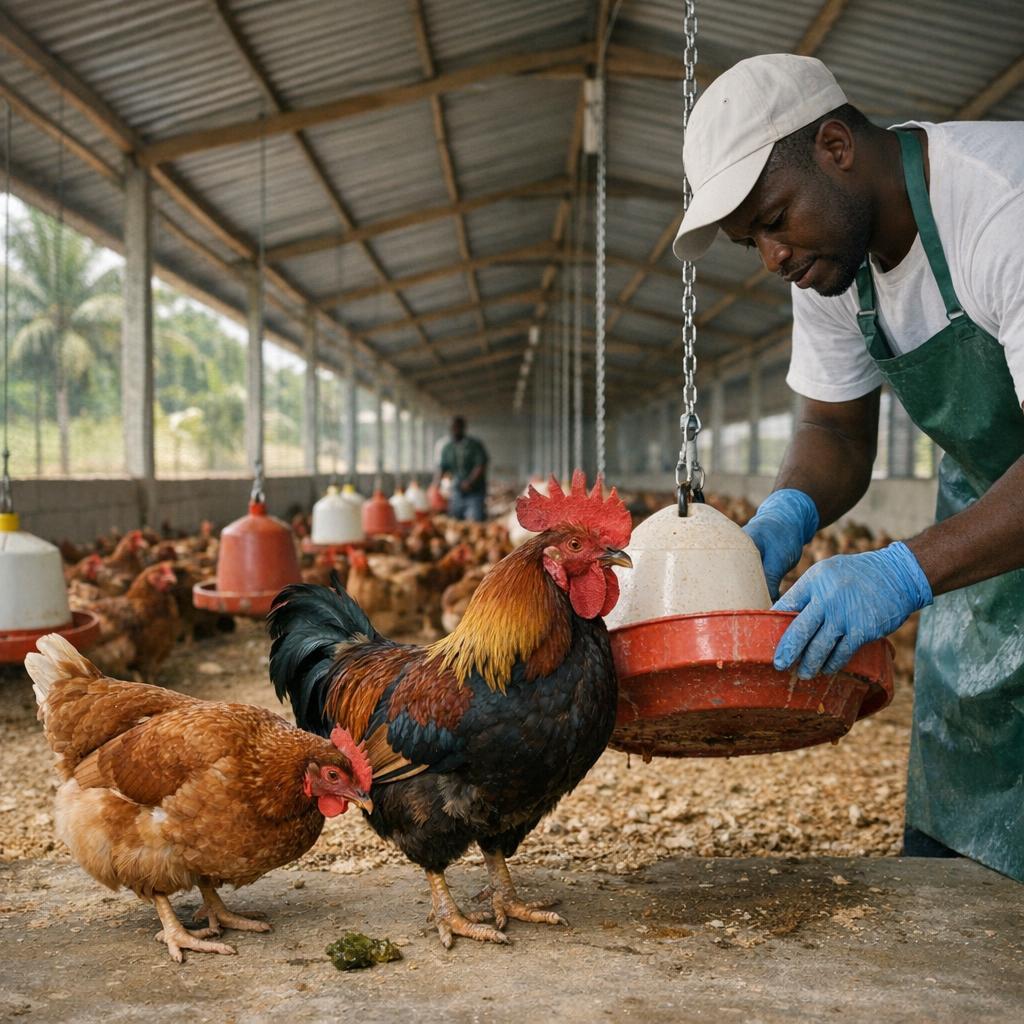
A colour to monitor, without jumping to conclusions
Greenish droppings can appear for various reasons, particularly when chickens eat less and bile becomes more visible in their droppings. The colour alone is therefore not enough to make a diagnosis. What matters is checking whether the change affects a few birds or a large part of the flock, whether it persists and whether it is accompanied by other signs.
Observe fresh droppings and their consistency: are they very runny, frothy or streaked with blood? Also watch the birds’ behaviour. Reduced activity, birds staying apart, ruffled feathers, a drop in appetite or water consumption, abnormal breathing or unusual mortality are signs to take seriously. Note when the changes began and how they develop.
Check the poultry farm every day
In Côte d'Ivoire, heat and humidity can accelerate litter deterioration and make equipment dirty. Make sure the water remains clean and accessible, clean the drinkers regularly and remove any damp or soiled areas of litter. Also check that the feeders are clean and that feed is stored in a dry place, away from rodents and other animals.
Walk around the poultry house at regular times, including early in the morning. Check ventilation and avoid sudden changes in flock management. Limit visits, reserve footwear and equipment for the poultry farm and use a properly maintained footbath at the entrance. After a flock has left, carry out a thorough cleaning and observe a sanitary break before the next birds arrive.
If some chickens seem lethargic, avoid unnecessarily moving birds or equipment from one poultry house to another. Separate birds showing visible signs if this can be done without worsening their condition, then ask the local veterinarian for advice. Do not try to choose a treatment yourself: the same signs can have different causes and require an appropriate assessment.
Respond without delay
If the greenish droppings persist, spread through the flock or are accompanied by a marked drop in activity, contact a veterinarian promptly. Prepare precise observations: the chickens’ age, the date the signs appeared, the number of birds affected, water and feed consumption, how the droppings are changing and any mortality.
To protect your poultry farm, observe the birds every day, keep the water, feed and litter clean, and ask a veterinarian for advice as soon as several signs occur together. A prompt response and good hygiene help you manage the situation better on your farm.
--- *Source: NEXTEKCI — In-house expertise — summary and analysis by NEXTEKCI.*