

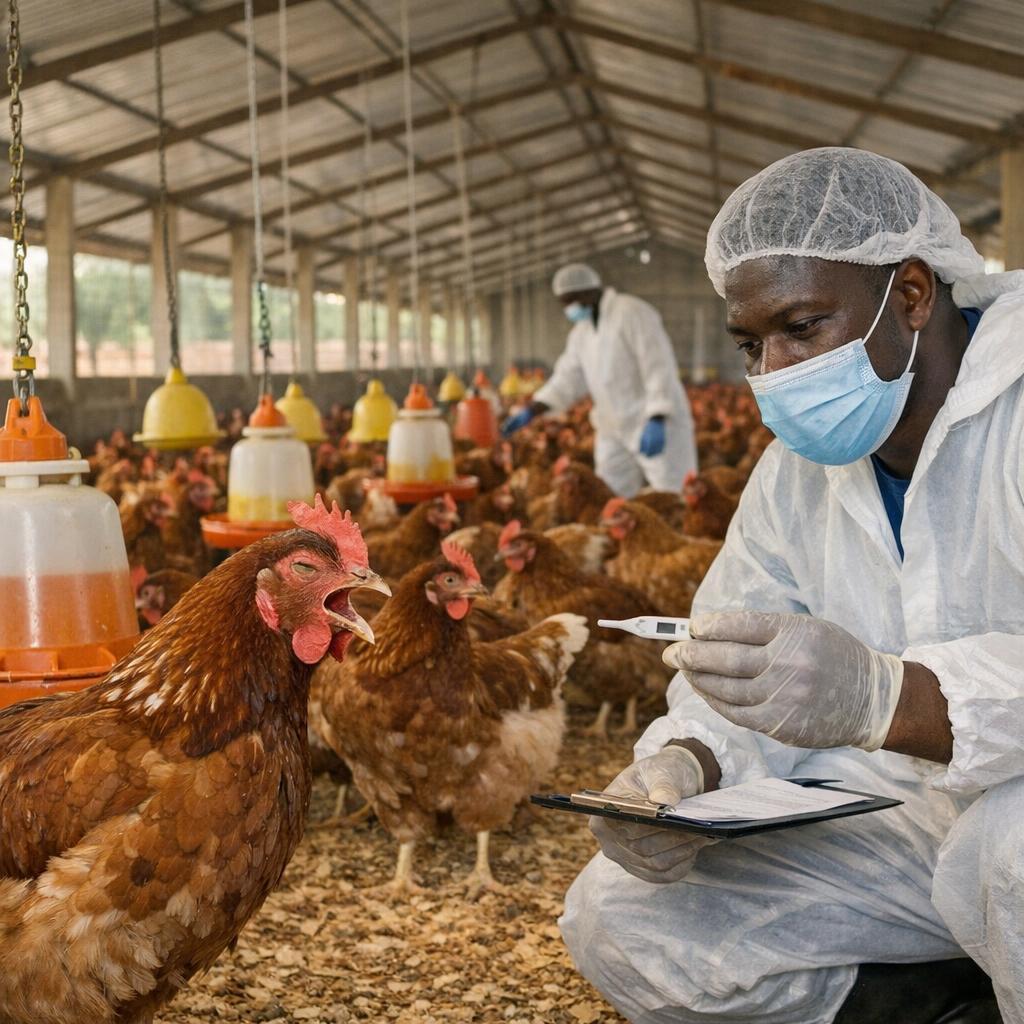
Infectious laryngotracheitis is a contagious disease that affects the respiratory tract of chickens. On a poultry farm, unusual respiratory signs should be taken seriously, but they do not, on their own, identify the cause. A prompt response helps limit contact and obtain professional advice.
What signs should you look for?
Affected birds may have noisy or difficult breathing, coughing, sneezing and discharge from the nose or eyes. Some stretch out their necks or open their beaks to breathe. You may also observe reduced activity, a decrease in water or feed consumption, and a drop in laying rate among laying hens. In severe cases, blood-tinged discharge may appear.
These signs may be linked to different causes. Therefore, avoid concluding on your own that it is infectious laryngotracheitis or relying solely on advice received remotely. If several birds show signs, or if their condition worsens, contact the local veterinarian promptly. Only they can assess the situation and advise you on the appropriate course of action.
Practical measures to limit the risks
- Reduce movement in the chicken coop. Limit visits to essential people and keep a simple register of entries and exits.
- Separate flocks as much as possible. Avoid mixing poultry of different ages or origins and limit the movement of equipment from one poultry house to another.
- Improve hygiene. Clean equipment and surfaces regularly, remove droppings and keep the surroundings clear. Install a footbath at the entrance, maintain it and ask visitors to wear footwear reserved for the poultry farm.
- Ensure a good environment in the poultry house. Keep the litter dry, provide suitable ventilation and ensure constant access to clean water. During hot or humid weather, pay particular attention to humidity, dust and the build-up of droppings.
- After a flock has left, carry out a sanitary break. Clean and disinfect the premises and equipment, then leave the poultry house empty before the next flock arrives, in accordance with the veterinarian’s recommendations.
Record the date when the signs appeared, the poultry houses concerned and changes in the number of affected birds. These observations will help the veterinarian assess the situation. In Côte d'Ivoire, maintain these biosecurity practices every day and promptly seek advice from the local veterinarian at the first unusual respiratory signs.
--- *Source: NEXTEKCI — In-house expertise — summary and analysis by NEXTEKCI.*