

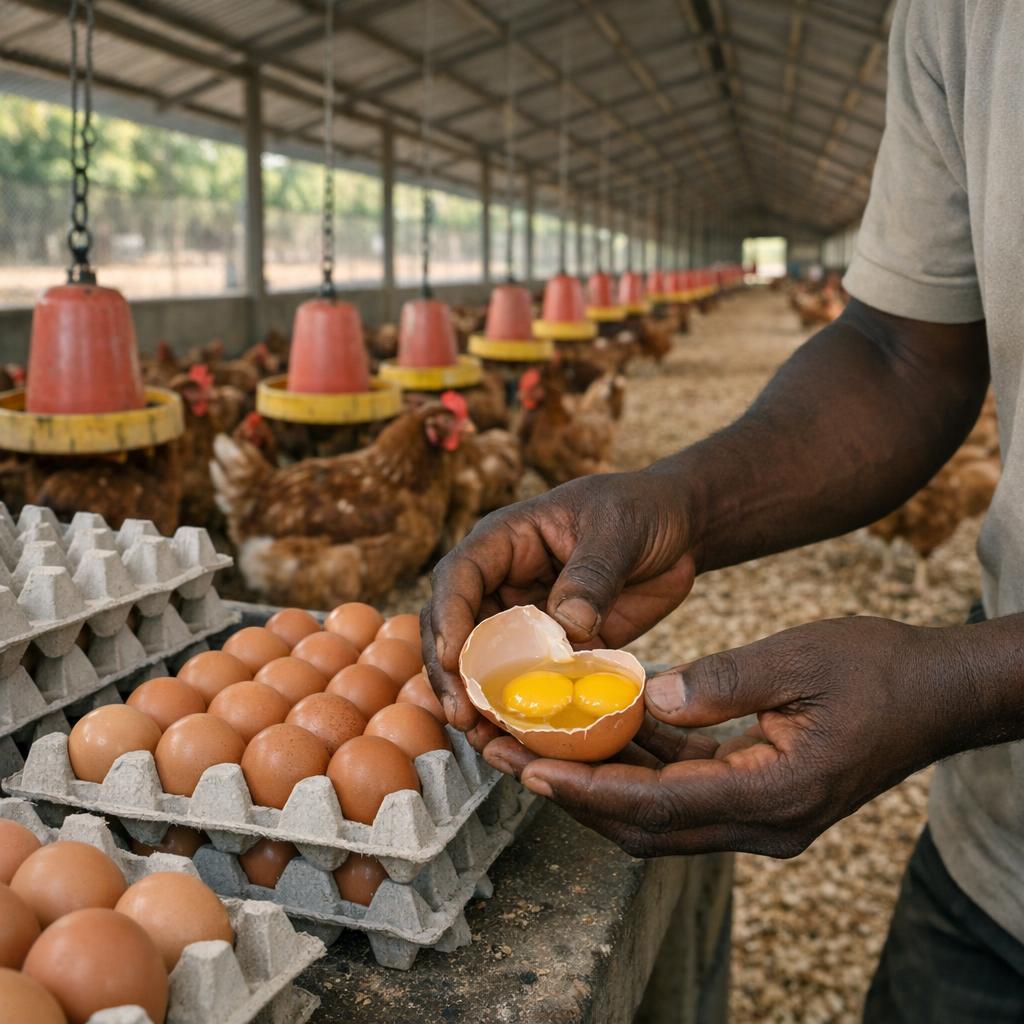
A phenomenon visible when opened
A double-yolk egg contains two distinct yolks in the same shell. The shell may be larger than that of other eggs, but size alone is not enough to confirm the phenomenon: the egg must be opened carefully, preferably over a separate container. The two yolks are then visible side by side, sometimes surrounded by the same egg white.
This phenomenon can occur in a layer flock, particularly when some hens start laying or their laying rhythm changes. A one-off observation is not enough to conclude that there is a problem. However, it is useful to check whether the eggs concerned occur in isolation or regularly, and whether any other changes are observed in the flock.
Setting up simple monitoring
Choose a fixed place to record observations, for example a notebook kept near the collection area. For each day, write down the date, the total number of eggs collected and the number of double-yolk eggs identified. If possible, add the poultry house or group of layers concerned, as well as their laying period.
To compare days, calculate the frequency as follows: number of double-yolk eggs ÷ total number of eggs collected × 100. This value describes only what was observed in your flock and during the period recorded; on its own, it does not constitute a diagnosis. Compare periods of similar duration and avoid combining records from different groups.
During collection, handle the eggs carefully and keep regular records. If you do not check the contents of every egg, count only those whose double yolk has been confirmed: an especially large shell is not enough. Also note any significant change in the laying rhythm or shell appearance, without automatically attributing these changes to double-yolk eggs.
When to ask for advice
If double-yolk eggs become frequent in a group, or if this observation is accompanied by a drop in laying, abnormal shells or a marked change in the hens’ behaviour, record the facts and consult the local veterinarian. Accurate monitoring will help them better understand the situation and advise you according to your poultry farming operation.
In Côte d’Ivoire, start keeping a simple daily record today and compare the data by group: a few regular notes are better than a general impression for managing your laying operation.
--- *Source: NEXTEKCI — In-house expertise — summary and analysis by NEXTEKCI.*