

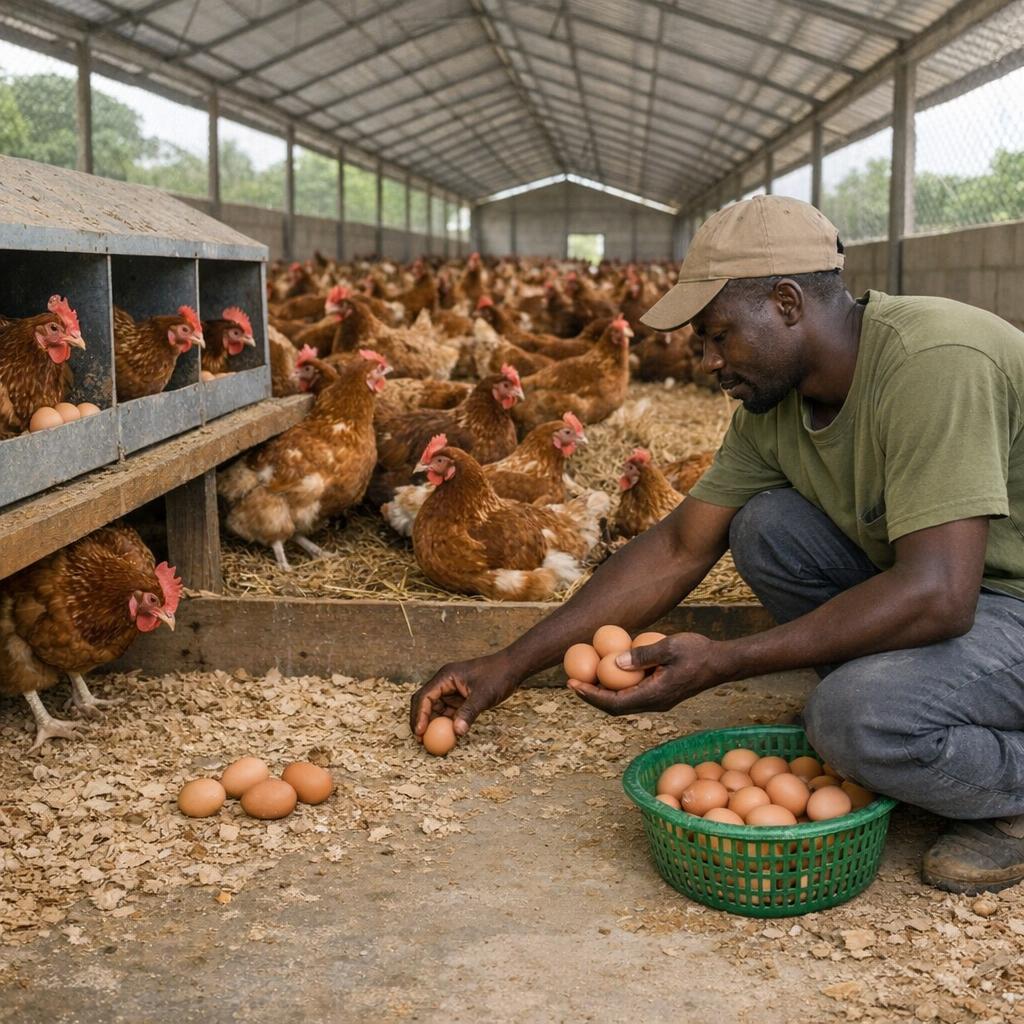
Observe before setting up
A well-adapted nest box gives hens a quiet, clean and accessible place to lay. The choice between an individual model and a collective model depends mainly on how the layers use the space. Some seek a specific, quiet spot; others are happy to lay close to their flockmates. In both cases, crowding and overly exposed areas should be avoided.
Before installing or changing the nest boxes, observe the flock during laying hours. Identify the areas they frequent, queues in front of the nests and eggs found on the floor. These clues help distinguish a shortage of spaces from an access, location or habit issue.
When should you prefer individual nest boxes?
Individual nest boxes are suitable when some hens prefer to be alone or when the laying areas need to be better distributed throughout the poultry house. Each compartment provides a defined space and limits jostling when the nests are well positioned and sufficiently numerous for the flock. They also make it easier to identify the most frequently used compartments.
Install them in a low-traffic area, sheltered from direct light and draughts. Check that the hens can access them without having to overcome a difficult obstacle. A nest that is too high, unstable or placed near a source of noise may be avoided.
When should you choose a collective nest box?
A collective nest box can be a good option when the hens readily move around in a group and the interior space is arranged so that they can enter and leave without getting in one another’s way. It offers greater freedom of movement, but requires close monitoring: if the group gathers there at the same time, the hens may push one another and some will lay elsewhere.
Avoid placing the collective nest box in a busy passageway or near the feeders and drinkers. Make sure the interior stays dry, clean and dark enough to encourage calm. Remove eggs and soiling regularly to keep the space welcoming.
Simple adjustments to monitor
Whatever the format, keep the nest boxes accessible and clean, and provide dry litter. Distribute them so that a single area does not attract the entire flock. If you change their location, do so gradually and observe the hens’ response. Eggs on the floor, unused nests or queues are signs that an adjustment may be needed.
In Côte d’Ivoire, also adapt the layout to the heat and airflow: keep the nest boxes ventilated without exposing them directly to draughts. Start by observing your layers, choose the format that suits their habits, then check its use every day to gradually improve your set-up.
--- *Source: NEXTEKCI — In-house expertise — summary and analysis by NEXTEKCI.*