

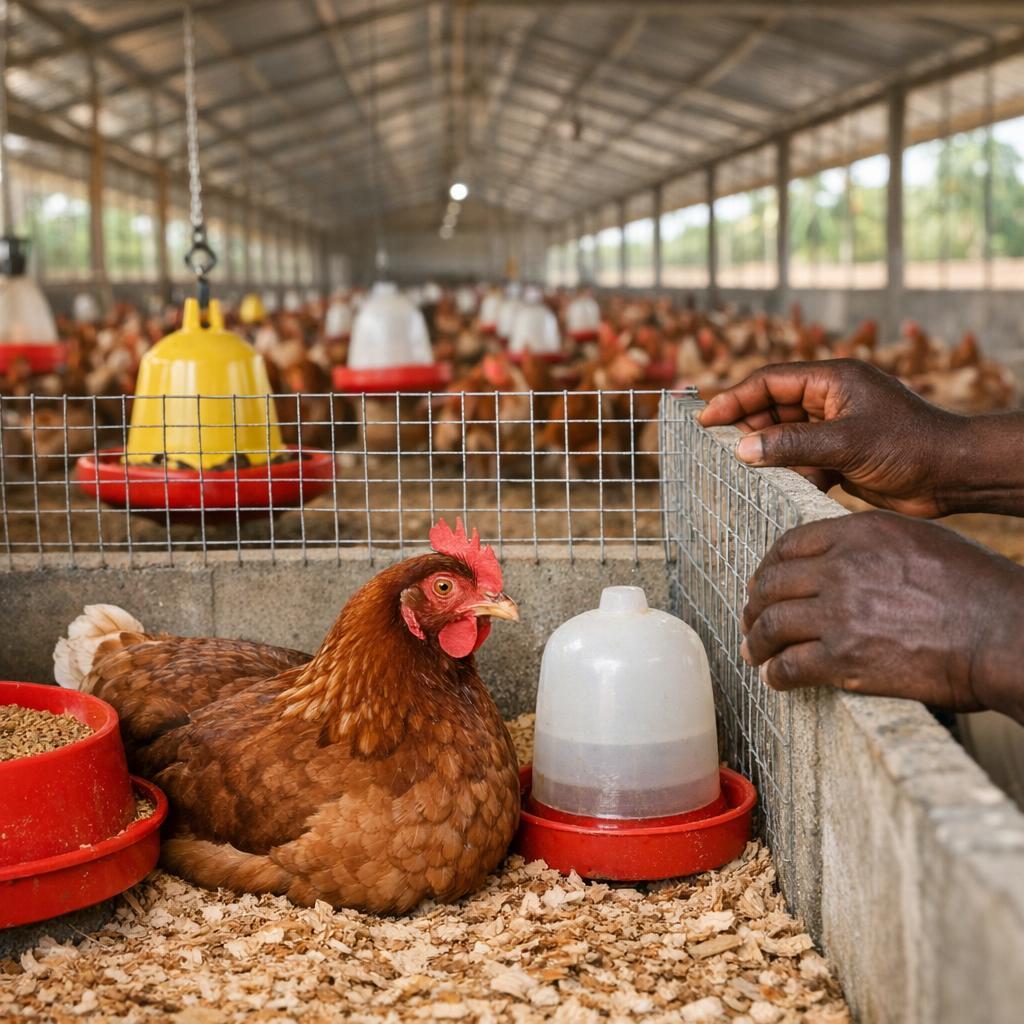
Why isolate a chicken?
An injured or weakened bird may be pushed around by the others and have difficulty accessing water or feed. Temporary separation makes it easier to monitor the bird while limiting contact with the rest of the flock. It does not replace a veterinarian’s advice.
Choose a suitable location
Set up the area in a quiet place, sheltered from rain, direct sunlight and draughts. Ensure good air circulation without exposing the bird to a cold draught. Avoid passageways, dogs, cats and other animals.
Use a pen, a well-ventilated crate or a small secure enclosure, spacious enough for the chicken to stand, move around and rest. Check that no sharp edge, cutting mesh or opening could worsen an injury. Clean, dry and comfortable litter helps keep the space in good condition. Replace it as soon as it is damp or soiled.
Provide water and feed
Place a drinker and feeder within easy reach, without making the bird walk far. Use equipment reserved for this area and keep the water clean. Position the containers to prevent them from tipping into the litter. Regularly check that the chicken can reach the water and feed without difficulty.
Organise observation and hygiene
Look at the bird several times a day without handling it unnecessarily. Note visible changes: difficulty standing, a drooping wing, a wound, unusual breathing, refusal to eat or very lethargic behaviour. If its condition worsens, if several birds show unusual signs or if you are unsure, contact the local veterinarian promptly. Only they can assess the situation and indicate what to do.
Attend to healthy birds first, then the isolated bird. After each visit, wash your hands and clean the equipment used. Do not share drinkers, feeders or tools between the temporary enclosure and the main poultry house without cleaning them. Also avoid unnecessary visits around the area.
A simple measure to adapt
Isolation should remain temporary and be reassessed according to the bird’s condition and the veterinarian’s advice. Prepare a clean, ventilated area in your poultry farm in advance: in Côte d'Ivoire, this arrangement helps you respond without rushing when a chicken is injured or appears weak. Set up your area now and keep the contact details of a nearby veterinarian close at hand.
--- *Source: NEXTEKCI — In-house expertise — summary and analysis by NEXTEKCI.*