
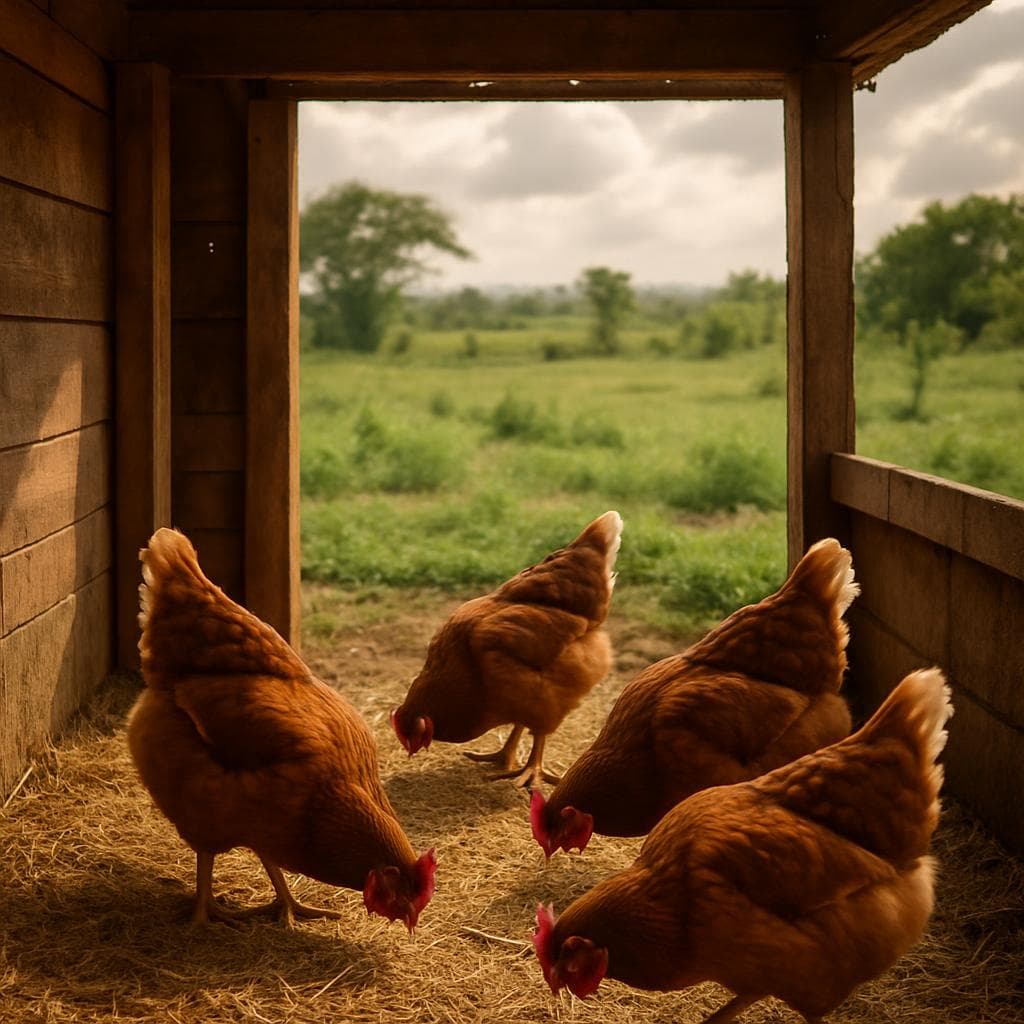
The rainy season in Côte d'Ivoire, while beneficial for agriculture, presents particular challenges for poultry farmers. Increased humidity can lead to health problems in birds, including respiratory diseases and infections. Here are some practical tips for managing these conditions and ensuring the well-being of your poultry.
1. Managing humidity
Humidity is a key factor to monitor during the rainy season. High humidity levels can promote the proliferation of bacteria and fungi. To minimise these risks, it is essential to:
- Ventilate the buildings: Ensure that your facilities are well-ventilated. Fresh air helps to reduce indoor humidity. Open windows and use fans if necessary.
- Monitor the temperature: A temperature that is too high combined with high humidity can be stressful for poultry. Use thermometers to track the climatic conditions inside the chicken coop.
2. Choosing litter
Litter plays a crucial role in managing humidity and the health of poultry. Here are some recommendations:
- Use absorbent materials: Opt for litters that absorb moisture well, such as straw, wood shavings or crushed corn. These materials help keep the ground dry and reduce the risk of infections.
- Change the litter regularly: It is important to renew the litter frequently to avoid the accumulation of moisture and debris. Dirty litter can be a fertile ground for diseases.
3. Disease prevention
Excessive humidity can promote the onset of diseases. To protect your poultry, adopt the following measures:
- Vaccination: Ensure that your poultry are up to date with their vaccination programme. Discuss with a veterinarian to establish a schedule suitable for your farm.
- Health monitoring: Regularly observe your poultry for any signs of disease, such as sneezing, breathing difficulties or a decrease in appetite. If in doubt, consult a veterinarian.
- Hygiene: Maintain good hygiene in the chicken coop. Clean and disinfect equipment and surfaces regularly to reduce the risk of infection.
Conclusion
Raising poultry during the rainy season requires particular attention to humidity, litter and disease prevention. By applying these practical tips, you can reduce risks and ensure the health of your animals. Remember to stay attentive to climatic conditions and adjust your farming practices accordingly. For any questions or need for assistance, do not hesitate to contact experts or exchange with other farmers. Together, we can improve our farming practices and ensure the success of our operations.
--- *Source: NEXTEKCI — In-house expertise — summary and analysis by NEXTEKCI.*