

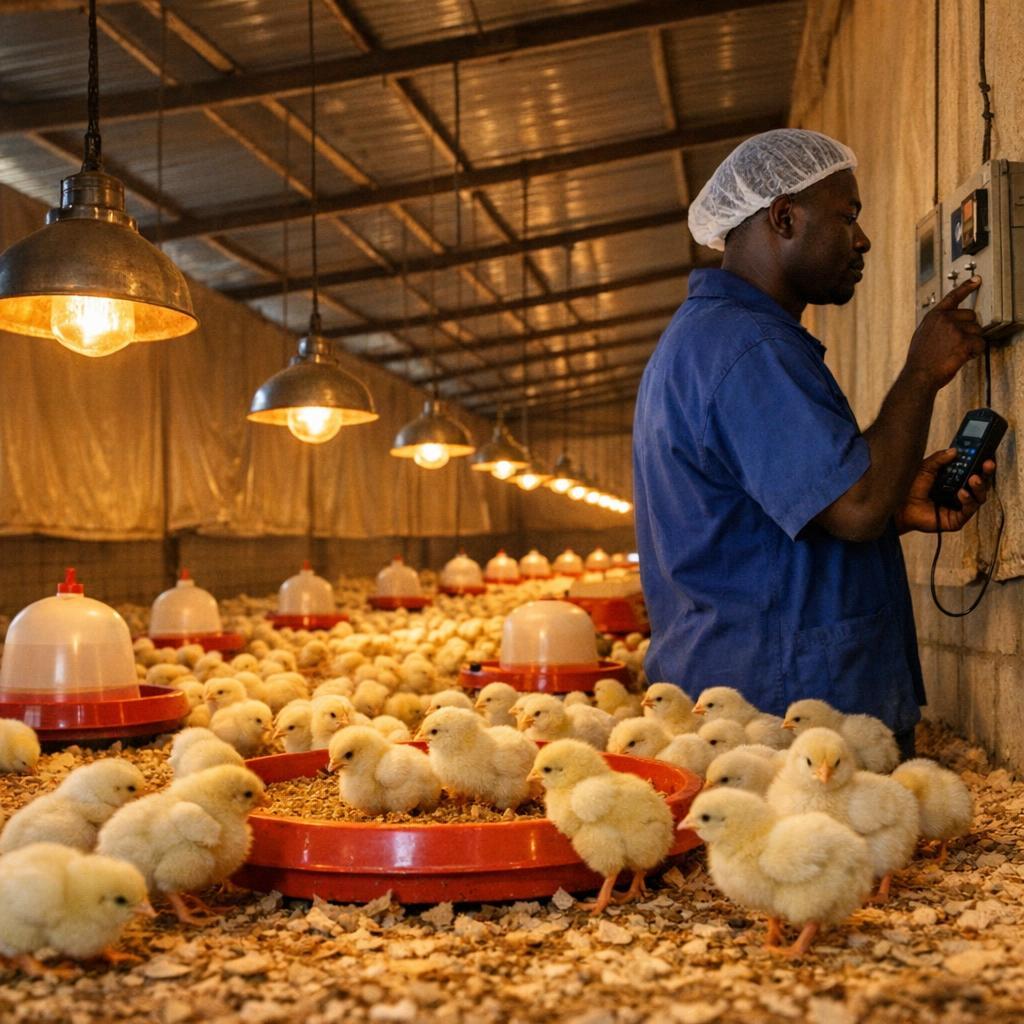
Why monitor lighting duration?
Light contributes to pullets’ development and their start of laying. A sudden increase in lighting duration can stimulate birds too early when they are not yet sufficiently developed. Conversely, a sharp decrease can disrupt their rhythm. The aim is therefore to maintain a consistent routine, suited to the flock’s age and the recommendations for the breed being reared.
In Côte d'Ivoire, day length varies less over the seasons than in some temperate regions. However, the natural light received inside a poultry house also depends on its orientation, the size of the openings, shading and closing habits. It is therefore not enough to rely on the time of sunrise and sunset: observe the actual conditions in your chicken coop.
Establishing a stable routine
- Note the switch-on and switch-off times. A simple record makes it possible to identify discrepancies and keep the same times every day.
- Take natural light into account. Avoid an opening or curtain causing the light level to change significantly from one day to the next. If you use supplementary lighting, set it to follow a defined programme rather than improvising.
- Avoid sudden extensions. Do not add several hours of lighting all at once to speed up laying. Adjustments must be progressive and consistent with the flock’s stage of development.
- Check the equipment. Regularly check the bulbs, connections and timer. A failure or clock discrepancy can cause an unexpected change. Plan an arrangement suited to power cuts to limit repeated changes.
- Aim for evenly distributed light. Very bright areas and dark corners can affect the birds’ behaviour. Check the whole poultry house, not just the area near the switch.
Relating light to the condition of the flock
Lighting duration should not be decided in isolation. Also monitor growth, uniformity, feed and water consumption, as well as the pullets’ age. Ask the poultry technician or the local veterinarian to help you establish a programme suited to your breed and poultry house. Do not change the rhythm simply because a few birds are beginning to show signs of maturity.
Before the laying period, check your schedule, installation and timings. By keeping lighting stable and regularly observing the flock, you give your pullets consistent cues: prepare your programme now and adjust it progressively with a local professional.
--- *Source: NEXTEKCI — In-house expertise — summary and analysis by NEXTEKCI.*