
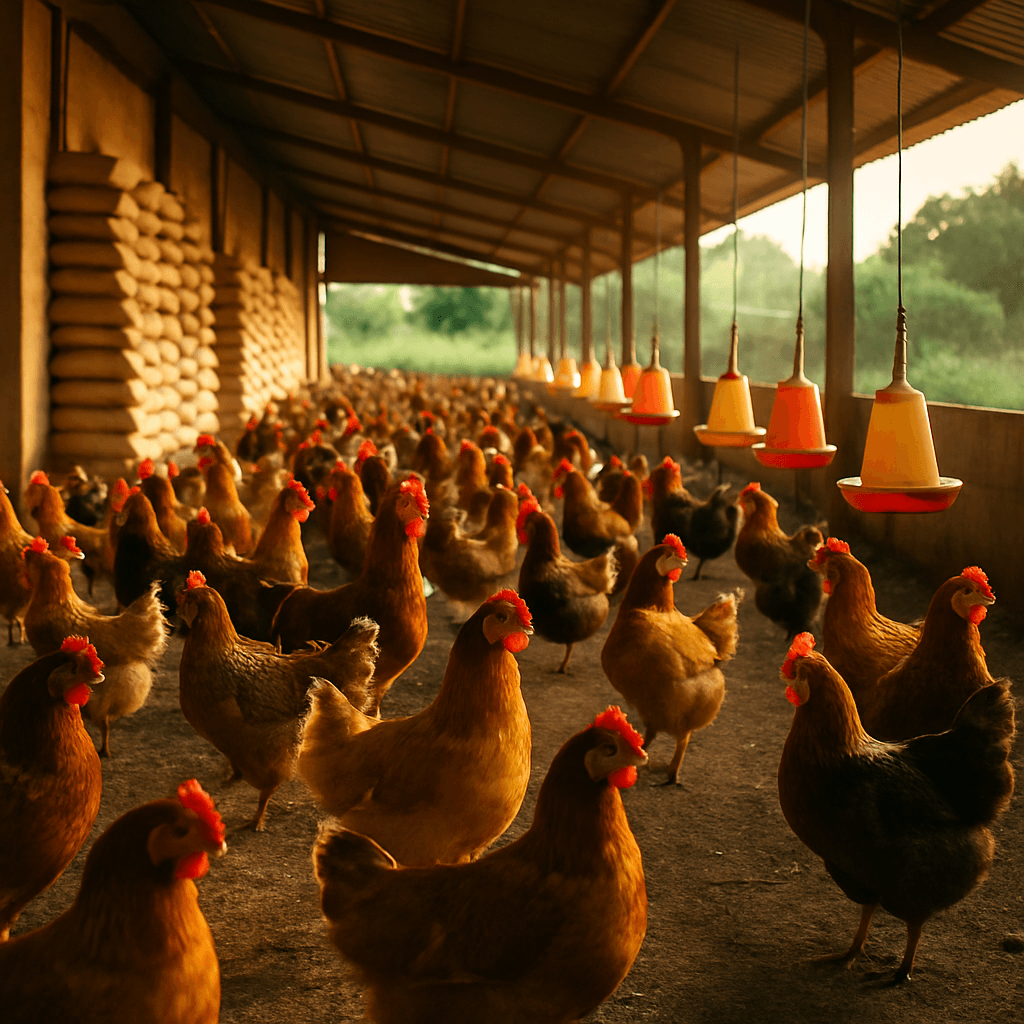
The poultry sector in Côte d'Ivoire is experiencing significant growth dynamics, and recent news highlights large-scale projects aimed at developing infrastructure for poultry farming. An ambitious project plans to construct 500,000 m² of buildings dedicated to broiler farming by 2028. This initiative could transform the poultry landscape, offering new opportunities and challenges for local farmers.
The importance of this infrastructure lies in its ability to improve farming conditions. Modern buildings allow for better control of the poultry environment, which is essential for their welfare and productivity. A good environment, particularly in terms of temperature, humidity, and ventilation, is crucial for preventing diseases and optimising animal growth. Thus, farmers who adopt this new infrastructure can expect an improvement in the health of their poultry and, consequently, an increase in their yield.
Furthermore, the expansion of poultry buildings could also promote better organisation of the value chain. By integrating modern technologies into new constructions, farmers can benefit from more efficient management systems, such as tools for monitoring animal health and feed consumption. This can lead to a reduction in production costs and better profitability.
However, this evolution comes with challenges. Farmers will need to adapt to new production standards and quality requirements that will likely be implemented with the rise of infrastructure. This involves ongoing training and investment in sustainable farming practices. Competition may also intensify, as new players could enter the market, attracted by the opportunities offered by these modern buildings.
For Ivorian farmers, this news underscores the importance of preparing for these changes. It is crucial to stay informed about market developments and to engage in training that will provide the necessary skills to take advantage of the new infrastructure. Additionally, collaboration between farmers, cooperatives, and industry stakeholders can facilitate access to the resources and knowledge needed to adapt to this new landscape.
In conclusion, the development of poultry infrastructure in Côte d'Ivoire represents a significant opportunity for farmers. By adopting modern practices and preparing for upcoming challenges, they can not only improve their production but also contribute to the sustainability and competitiveness of the national poultry sector.
--- *Source: Réussir Volailles — summary and analysis by NEXTEKCI.*