
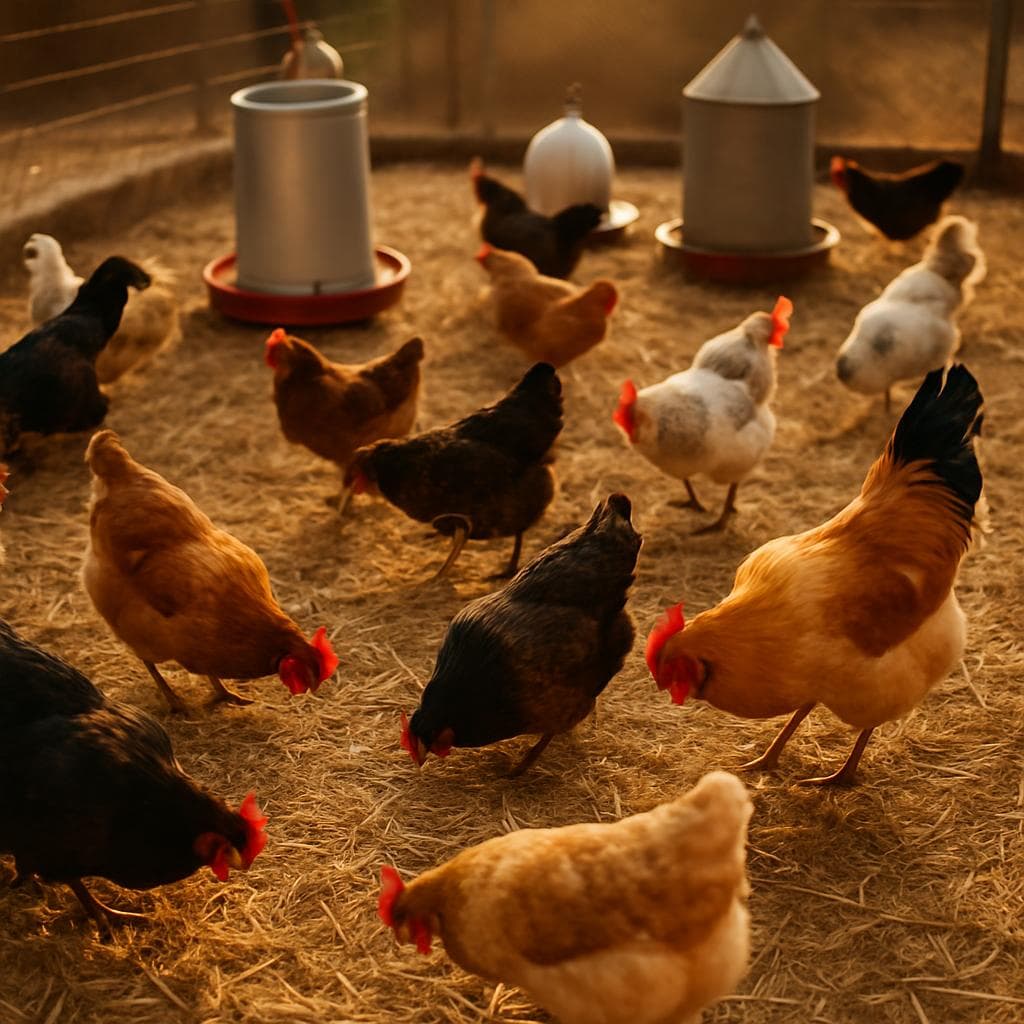
Stocking density is a fundamental aspect to consider to ensure the well-being and productivity of your poultry. In Côte d'Ivoire, where poultry farming is rapidly expanding, it is essential to understand how to manage the available space according to the age of the birds. Here is a practical guide on the recommended stocking density according to the different stages of poultry growth.
1. Day-old chicks (0 to 3 weeks)
During the first weeks of life, day-old chicks require sufficient space to move freely and avoid stress. The recommended stocking density for day-old chicks is generally 25 to 30 birds per square metre. This space allows them to develop properly while minimising the risks of diseases and injuries.
2. Young poultry (3 to 6 weeks)
From three weeks onwards, the poultry begin to grow rapidly. It is advisable to reduce the density to about 15 to 20 birds per square metre. This change allows them more space to move and feed, which is essential for their healthy growth and muscle development.
3. Growing poultry (6 to 12 weeks)
Between six and twelve weeks, the birds continue to grow and require more space. At this stage, the stocking density can be reduced to about 10 to 15 birds per square metre. This helps to prevent conflicts among the birds and promotes better air circulation, which is crucial for preventing respiratory diseases.
4. Adult poultry (12 weeks and older)
Once the poultry reach adulthood, it is recommended to maintain a density of about 6 to 10 birds per square metre. This density not only ensures the well-being of the birds but also optimises their production, whether for meat or eggs. Adequate space reduces stress and encourages natural behaviours, contributing to better quality poultry products.
Conclusion
Managing stocking density is essential for the health and productivity of your poultry. By following these recommendations according to the age of your birds, you will help create an optimal environment for their development. Also, remember to regularly monitor the condition of your animals and adjust the density according to climatic conditions and available space. For personalised advice and information on daily prices, feel free to contact us via WhatsApp. By acting proactively, you will maximise the potential of your poultry farming in Côte d'Ivoire.
--- *Source: NEXTEKCI — In-house expertise — summary and analysis by NEXTEKCI.*