
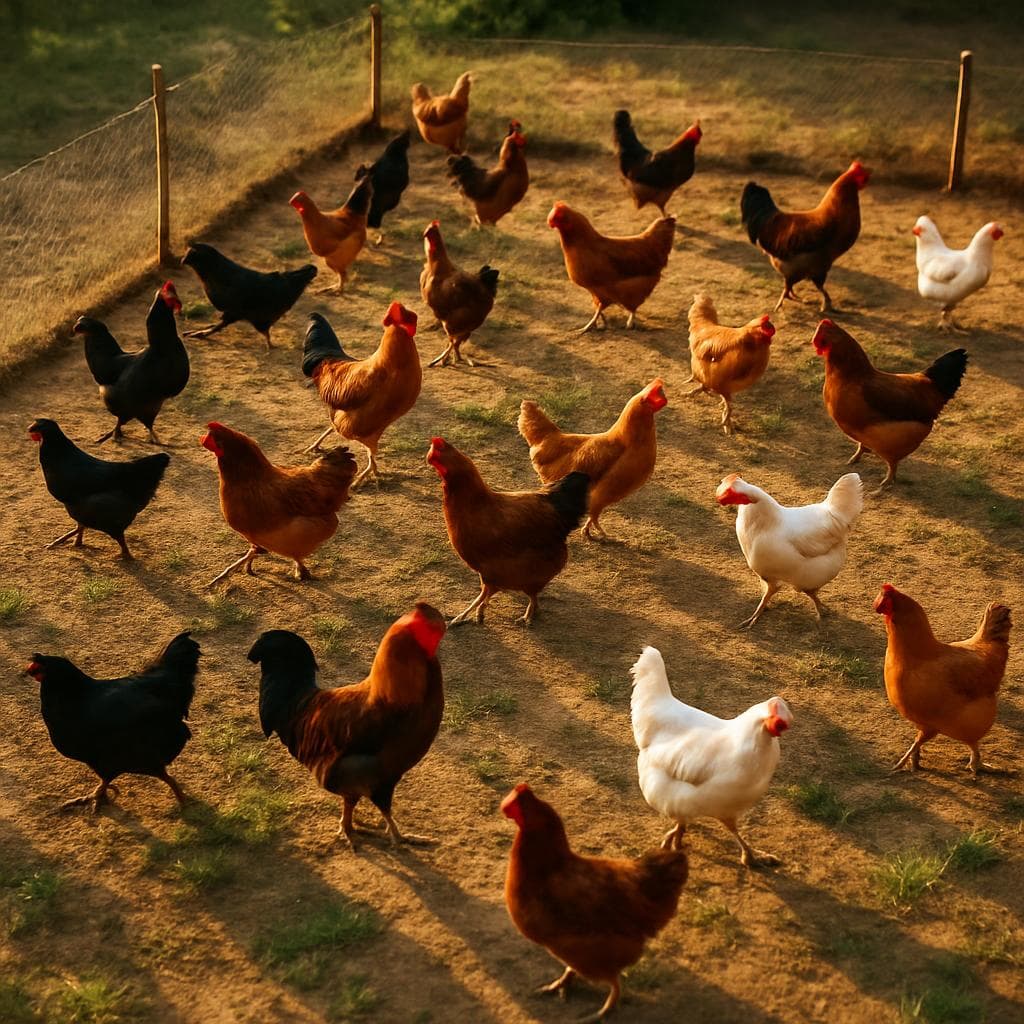
Stocking density is a fundamental element to consider to ensure the well-being of your poultry and optimise their growth. In Côte d'Ivoire, where poultry farming is rapidly expanding, it is essential to adopt practices suited to the different ages of the birds. Here is a practical guide to help you determine the number of birds per square metre according to their age.
1. Day-old chicks (0 to 3 weeks)
At the beginning of their life, day-old chicks require sufficient space to move and develop without stress. For this age group, it is generally recommended to allow 10 to 15 chicks per square metre. This provides them with a comfortable environment, thus promoting their growth and reducing the risk of diseases.
2. Young poultry (3 to 6 weeks)
From the third week onwards, young poultry begin to grow rapidly. At this stage, the stocking density can be slightly increased. It is advisable to maintain 8 to 10 young poultry per square metre. This allows them to continue developing while having enough space to avoid conflicts and stress.
3. Poultry in fattening (6 to 12 weeks)
During this period, poultry continue to grow and their need for space remains significant. You can consider a density of 6 to 8 poultry per square metre. This promotes good muscle development and better meat quality, essential for the profitability of your farm.
4. Adult poultry (12 weeks and older)
For adult poultry, it is crucial to provide adequate space to avoid aggressive behaviours and stress. A density of 4 to 6 poultry per square metre is recommended. This allows each bird to move freely, feed, and drink without constraint, which is essential for their well-being and productivity.
Factors to consider
In addition to the age of the poultry, several factors can influence stocking density. Among these are ventilation, feeding, hydration, and climatic conditions. Ensure that your facility is well-ventilated and that the poultry have access to quality feed and fresh water at all times.
Conclusion
Managing stocking density is crucial for the success of your poultry operation. By adhering to the recommendations according to the age of your poultry, you will optimise their health and productivity. Do not hesitate to adjust these densities based on your observations and the specific conditions of your farm. For personalised advice and information on current prices, contact us via WhatsApp. Take care of your poultry, and they will take care of your farm!
--- *Source: NEXTEKCI — In-house expertise — summary and analysis by NEXTEKCI.*