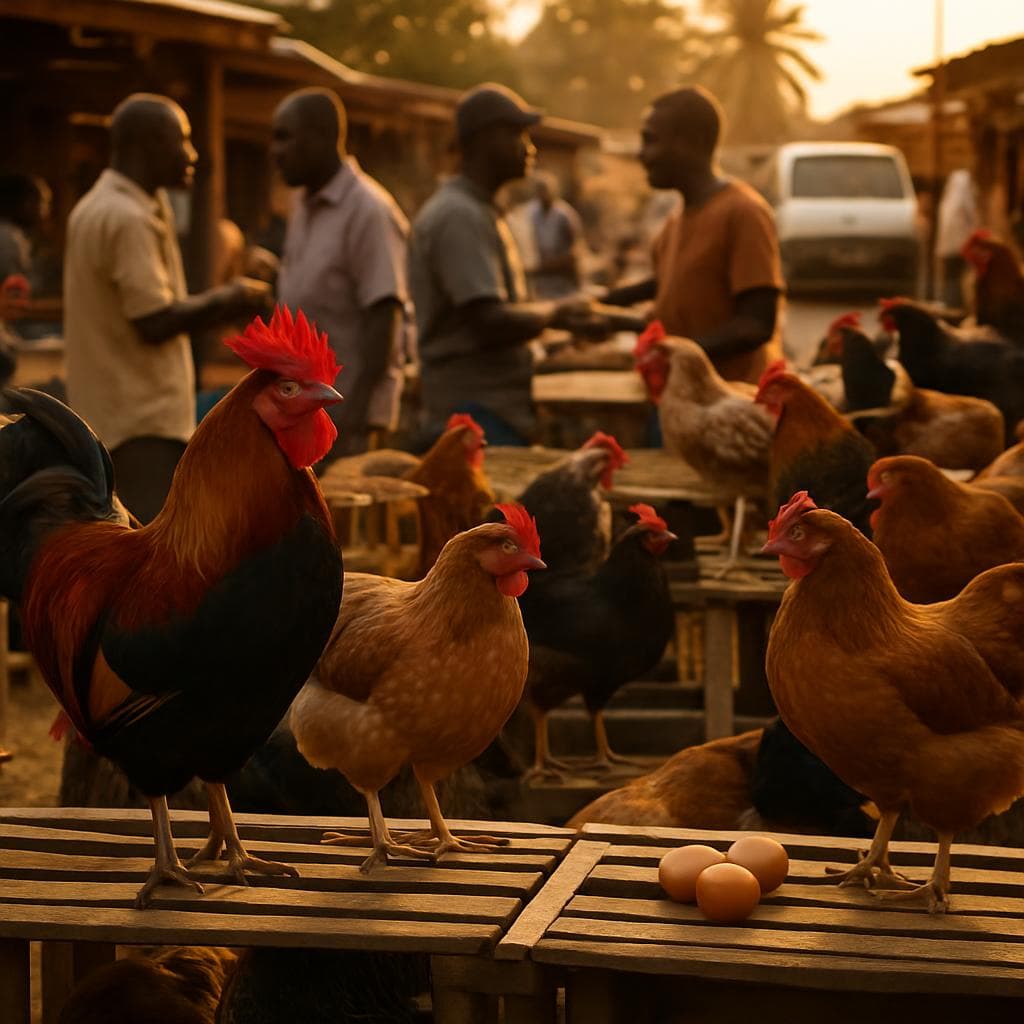
Poultry farming in Côte d'Ivoire represents an interesting opportunity for farmers looking to diversify their activities. However, the choice between raising broilers and layers can be complex, especially depending on the available budget. This article offers an analysis of both options to help you make an informed choice.
Broilers: a quick and profitable option
Raising broilers is often favoured for its short-term profitability. Broilers, generally raised for their meat, reach their market weight in just a few weeks. This means that farmers can realise profits relatively quickly, which is a major advantage for those looking to generate income in a short timeframe.
However, it is important to consider the costs associated with this form of farming. Broilers require specific feed and rigorous health monitoring to ensure their rapid growth and health. Additionally, managing the farming conditions, particularly temperature and hygiene, is crucial to avoid diseases that can lead to significant losses.
Layers: a long-term investment
On the other hand, raising layers can prove to be a wise choice for those considering a steady income over the long term. Layers produce eggs throughout their life cycle, allowing farmers to benefit from a continuous source of income. Eggs being a staple food in many Ivorian households, demand remains relatively stable.
It is essential to note that layers require a more substantial initial investment, particularly in terms of housing, feed, and veterinary care. Maintenance costs can also be higher, as these birds require special attention to maintain their egg production.
Comparison of the two options
For farmers with a limited budget or those seeking a quick return on investment, raising broilers may be the best option. In contrast, those who have the capacity to invest in the long term and are willing to manage the requirements of layer farming may find this option more advantageous.
Conclusion: making the right choice
Ultimately, the choice between broilers and layers will depend on your financial goals, your ability to invest, and your knowledge of the specific requirements of each type of farming. Before you start, it is advisable to thoroughly inform yourself about the nutritional, health, and environmental needs of each species. You may also exchange ideas with other farmers or consult experts to refine your decision. Whatever your choice, ensure you remain attentive to market developments and consumer needs to maximise your chances of success in poultry farming in Côte d'Ivoire.
--- *Source: NEXTEKCI — In-house expertise — summary and analysis by NEXTEKCI.*