

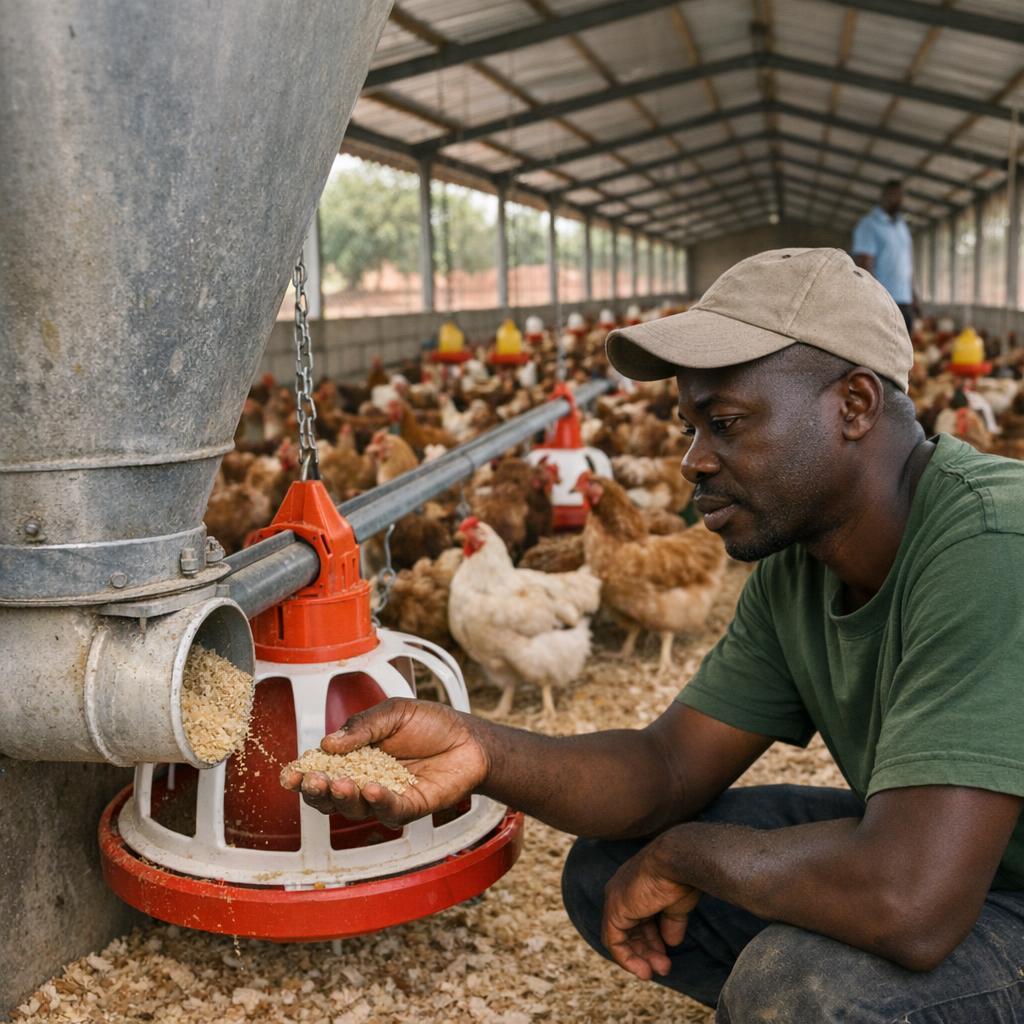
When the silo is full, but the feed no longer descends
Have you noticed that the feeders are emptying while there is still feed in the silo? The product may have accumulated in the shape of a bridge above the outlet: this is an arch. A narrow passage can also form in the centre, while the feed remains blocked against the walls. In both cases, the flow becomes irregular and the supply of the poultry is disrupted.
First, look for the signs: the silo level no longer dropping, the hopper or feed chain almost empty, the flow starting again and then stopping, or differences between the lines. Also check that the motor, controls and pipes are working normally. An electrical or mechanical fault can look like a blockage: do not conclude too quickly that it is an arch.
Look for the causes before taking action
Moisture encourages feed to clump together. During the rainy season, check the covers, seals and points where water may enter. Condensation caused by temperature differences can also dampen the product. Check that the silo is properly closed after each filling and that the area around its base remains clean and dry.
A large amount of fines, compacted feed or prolonged storage can also hinder the flow. Note when the problem occurs and whether several feeds are affected. These observations will help distinguish a storage issue from a fault in the auger or the silo outlet.
Take care when restoring the flow
Start by switching off the system’s power supply and preventing it from being restarted during the inspection. Inspect the pipes, outlet and visible equipment from the ground. If the system has a clearing mechanism provided by its manufacturer, use it only in accordance with the instructions. Avoid hitting the silo with a hammer: this may damage it or cause the feed to fall suddenly.
Do not climb onto the silo while it is operating and never enter it. Someone could be buried or trapped in the feed, even if the silo appears empty. If the blockage persists, if a component appears damaged or if access requires working at height, call a qualified technician. Do not dismantle a component while the system could start up.
After restoring the flow, check that the feed descends regularly to the feeders and that there are no leaks or damp build-ups. To prevent a recurrence, regularly check the seals, level and condition of the equipment, and avoid leaving feed to stand unnecessarily.
Action for your poultry farm: at your next inspection, note the silo level, the condition of the feed and the flow at the feeders. As soon as an abnormality appears, secure the system and look for the cause before restarting the supply.
--- *Source: NEXTEKCI — In-house expertise — summary and analysis by NEXTEKCI.*