
To clean or not to clean: the dry-cleaning rule and its exceptions
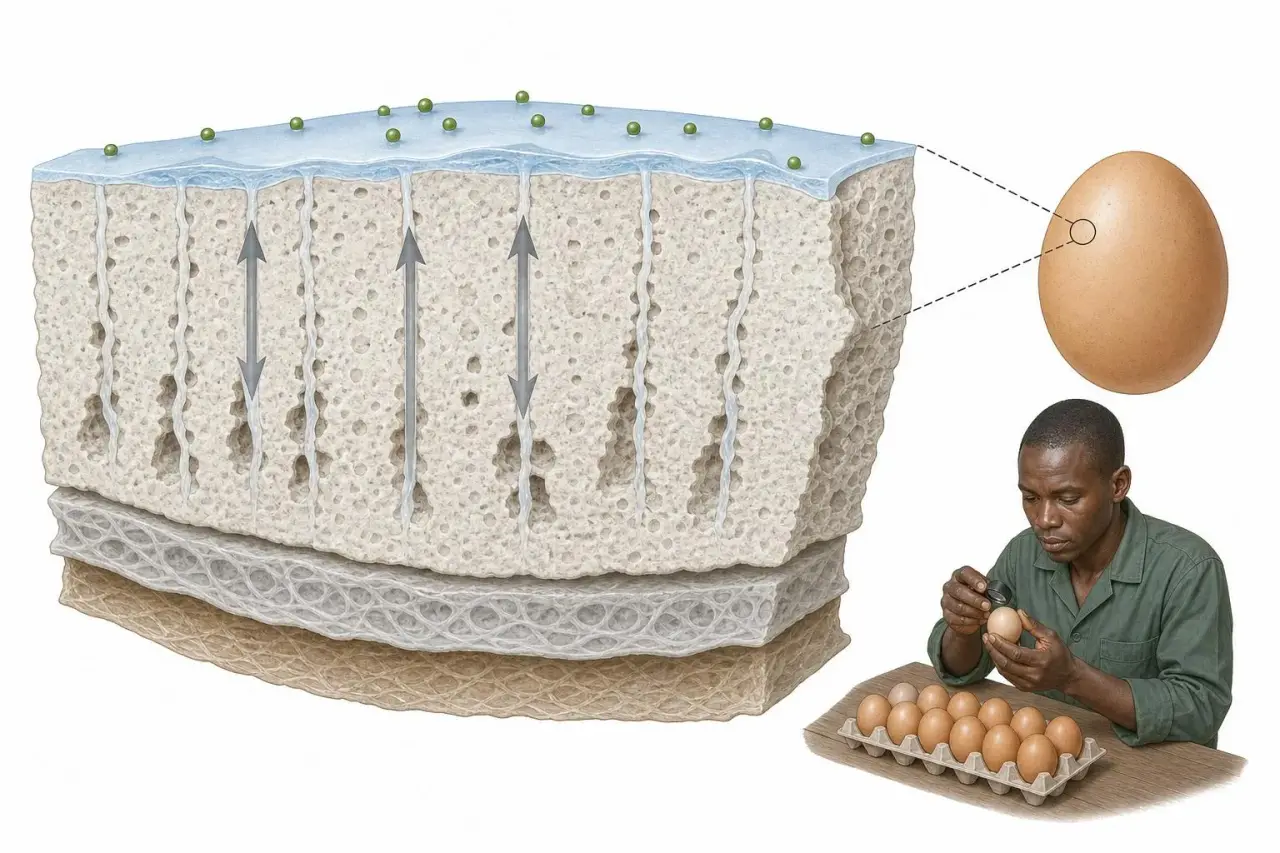
Faced with a tray of stained eggs, everybody has the same reflex: a basin of water and a cloth. That is the movement that turns a slightly dirty egg into a dangerous one. The shell is not a wall: it is a fine sieve protected by a natural varnish, the cuticle, which water removes, and through which water carries in what it was supposed to remove. This lesson explains the cuticle and the pores, shows why water is dangerous with an example you can repeat, sets the dry-cleaning rule movement by movement, and says what the rare exceptions are.
12 min read · 5-question quiz at the end
 By Abdul Hussein ChoumanFounder of NEXTEKCI · Agnibilékrou hatchery since 2006
This lesson is part of Table eggs: from nest to customer specialisation. It opens to every registered student, from free registration. Levels 1 to 5 and the tracks remain readable by everyone.
Faced with a tray of stained eggs, everybody has the same reflex: a basin of water and a cloth. That is the movement that turns a slightly dirty egg into a dangerous one. The shell is not a wall: it is a fine sieve protected by a natural varnish, the cuticle, which water removes, and through which water carries in what it was supposed to remove. This lesson explains the cuticle and the pores, shows why water is dangerous with an example you can repeat, sets the dry-cleaning rule movement by movement, and says what the rare exceptions are.
- ✓Explain the role of the cuticle and the pores in the natural protection of the egg
- ✓Say why water is dangerous on a shell and what happens when a washed egg is stored
- ✓Apply dry cleaning: which eggs, which tools, which movement, in how much time
- ✓Know the exceptions and be able to explain the rule to a customer or an employee who wants to wash
- The cuticle and the pores: the egg is protected, as long as it is not undressed
- Why water is dangerous: four mechanisms
- The dry-cleaning rule, movement by movement
- The exceptions: few, and all on the customer's side
- Worked example: what brushing brings in, what washing would cost
- Real cleaning is prevention: fewer dirty eggs coming in
- Going further
- •The inside of a fresh egg is almost sterile; the microbes are on it; the cuticle seals the 7,000 to 17,000 pores and disappears with water or hard rubbing (shiny egg = cuticle gone).
- •Water is dangerous four times over: it removes the cuticle, cold water on a warm egg sucks dirt through the pores, it spreads the stain, and moisture makes eggs rot and go mouldy.
- •Dry cleaning: at grading, within the hour, lightly dirty only, cloth or brush or very fine abrasive, rub the stain and not the egg, 30 seconds maximum; otherwise heavily dirty, separate sale the same day.
- •Exceptions: the customer or you wash the egg just before breaking and cooking it, never before storing it; we refuse to deliver washed eggs without a cold chain.
- •Beyond 40 dirty eggs out of 1,800, the cause is in the nests: close the nests at night, change the nest litter every week, slats in the rainy season, floor eggs collected first.
© NEXTEKCI, Agnibilékrou · Lessons protected by copyright · Terms of use · Privacy policy