
Poultry encyclopedia · NEXTEKCI School · Feed raw materials
Wheat bran
Wheat bran is the outer layer of the grain, recovered by flour mills when they make flour. It provides a little protein and a lot of fibre, but little energy for poultry. Useful in some feeds, it must never be used to "stretch" a broiler feed.
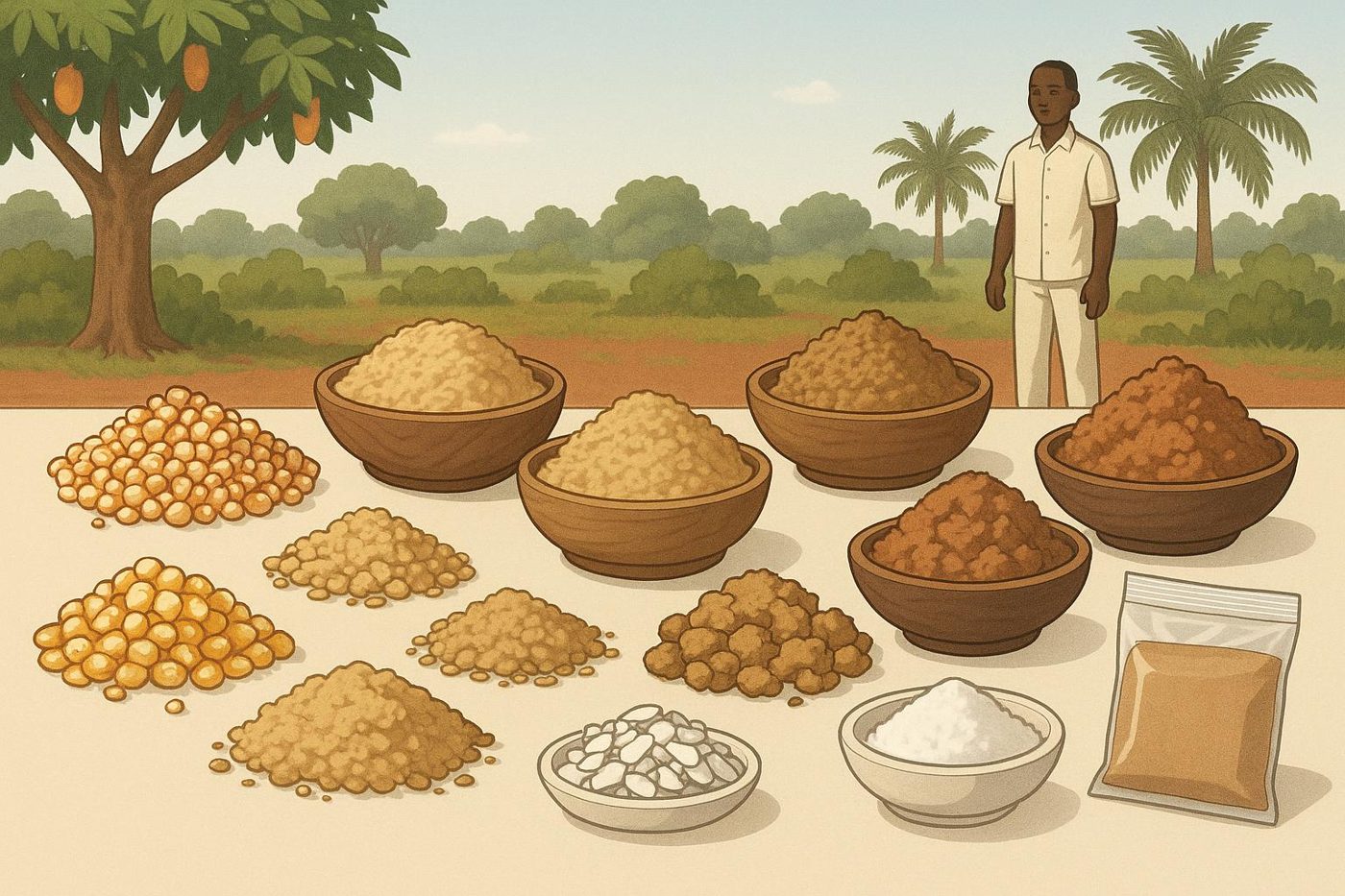
Key facts
- Origin
- By-product of wheat milling
- Protein
- Moderate, often around 14 to 17%
- Fibre
- High
- Energy for poultry
- Low
- Phosphorus
- Present, but largely poorly usable by the bird
What it is
When a flour mill turns wheat into flour, it separates the outer layer of the grain: this is the bran. Mills also produce other "offals", finer and richer in flour, often called middlings.
Bran comes as light brown flakes. It is widely used for ruminants, and also in poultry farming, in measured amounts.
Its role in the ration
Bran provides a little more protein than cereals, fibre and some minerals. But poultry digest fibre poorly: for them, bran is a low-energy, bulky feed.
It finds its place mainly in pullet and layer feeds, where a little fibre helps the gut work well and gives a feeling of fullness, and where fast growth is not the aim. For broilers, which must grow quickly, it is used with great caution.
The limits
The more bran is added, the more energy the feed loses: the bird must eat more for the same result, and the feed conversion ratio gets worse. In a broiler feed, too much bran quickly shows on the scales.
The phosphorus in bran is largely in a form (phytates) that poultry use poorly. Bran therefore cannot be relied on to cover phosphorus needs: that is the job of the phosphates in the formula.
Quality, storage and availability
Good bran is dry, evenly coloured, without lumps, without a mouldy smell and without insects. Because it is light and absorbs moisture, it goes mouldy quickly in a damp store, especially in the rainy season: it is stored on pallets, kept dry, and not kept too long.
In Côte d’Ivoire, wheat is imported and processed by flour mills; bran is therefore available, but its quality varies from one batch to another. Be wary of bran that is unusually heavy or sandy: it may have been mixed with something else.
Common mistakes
Adding bran to a complete feed "to make it last": this dilutes the energy, protein, vitamins and minerals, and the flock grows less or lays less. It is a false economy.
Confusing bran and middlings, which do not have the same value. The share of bran in a feed is set in the formula of the nutritionist or the manufacturer, according to the type of bird and its age.