
Poultry encyclopedia · NEXTEKCI School · Feed raw materials
Groundnut meal and the aflatoxin risk
Groundnut meal is rich in protein and very palatable, but it is the raw material most exposed to aflatoxins, poisons produced by moulds. A contaminated batch can ruin a flock without any visible mould. It is only used once checked, and in amounts set by the nutritionist.
Key facts
- Main role
- Protein
- Protein content
- Often around 40 to 50%
- Amino acids
- Poor in lysine and methionine
- Main danger
- Aflatoxins (Aspergillus moulds)
- Check
- Laboratory analysis or rapid test, batch by batch
What it is
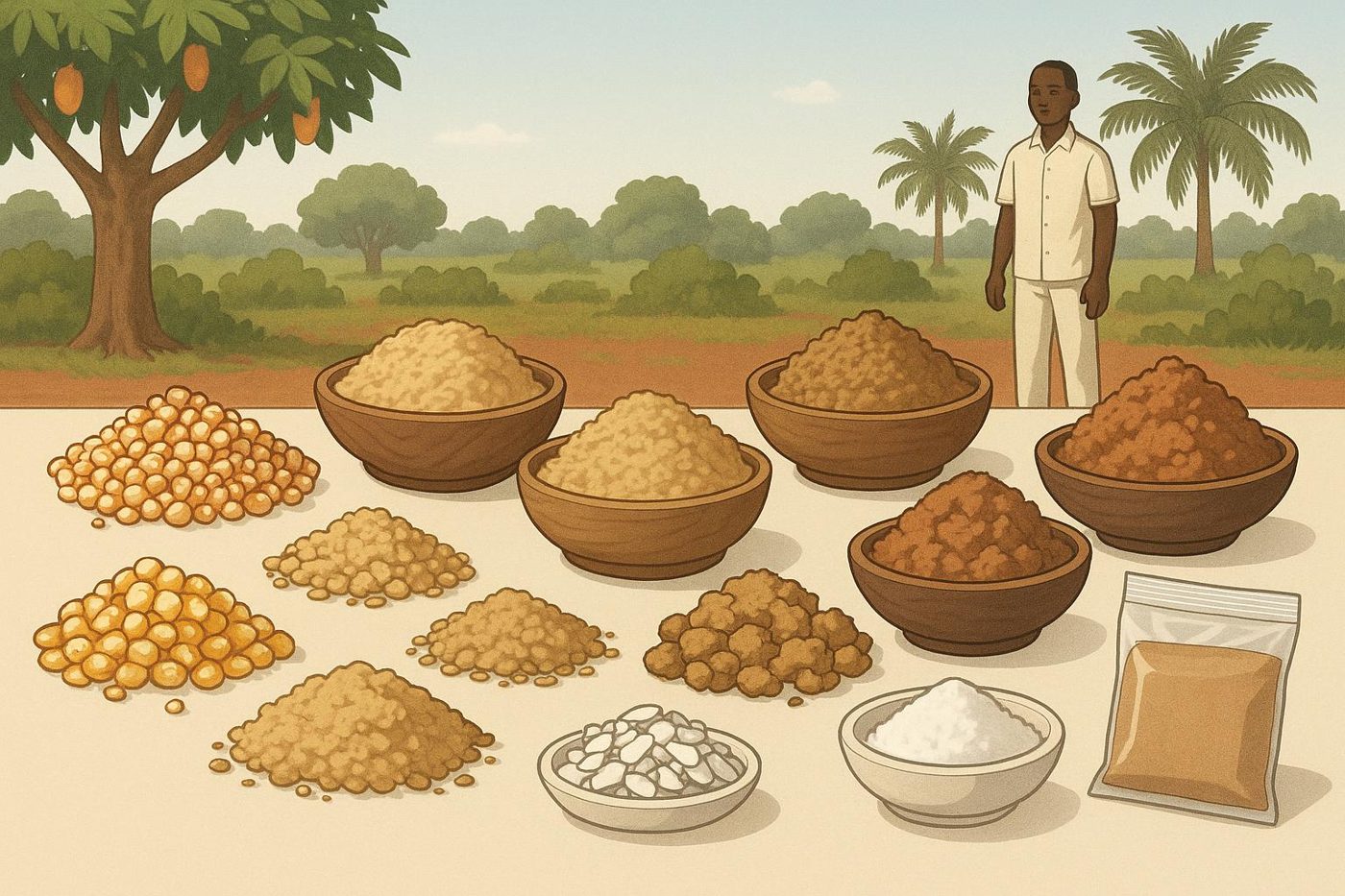
Groundnut meal is what remains of shelled groundnuts after the oil has been extracted, in a factory or in small village presses. It comes as cakes, pieces or meal, light brown in colour.
Groundnuts are grown in the centre and north of Côte d’Ivoire and throughout West Africa. The meal is therefore often available locally, especially where oil is pressed.
Its role in the ration
It is a rich source of protein that birds accept well. But its protein is poor in lysine and methionine: it does not replace soybean meal weight for weight, and the formula must be completed.
Artisanal meal often keeps more oil than factory meal: it provides more energy, but it goes rancid more quickly.
Aflatoxins: an invisible danger
Groundnuts are very susceptible to moulds of the Aspergillus genus, which grow in heat and humidity, in the field, during drying or in storage. These moulds produce aflatoxins, poisons that damage the liver, slow growth, weaken the immune defences (vaccines protect less well), reduce laying and can kill. Young birds are the most sensitive, and ducks even more so than chickens.
The trap: meal can be loaded with aflatoxins without any visible mould, and neither sun, sieving nor cooking destroys them. The only way to know is analysis, in a laboratory or with a rapid test, on a properly taken sample.
Checking and storage
A serious manufacturer buys groundnut meal from known suppliers, asks for or carries out aflatoxin analyses and rejects doubtful batches. Some feeds contain mycotoxin binders: their choice and use are the manufacturer’s responsibility, according to its own specifications.
On the farm or in the store: dry meal, without lumps or a mouldy or rancid smell, stored on pallets, dry and in the shade, and used quickly. A suspect batch is set aside and analysed, never "mixed in so as not to waste it".
Warning signs
A flock that eats but grows badly and becomes uneven, laying that drops for no reason, vaccines that seem not to protect, pale birds and slowly rising mortality: these are possible signs of aflatoxins in the feed. The liver of dead birds may be pale, yellowish or crumbly.
If so, call the vet, keep a sample of each feed batch, and have it analysed. The change of feed is decided with the vet and with the supplier.