

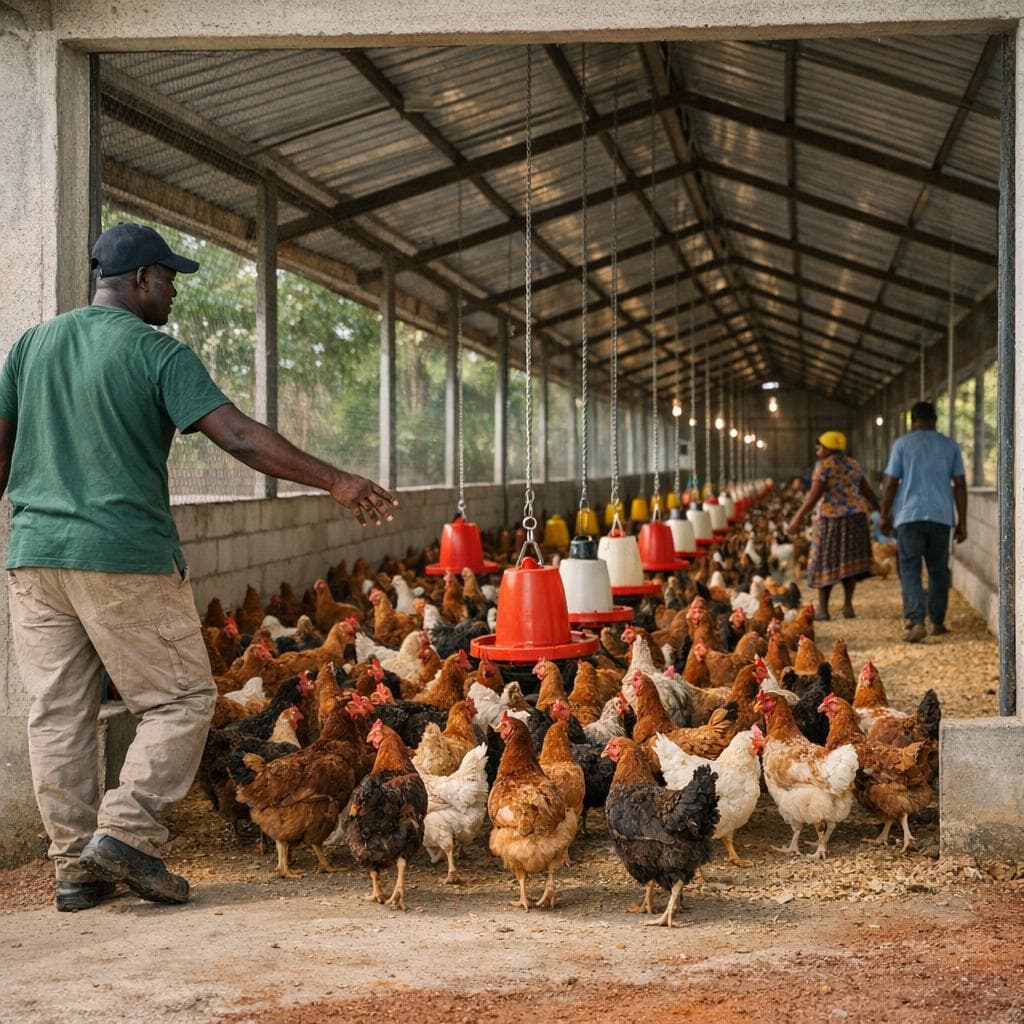
Plan ahead for the transfer
Moving to the laying house is an important stage for pullets. A rushed move, an inadequately prepared space or simultaneous changes to feed and management can make it harder for them to adapt. The aim is therefore to prepare their new accommodation in advance and keep their routine as stable as possible.
Plan the transfer according to the pullets’ development and the management recommendations suited to their breed. Avoid deciding solely on the basis of a fixed date: observe their progress and ask your technician or veterinarian for advice if you are unsure about the right time.
Prepare the poultry house before they arrive
Clean and disinfect the poultry house, then let it dry before placing the birds inside. Check the roof, openings and equipment. The litter must be clean and dry, and evenly distributed. Make sure the feeders and drinkers are accessible, working and sufficient in number to limit crowding.
Also check the ventilation. The poultry house must remain properly ventilated, with no direct draughts on the pullets. Identify areas that are too hot, damp or cluttered and fix any problems before the transfer. Finally, prepare the route for moving the birds to avoid obstacles and unnecessary handling.
Move the pullets calmly
Choose a time when conditions are favourable and the team can work without rushing. Handle the pullets gently, avoiding shouting and sudden movements. Distribute them evenly throughout the poultry house rather than letting them gather in a single area.
When they arrive, show them where the water and feed are. If possible, initially keep them on familiar feed and avoid changing the ration, timings and lighting at the same time. Any changes to the lighting or feeding programme should be gradual and follow the management advice you have received.
Observe them during the first few days
Visit the poultry house regularly to check that the pullets are moving around, eating and drinking. Note their behaviour, how the groups are distributed and the condition of the equipment. Unusual clustering, birds that are listless or a visible drop in consumption require prompt attention. If there are any worrying signs, contact the local veterinarian.
A successful transfer is prepared well before the move. Draw up a checklist, prepare the poultry house and organise the team’s work. In Côte d'Ivoire, take the time to adapt this organisation to your facilities and local conditions: well-supported pullets will begin their new stage more calmly.
--- *Source: NEXTEKCI — In-house expertise — summary and analysis by NEXTEKCI.*