

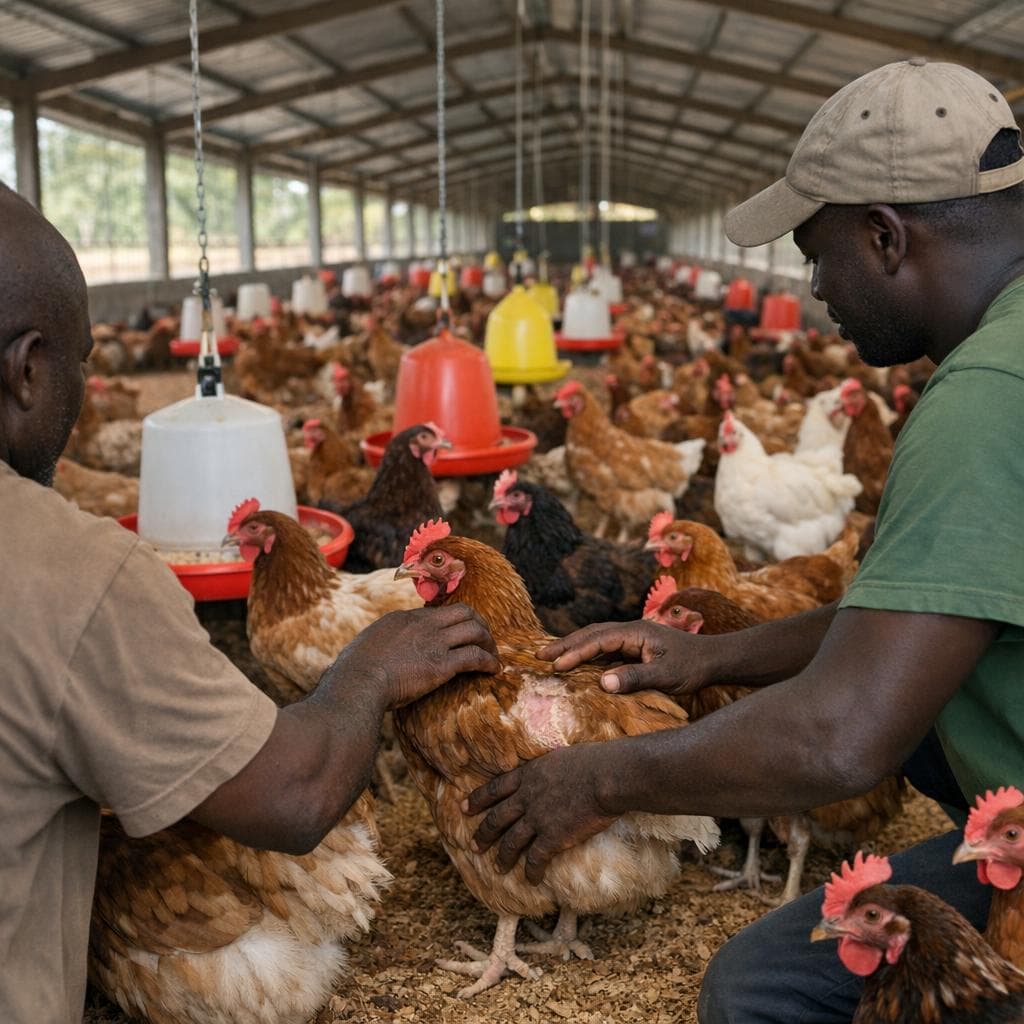
Feather pecking can appear gradually or spread quickly through a flock of pullets. It is manifested by broken or pulled-out feathers, bare patches and sometimes injuries. At the first signs, look for what has changed in the birds’ environment or habits: early intervention helps prevent the behaviour from becoming established.
Observing where and when feather pecking occurs
Start by examining several areas of the poultry house and observing the pullets at different times of the day. Is the behaviour concentrated near the feeders, drinkers or a corner of the chicken coop? Are certain times more affected? Note the areas of the body affected, the number of birds involved and any recent changes in flock management. These observations will help distinguish a localised problem from a difficulty affecting the whole poultry house.
Also check whether the weakest or most timid birds are regularly chased. Marked competition around the equipment can prevent some pullets from accessing water and feed calmly, and encourage tension.
Checking the poultry house conditions
Heat, insufficient ventilation, damp litter or lighting that is too intense can make birds more agitated. Walk through the poultry house: does the air circulate properly without a direct draught? Does the litter remain dry and crumbly? Is the light even, with no excessively bright areas? Gradually correct the points you observe and then check the flock’s behaviour.
Also ensure that feeders and drinkers are practically distributed. Pullets must be able to access them without jostling. Monitor feed levels and water availability, especially during hot periods or after a change to the poultry house layout.
Reducing boredom and monitoring changes
An environment lacking stimulation can encourage pecking at feathers. Maintain litter that is suitable for scratching and searching for material, and provide safe activities that pose no risk of injury or contamination. Keep the poultry house clean and remove damaged or dangerous items.
Keep a simple record of your observations: date of appearance, location, progression and recent changes concerning feed, lighting, ventilation or equipment. Avoid changing several parameters at the same time, so that you can better identify what improves or worsens the situation.
If injuries appear, feather loss spreads or the behaviour persists despite your checks, contact the local veterinarian. In Côte d'Ivoire, observe your flock from today, record your findings and first correct the visible factors in the poultry house and access to resources.
--- *Source: NEXTEKCI — In-house expertise — summary and analysis by NEXTEKCI.*