

Signs to watch for
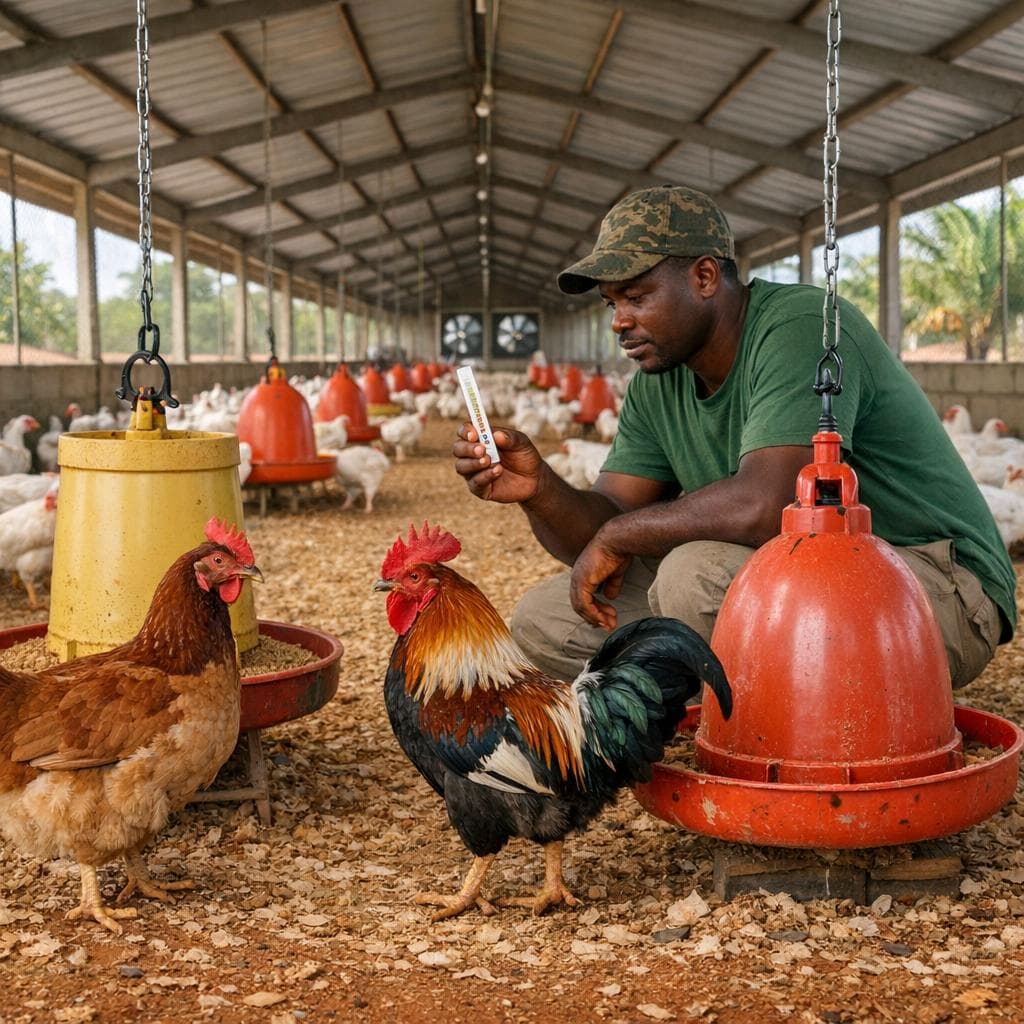
Avian infectious bronchitis is a contagious disease that mainly affects the respiratory tract of poultry. In the chicken coop, certain visible signs should attract your attention: repeated sneezing, coughing, rattling, discharge from the nostrils or eyes, and more difficult breathing. The birds may also seem less active, huddle together, or eat and drink less. In layers, a drop in egg production or eggs of unusual quality may also be observed.
These signs alone do not make it possible to confirm the cause of the problem. Other factors can cause respiratory disorders. Note when they appear, which poultry houses are affected and how the flock’s condition changes. If the signs become more widespread or worsen, contact the local veterinarian promptly. Only they can assess the situation and tell you what to do. Avoid self-medication and do not give any product without their advice.
Reduce risks every day
Prevention is based first and foremost on good organisation of the chicken coop and movements around the flock:
- Limit visits. Restrict access to essential people and ask them to wear clean shoes dedicated to the poultry house.
- Install a footbath at the entrance. Keep it clean and replace its contents according to the instructions for use. A dirty or neglected footbath is not a reliable barrier.
- Clean between flocks. After a flock leaves, remove droppings and debris, clean the equipment and leave the poultry house empty for an appropriate period before a new flock arrives. Ask your technician or veterinarian for advice on organising this sanitary break.
- Monitor the environment. Damp litter, excessive dust or poor air circulation can weaken the poultry. Check the ventilation regularly, without creating direct draughts on the birds.
- Maintain drinkers and feeders. Keep them clean and accessible, then observe the flock’s consumption and behaviour every day.
In Côte d'Ivoire, heat, humidity and dust around the poultry house make daily monitoring particularly important. Keep entrances clean and avoid moving from one poultry farm to another without appropriate hygiene measures.
Take action
Starting today, record the signs observed, control access to the chicken coop and check that the litter and equipment are clean. At the slightest health concern, contact the local veterinarian: a prompt response and regular hygiene practices help better protect your farm.
--- *Source: NEXTEKCI — In-house expertise — summary and analysis by NEXTEKCI.*