

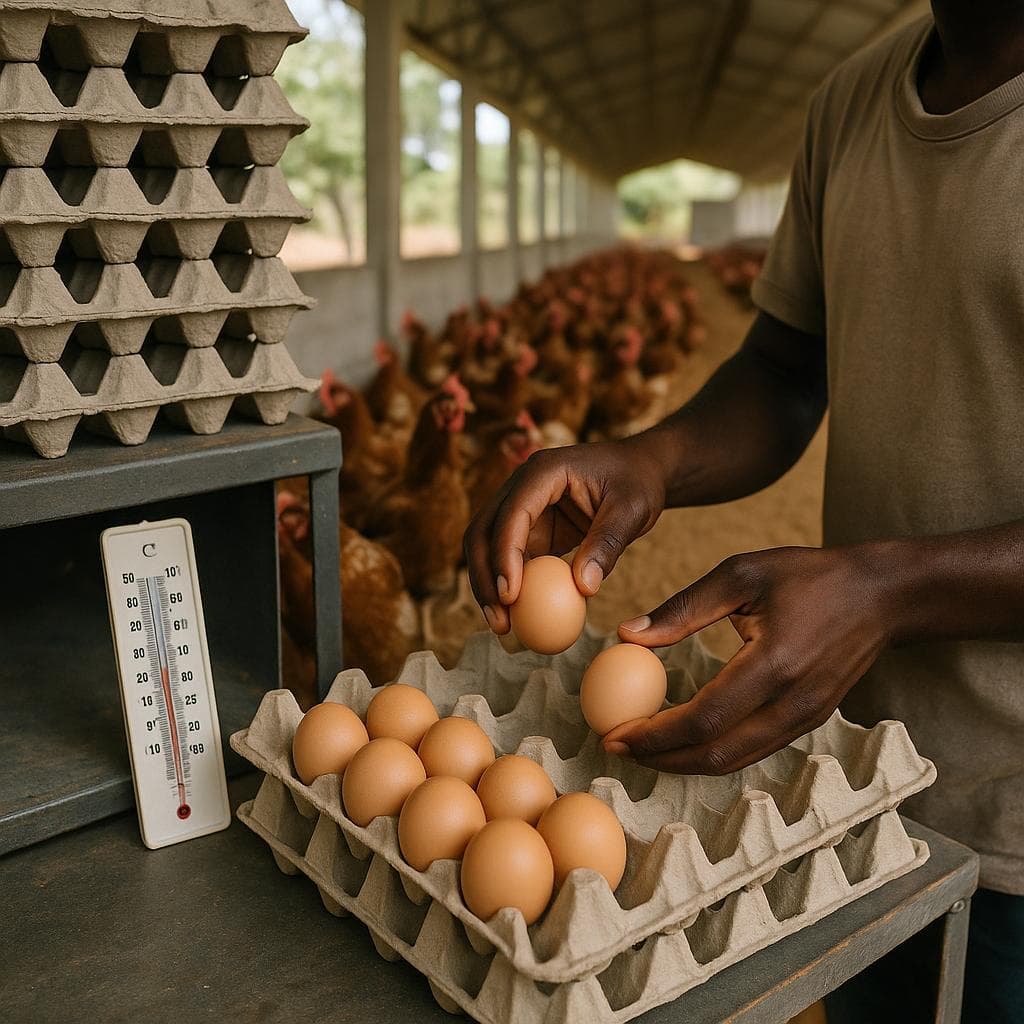
Eggs intended for incubation are fragile: a cracked or soiled shell can compromise their storage and encourage contamination. From collection to departure from the farm, a few precautions can help limit losses and preserve their quality.
Collect frequently and handle with care
Collect the eggs several times a day, especially when temperatures are high. Eggs left in the nests for a long time are more likely to be trampled, dirtied or exposed to heat. Wash your hands before collecting and use clean, dry and suitable trays.
Handle the eggs gently, without squeezing or knocking them together. Avoid sliding them from one container to another and do not fill the trays beyond their capacity. During transport around the farm, walk gently and protect the trays from jolts.
Set aside eggs unsuitable for incubation
When sorting, set aside any broken, cracked, very dirty or abnormally shaped eggs. Do not try to keep a cracked egg with adhesive tape: the shell is a natural barrier against microbes.
For hatching eggs, avoid washing them with water or with a damp cloth. Moisture and rubbing can damage the shell’s natural protection or encourage contaminants to penetrate. If an egg is slightly dusty, set it aside according to your hatchery’s instructions rather than cleaning it with plenty of water.
Prepare a suitable storage area
Choose a clean, quiet, shaded room reserved for eggs as far as possible. It should be ventilated, without direct draughts, and protected from the sun, chemicals, animals and damp feed. Maintain a cool, stable temperature; for hatching eggs, a range of around 15 to 18 °C is generally recommended. Avoid a domestic refrigerator, which is often too cold and subject to fluctuations when opened.
Store the eggs point downwards on clean trays. Do not put the trays on the floor or stack them unstably. Moderate humidity helps limit drying out; above all, avoid very damp rooms where condensation may form. Record the collection date and clearly separate the batches. Use the oldest eggs first and arrange for their collection without unnecessary delay.
In Côte d'Ivoire, heat can quickly worsen storage conditions. Make collection, sorting and checking the room a daily routine: these practical steps reduce breakage and help deliver better-protected eggs.
--- *Source: NEXTEKCI — In-house expertise — summary and analysis by NEXTEKCI.*