

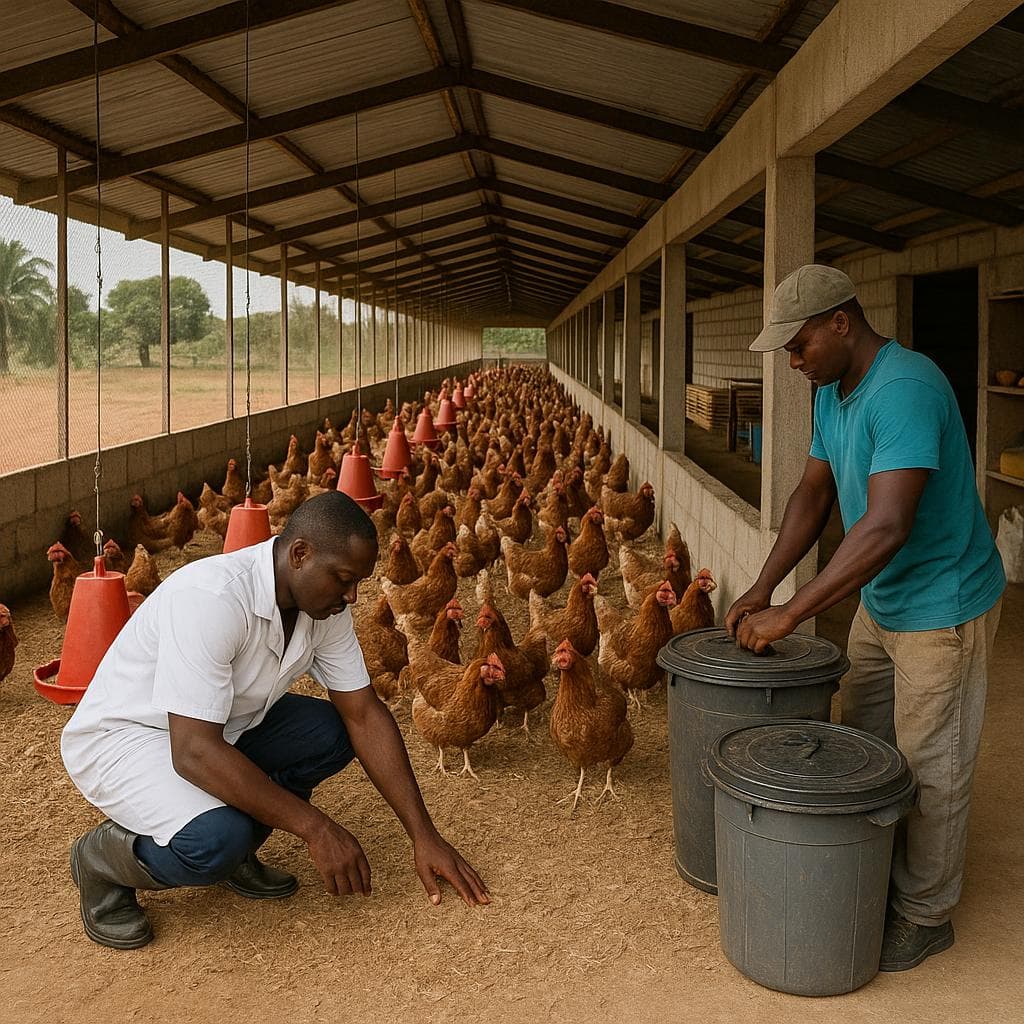
Manure and used litter can be put to good use in the garden or fields, but if poorly managed, they attract flies, produce odours and encourage dampness in the chicken coop. Prevention starts in the poultry house, then continues during storage and removal.
Keep the litter dry
Damp litter is often a sign of a problem that needs to be corrected quickly. Check the drinkers: a leak, incorrect adjustment or overflow can quickly wet the floor. Repair faulty equipment and distribute the water in a way that avoids waterlogged areas. Also make sure the roof does not let rain in and that air circulates properly, without exposing the birds to draughts.
Regularly remove caked or very damp patches, especially under the drinkers and around walkways. Replace them with clean, dry litter. Avoid simply covering a wet area: the moisture and odours would remain trapped underneath. When removing it, wear gloves and a mask, and minimise dust by handling the material carefully.
Dry and store under cover
After cleaning, transport the manure and used litter to a designated area, away from the chicken coop, homes and water sources. For drying, spread the material in an aerated layer on a dedicated surface, protected from the rain. A tarpaulin can protect the pile, but avoid covering it completely if this prevents aeration.
Set up the storage area on stable ground that limits seepage and runoff towards wells, waterways or areas used for circulation. Cover the materials without allowing water to accumulate. A well-contained, regularly aerated pile limits odours and makes access easier for maintenance.
Remove without contaminating the surroundings
Do not let manure accumulate near the poultry house, and do not dump it in a drain, waterway or neighbouring plot. To put it to good use as a soil amendment, favour well-managed composting, with dry plant material to balance the mixture. Protect the compost from rain and turn it to promote aeration. Avoid spreading fresh manure near crops that are ready to be harvested.
Clean tools after use and prevent animals from accessing the pile. If odours persist, there are many flies, or the litter remains damp, first look for the cause: a leak, seepage, drainage or insufficient ventilation.
Key points: regularly inspect the drinkers and litter, remove wet patches without delay, then store the manure under cover and away from water. These simple measures help every poultry farmer in Côte d'Ivoire keep a cleaner chicken coop and a healthy environment.
--- *Source: NEXTEKCI — In-house expertise — summary and analysis by NEXTEKCI.*