

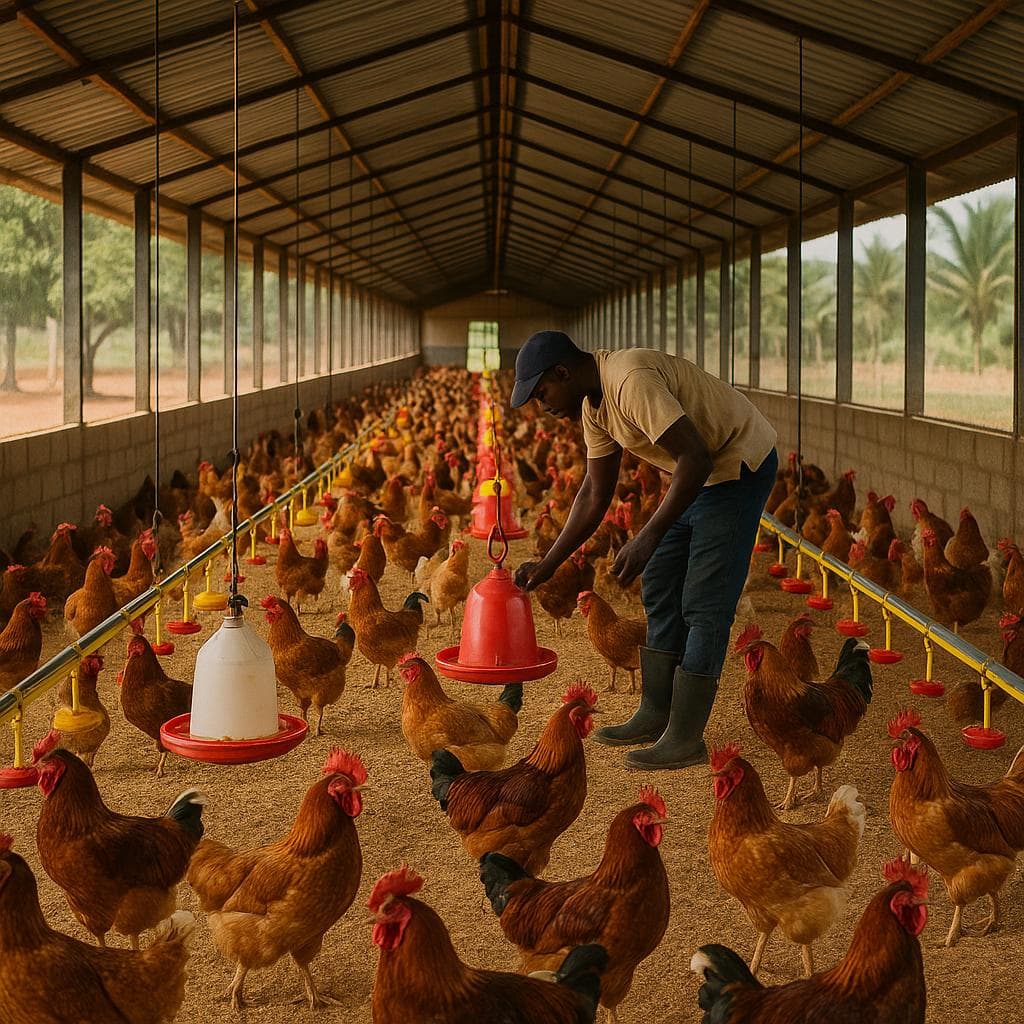
Poultry welfare is increasingly part of discussions around poultry production. A recent news item highlights the efforts made by poultry farmers to improve the animals’ living conditions. Beyond communication, this subject invites us to take a close look at the practices applied every day in poultry houses.
Welfare does not depend on a single intervention. It depends in particular on constant access to clean water, appropriate feed, good ventilation and litter kept in satisfactory condition. Regular observation of the flock also helps to quickly spot changes: reduced activity, unusual consumption, birds moving away from the group or signs of respiratory discomfort. These signs do not always make it possible to identify the cause of a problem on their own, but they warrant a prompt check of rearing conditions and, if necessary, advice from a professional.
In Ivorian poultry farms, heat and humidity can make it difficult to maintain a stable environment. Air circulation, the availability of drinkers and control of stocking density must therefore be monitored carefully, taking into account the age of the poultry and the actual capacity of the poultry house. Litter that is too wet, for example, can reduce the animals’ comfort and should prompt an investigation into the cause of the problem: a leak, insufficient ventilation or inadequate water management.
Highlighting poultry farmers’ efforts also means being able to explain the practices put in place. Keeping simple notes on mortality, consumption, health interventions and observed incidents makes it possible to monitor the flock’s progress and better pass on information to the team or the technical adviser. This approach does not replace care or biosecurity rules; it helps to make more consistent decisions.
What this means in practical terms for a poultry farmer in Côte d’Ivoire
Walk around the poultry house every day, check the water, feed, ventilation and condition of the litter, then note any abnormalities. During hot periods, pay particular attention to air circulation and access to drinkers. If unusual behaviour or an increase in losses occurs, quickly look for the cause and seek advice. These regular practices help protect the poultry and better manage the flock.
--- *Source: Réussir Volailles — summary and analysis by NEXTEKCI.*