

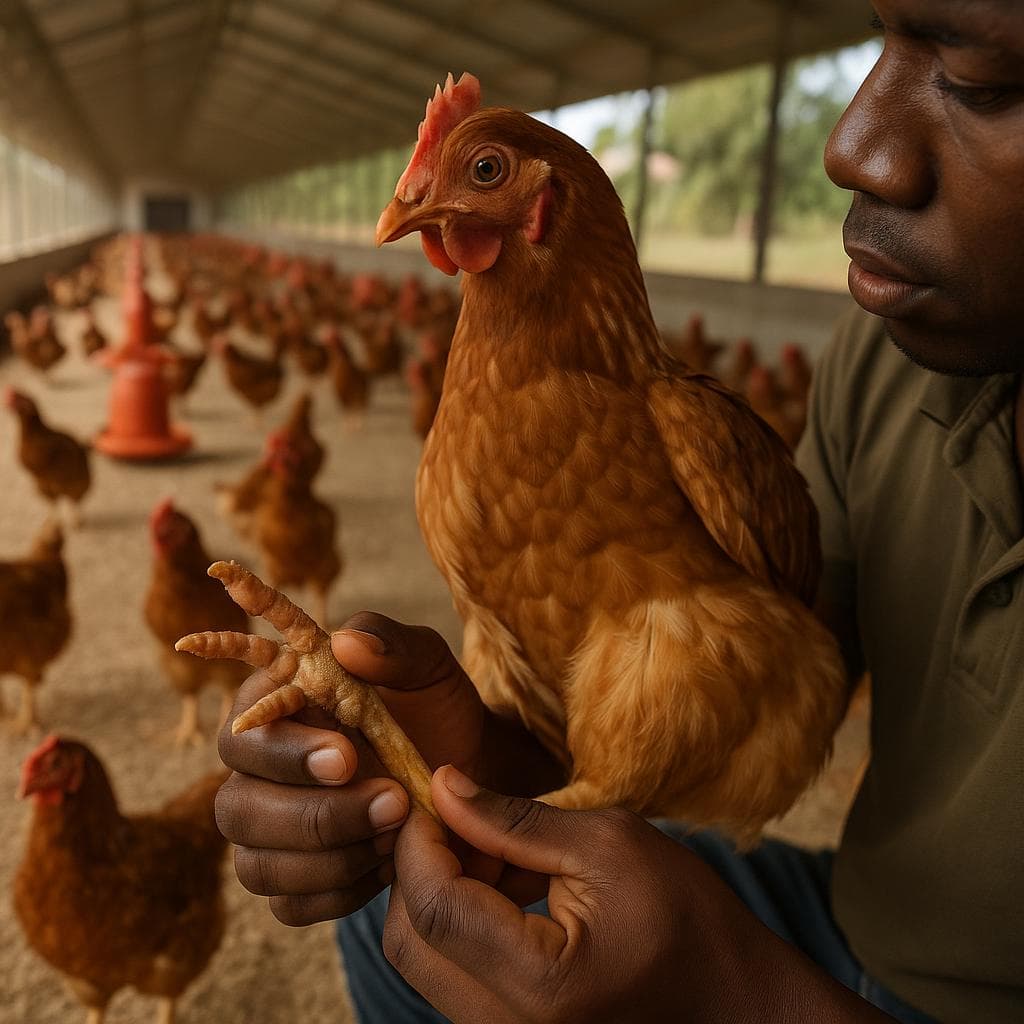
The footpads are the surfaces underneath the feet that bear the chicken’s weight when it walks or rests. Their condition provides useful indications of the birds’ comfort and the quality of the litter. Spotting a lesion early often makes it possible to correct poultry-rearing conditions before more chickens are affected.
What signs should you look for?
Gently examine a few birds, particularly those that are limping, remain lying down or move around less. Compare both feet and look at the sole, toes and joints.
A healthy footpad is generally intact, with no swelling or wound. Irritation may appear as redness or darker discolouration. If the skin becomes thickened, cracked or forms a scab, the lesion is more advanced. An open wound, a black area, pus or marked swelling requires prompt attention. Pain may cause the bird to limp and reduce its access to water and feed.
These signs are not always enough to establish a diagnosis. If several chickens are affected, if the lesions worsen or if the birds appear lethargic, seek advice from a veterinarian or a qualified poultry-rearing officer.
Look for the cause in the chicken coop
A common cause is wet or compacted litter, which keeps the feet in prolonged contact with moisture and droppings. Check around the drinkers, for leaks, areas where water collects and poorly ventilated spots. Insufficient ventilation, high humidity and soiled litter can make the problem worse.
Run your hand over the litter: if it is wet, sticky or forms hard patches, take action. Repair the drinkers, adjust their height to the size of the birds and remove the waterlogged sections. Add clean, dry litter without covering up a persistent source of moisture. Also ensure good air circulation, while avoiding direct draughts on the animals.
Take action without irritating the feet
Regularly monitor the condition of the footpads and note where lesions appear. This helps identify a localised problem, for example around a drinker. Handle the chickens gently and keep severely affected birds apart if this can be done without stressing them. Do not apply caustic products or irritating remedies: they can make the wounds worse. In Côte d'Ivoire, incorporating these checks into the chicken coop routine helps address dampness quickly and preserve the flock’s well-being.
--- *Source: NEXTEKCI — In-house expertise — summary and analysis by NEXTEKCI.*