

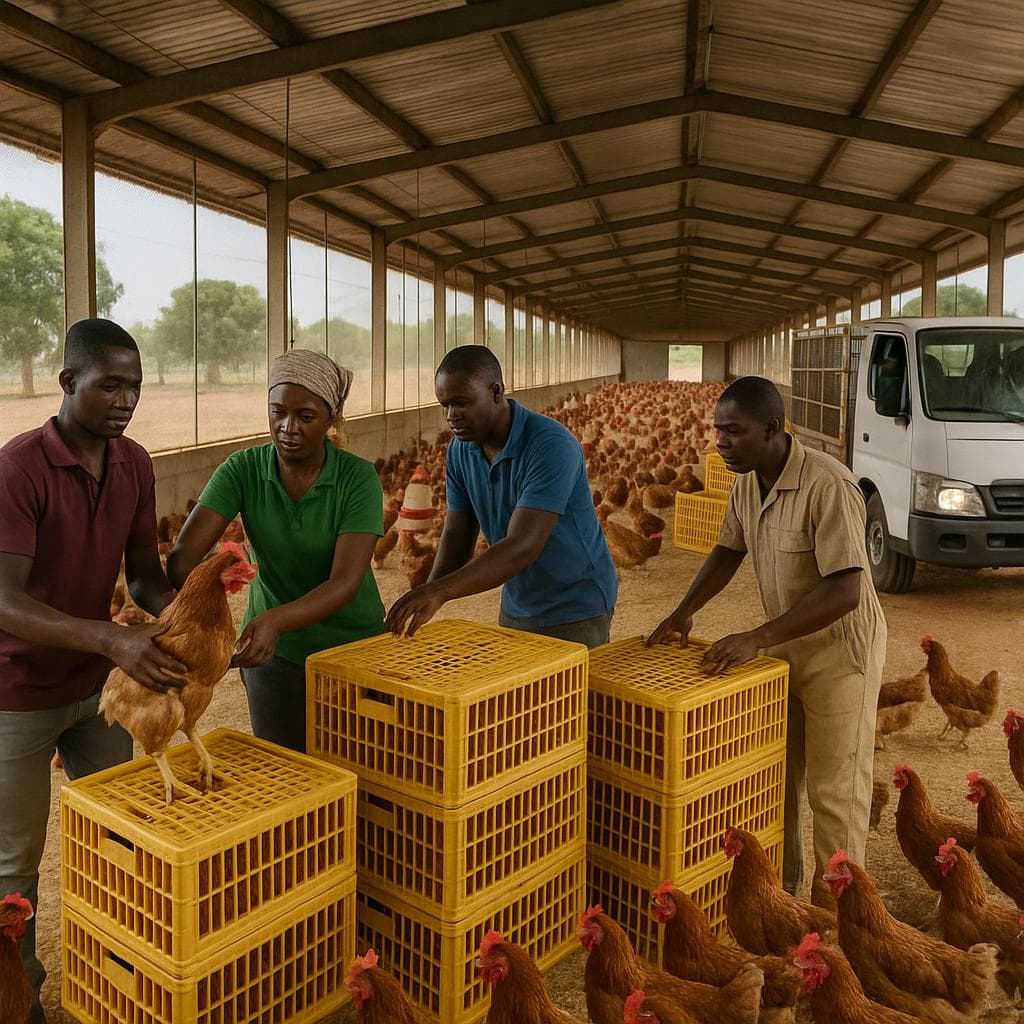
Preparing the poultry house before the buyers arrive
Collection begins before the day of sale. Check the condition of the doors, corridors and exits: the passages must be clear, with no wire, tool or object that could snag the birds. Repair the wire fencing and identify areas where the chickens might get stuck. Prepare clean crates in good condition, as well as suitable lighting if the work is carried out early in the morning or in the evening.
Gather the people who will take part in the work in advance. Assign one person to guide the birds, another to place them in the crates and, if possible, one person to keep track of the count. Explain the method to the whole team: calm, coordinated movements prevent running, shouting and repeated handling.
Reducing stress during capture
Choose a time when it is relatively cool, for example early in the morning or in the evening, especially during hot periods. Reduce the light intensity without plunging the poultry house into complete darkness: a calmer atmosphere limits sudden movements and allows the workers to see properly.
Gradually reduce the space available to the birds using clean, stable panels or barriers. Do not push them en masse into a narrow corner. Move slowly, without hitting the walls or waving your arms. Avoid chasing a chicken the full length of the poultry house: guide it towards the capture area and give the team time to catch it properly.
Handling and loading with care
Catch the birds gently, without pulling on a wing, leg or neck. Support their bodies while handling them and avoid throwing them or letting them fall. Do not squeeze the breast, as this can make breathing difficult. Place them directly in suitable crates, without piling them up or exceeding the capacity intended for their size. The crates must remain ventilated and be transported without excessive jolts.
Regularly check the birds that have already been loaded, particularly when it is hot. Avoid leaving the crates in the sun for a long time or in a poorly ventilated vehicle. Keep water available until the time set for collection and transport. For feed management before departure, follow the instructions of the client, carrier or a competent professional, without unnecessarily prolonging feed withdrawal.
Carrying out a final check
Count the birds as you go and record the quantities loaded. Check that no chicken is left hidden in the poultry house and that the crates are properly closed and arranged to allow air to circulate. After departure, clean the equipment and collection route in accordance with the farm’s hygiene rules.
In Côte d'Ivoire, prepare your team and poultry house before confirming the departure: on the day of sale, proceed calmly, handle each chicken with care and check the load before transport.
--- *Source: NEXTEKCI — In-house expertise — summary and analysis by NEXTEKCI.*