

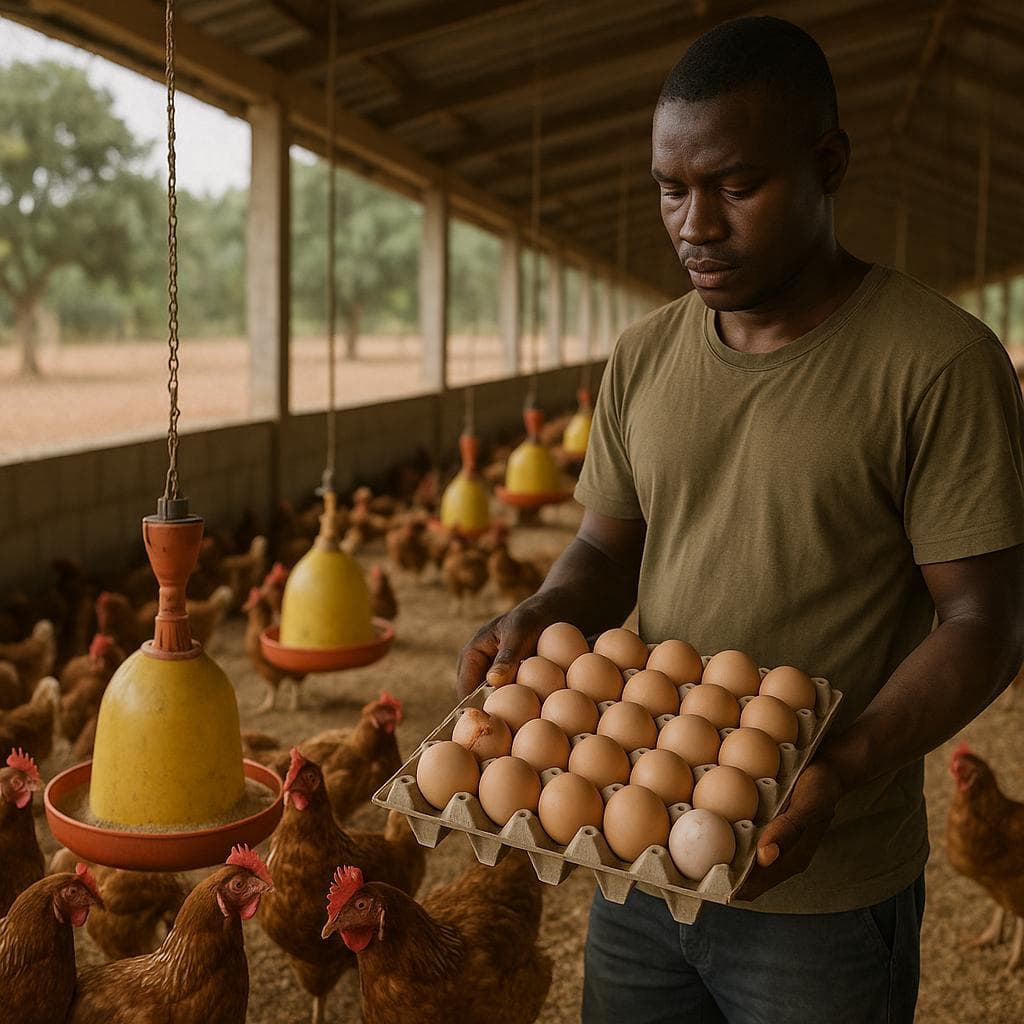
An eggshell that breaks easily leads to downgraded eggs and makes collection more difficult. In layers, calcium and phosphorus contribute to eggshell formation, but their balance matters just as much as their presence in the ration. Before adding a supplement at random, check the feed and rearing conditions.
Check the ration and minerals
Calcium is essential for eggshell strength. It must be supplied in an amount suited to the laying stage and in a form that hens can use. Crushed seashells or limestone intended for animal feed can be sources of calcium, provided their quality and dosage are controlled. Particles of different sizes, some of which remain longer in the gizzard, can help provide calcium during eggshell formation. Ask a technician for advice on choosing a form suited to your feed.
Phosphorus also plays a role in mineral metabolism. An excess or deficiency, as well as an imbalance between calcium and available phosphorus, can disrupt the use of minerals. Therefore, avoid correcting the ration by adding products separately without knowing its composition. Check the feed label, whether it is suitable for layers, and its storage conditions. Feed that is damp, mouldy or poorly stored should be discarded: it may lose quality and pose a health risk.
Observe the water, heat and hens
During periods of intense heat, which are common in Côte d'Ivoire, hens may eat less feed. The ration then provides less calcium and other nutrients. Make sure clean water is available at all times, that the drinkers are working and that the poultry house is adequately ventilated. Avoid sudden feed changes and limit sources of stress, particularly repeated handling.
Fragile eggshells may also be linked to the age of the layers, a disease or a flock management problem. Note when the defect appears, monitor feed consumption and look for other unusual signs: a drop in laying rate, lethargic hens or misshapen eggshells. If the problem persists, consult a veterinarian or technician rather than adding more and more supplements.
Take a methodical approach
Start by examining a few eggs, the feed, the water and the condition of the poultry house. Record your observations and check that the ration is properly formulated for layers. In Côte d'Ivoire, also adapt ventilation and access to water during hot periods. Have the flock checked if the eggshells remain fragile: a targeted correction is better than an improvised addition.
--- *Source: NEXTEKCI — In-house expertise — summary and analysis by NEXTEKCI.*