

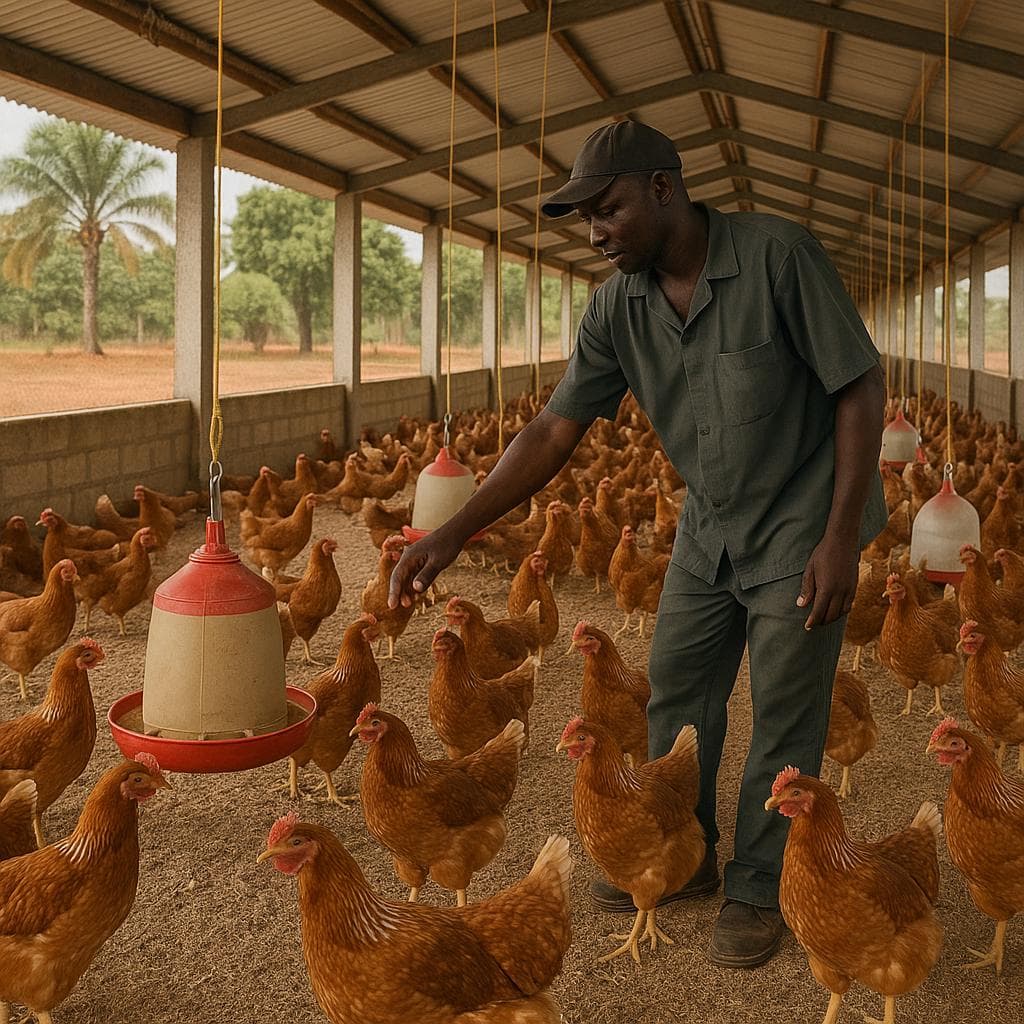
Identifying disparities in the flock
A flock is uneven when some pullets are noticeably smaller or lighter than their flock mates, have less developed plumage or keep apart from the others. Observe the birds at several times of the day: when feeding, drinking and resting. Also note their activity, the condition of their droppings and the appearance of signs such as coughing, diarrhoea or ruffled feathers.
To monitor growth, regularly weigh a representative sample, taking birds from different areas of the poultry house and not just the easiest ones to catch. Use the same scales and record the results in a farm record book. The trend from one weighing to the next is often more useful than a single observation. If you do not have a suitable benchmark for the breed and age, ask your technician or veterinarian for advice.
Find the cause before making corrections
First check that all the pullets can access the feeders and drinkers. Incorrectly adjusted height, insufficient equipment, low water flow or irregular distribution can give dominant birds an advantage. Distribute the feed properly and check that it is fresh, clean and suitable for the rearing stage.
Next, inspect the poultry house: temperature, ventilation, litter moisture and draughts. In a poultry house that is too hot, too cold or poorly ventilated, birds eat less and distribute themselves unevenly. Also check stocking density and litter quality. Wet litter around the drinkers should be removed and the cause of the moisture corrected.
Uneven growth can also be linked to disease, parasites or a difficult start. If the disparities are accompanied by mortality, reduced appetite or respiratory or digestive signs, do not simply change the ration: have the flock examined by an animal health professional.
Take gradual action and monitor the results
First correct problems with access, water and housing conditions, then monitor progress. If it makes monitoring and access to feed easier, temporarily separate the smaller birds from the more developed ones, provided you give them a clean, quiet and well-equipped space. Avoid sudden changes of feed and repeated handling.
For your next flock, check the distribution of the chicks, brooding, drinking and feed distribution as soon as they arrive. In Côte d'Ivoire, also take periods of high heat into account by maintaining good air circulation and making clean water available. Record your observations, correct any defects found and promptly seek advice from a technician or veterinarian if the flock is not progressing steadily.
--- *Source: NEXTEKCI — In-house expertise — summary and analysis by NEXTEKCI.*