

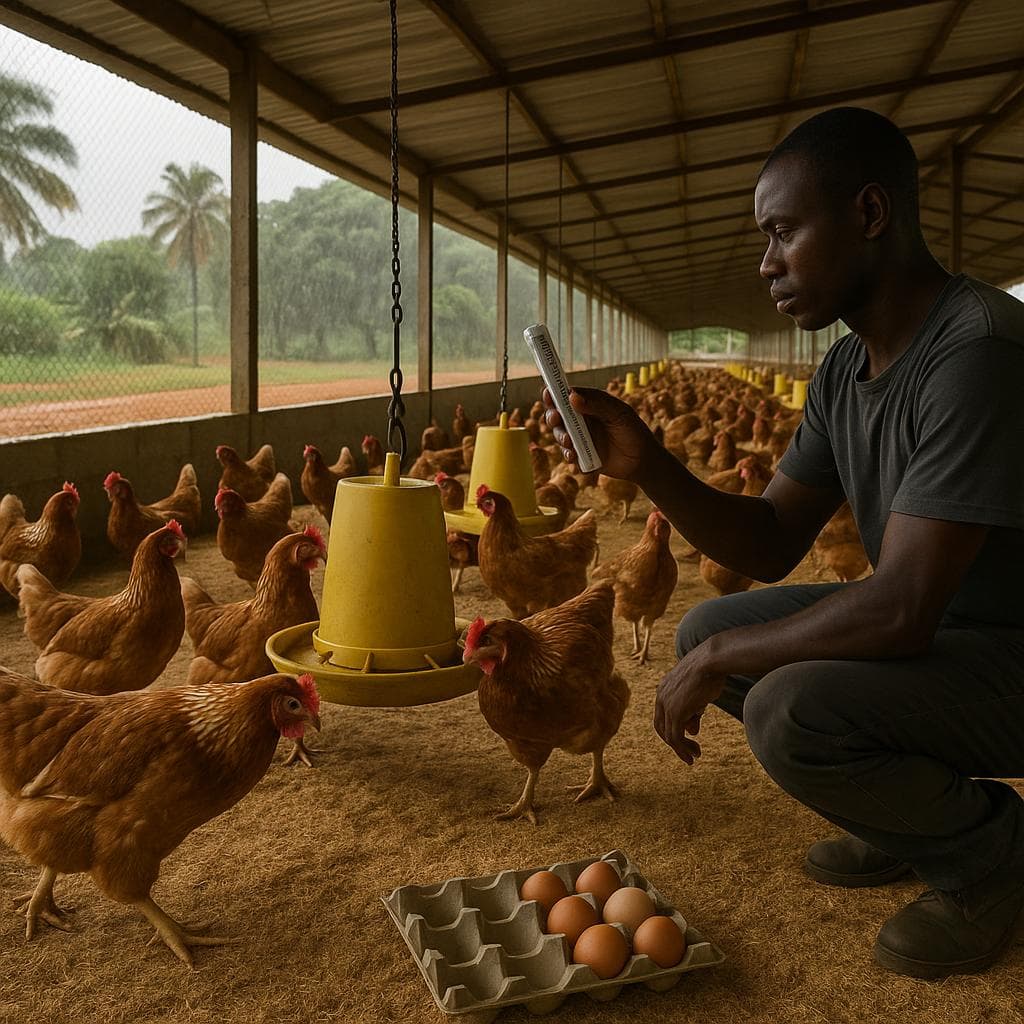
Why the seasons matter
In Côte d'Ivoire, the alternation between dry and rainy periods changes rearing conditions. During hot spells, layers may eat less and drink more. Egg production, egg size and shell quality may then be affected. In the rainy season, humidity, water leaks and insufficient ventilation encourage wet litter and the multiplication of germs or parasites. These effects are not identical in every poultry house: observe your birds and your records rather than relying on a general rule.
Before the hot spells
Check that air circulates properly, without a direct draught on the birds. Clean the openings and fans, and check that they are working before the hottest days. Reduce unnecessary sources of heat in the poultry house and ensure a constant supply of clean, fresh water. Inspect the drinkers regularly to spot blockages, leaks and areas where birds cannot drink easily.
Distribute feed at the coolest times, in accordance with the recommendations of your technician or feed supplier. Avoid sudden changes to the ration. If consumption falls, make a note of it and seek advice from a professional: do not change the feed formula or supplements on your own.
Preparing for the rains
Before the first showers, repair roof leaks and check water drainage around the poultry house. Keep the litter dry by removing soiled areas and quickly correcting watering problems. Wet litter releases more ammonia and can irritate the respiratory tract. Also keep feed protected from water and humidity to preserve its quality.
Strengthen biosecurity measures: limit visits, clean boots and equipment, and avoid carrying mud or droppings from one chicken coop to another. Watch for unusual signs, such as a sudden drop in laying, more fragile shells, abnormal droppings or lethargic birds. If in doubt, contact a veterinarian promptly.
Tracking changes
Record the quantities of feed and water consumed, eggs collected, their quality and mortality every day. Compare trends with weather conditions and the actions taken. These notes help distinguish a seasonal effect from a health, equipment or poultry management problem.
Starting now, inspect your poultry house, check the water and begin daily monitoring: you will be able to adapt your practices before the season disrupts your layers for a prolonged period.
--- *Source: NEXTEKCI — In-house expertise — summary and analysis by NEXTEKCI.*