

Understanding the problem
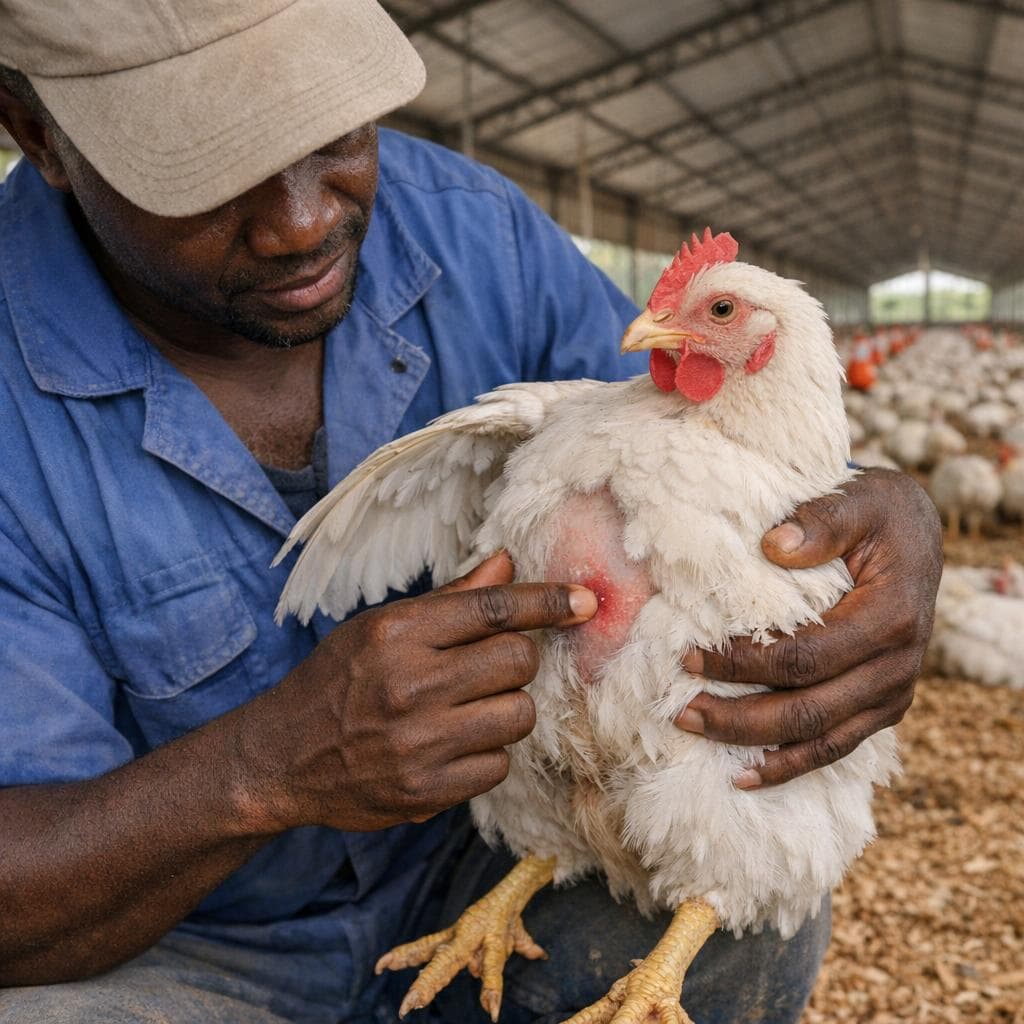
The breastbone is the prominent part of a chicken’s chest. When the bird remains lying for a long time on damp, soiled or compacted litter, the skin can become irritated and damaged. A reddened or thickened area, a blister, a scab or a wound may then be observed on the breastbone. Heavy birds or those that move little may be particularly exposed, especially if the floor is uncomfortable.
These lesions harm the welfare of the poultry and can become more serious if the skin is damaged. Regular checks make it possible to quickly spot visible signs and take action on the conditions in the chicken coop.
Keeping litter dry and soft
Inspect the floor every day, particularly around the drinkers and in areas where the chickens gather. Remove wet or heavily soiled parts, then add clean, dry litter. Compacted litter should be aerated or replaced depending on its condition: it should not form a hard surface on which the birds rest.
Check that the drinkers are stable, suitable for the poultry and correctly adjusted. A leak, overflow or incorrectly adjusted height can quickly make the floor damp. After rain or high ambient humidity, pay particular attention to areas that dry slowly.
Improving the comfort of the poultry house
Ensure sufficient ventilation to remove humidity without creating a direct draught over the animals. Avoid overcrowded areas: the chickens must be able to move around and easily access the feeders and drinkers. Properly distributing the equipment also helps limit crowding and compaction of the litter.
Observe the flock’s behaviour. Birds that remain lying for a long time, avoid walking or show signs of discomfort deserve particular attention. During checks, also look at the skin of the breastbone, without handling the animals unnecessarily.
When should you seek advice?
If you notice a wound, marked inflammation, a worsening condition or several birds affected, contact the local veterinarian. They will be able to assess the situation and advise you according to your poultry farm. Do not attempt to treat the lesions without their advice.
In Côte d'Ivoire, make a habit from today of checking the litter, the drinkers and the condition of the breastbones. A simple routine, carried out every day, contributes to your chickens’ comfort and better monitoring of the flock.
--- *Source: NEXTEKCI — In-house expertise — summary and analysis by NEXTEKCI.*