
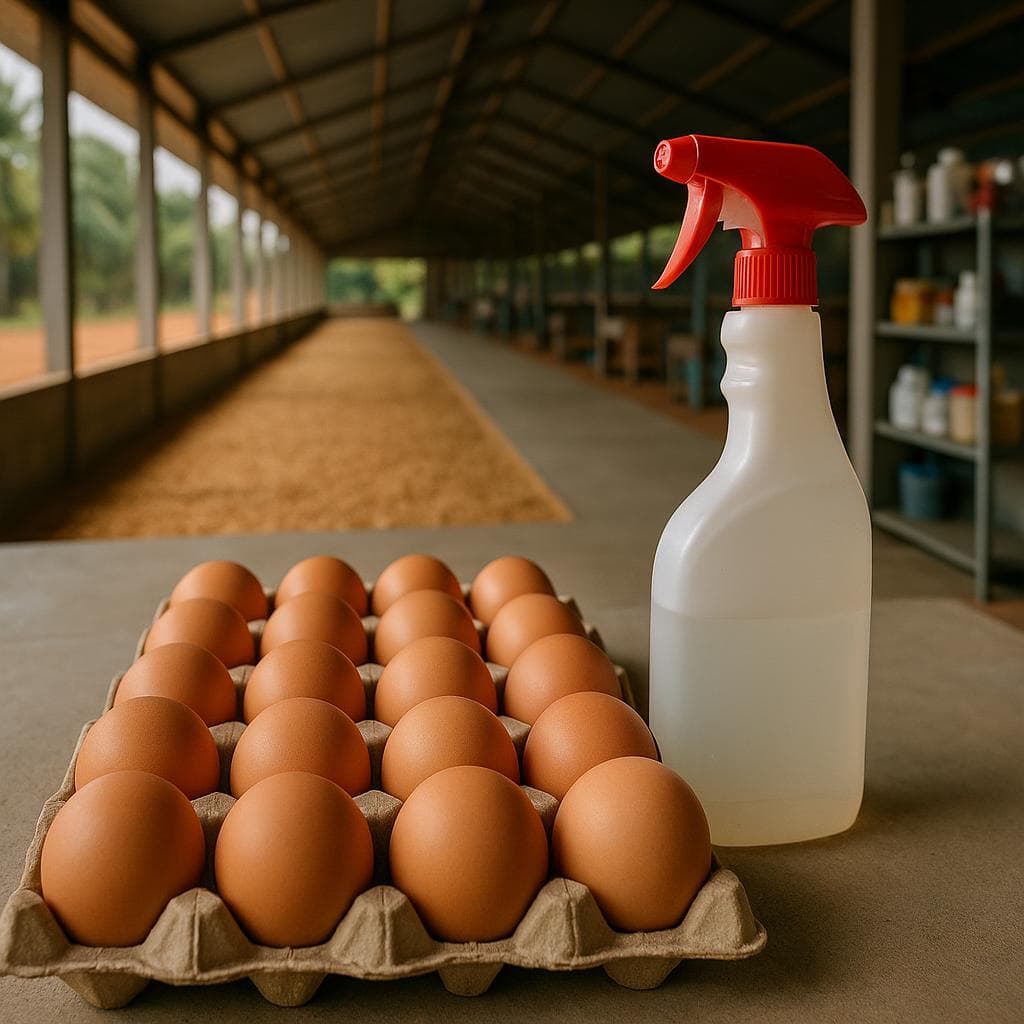
Disinfecting eggs before incubation is an essential step to ensure the health of the chicks and maximise the hatching rate. In Côte d'Ivoire, where climatic conditions can promote the proliferation of bacteria, it is vital to adopt effective disinfection techniques. Here are some methods and products that farmers can use.
1. Preliminary Cleaning
Before proceeding with disinfection, it is important to clean the eggs. This includes removing visible dirt and debris. Use a clean, dry cloth to gently wipe each egg. Avoid water, as it can promote the absorption of contaminants through the shell.
2. Disinfection Methods
#### a. Dry Disinfection This method involves using disinfectant products in powder form. Farmers can sprinkle a powdered disinfectant on the eggs and let it act for a few minutes. This helps eliminate bacteria without moistening the shell.
#### b. Spraying Another effective method is spraying disinfectant solutions. Use a sprayer to apply a solution made of water and disinfectant on the eggs. Ensure that the entire surface is well covered, then let it air dry. This method is particularly effective for eggs with stubborn dirt.
#### c. Disinfectant Bath For more thorough disinfection, you can immerse the eggs in a disinfectant bath. Prepare a solution with an appropriate disinfectant and water. Dip the eggs for a few minutes, then rinse them with clean water and let them dry. This method is very effective but requires special care to avoid cracking the shells.
3. Disinfection Products
There are several products that farmers can use to disinfect eggs. Solutions based on sodium hypochlorite, peracetic acid, or quaternary ammonium compounds are often recommended. Each product has its specifics, so it is essential to follow the manufacturer's instructions regarding dilution and contact time.
4. Precautions to Take
When disinfecting, it is crucial to wear gloves and a mask to avoid direct contact with the chemicals. Additionally, ensure that the workspace is well-ventilated. After disinfection, it is advisable to leave the eggs in a clean, dry place before placing them in incubation.
Conclusion
As a farmer in Côte d'Ivoire, disinfecting eggs before incubation is a step that should not be overlooked. By applying these methods and using the right products, you maximise your chances of obtaining healthy chicks and improving your yield. Take the time to inform yourself about the available products and do not hesitate to exchange with other farmers to share your experiences. For any questions about specific products to use, remember that the daily prices are communicated on WhatsApp.
--- *Source: NEXTEKCI — In-house expertise — summary and analysis by NEXTEKCI.*