

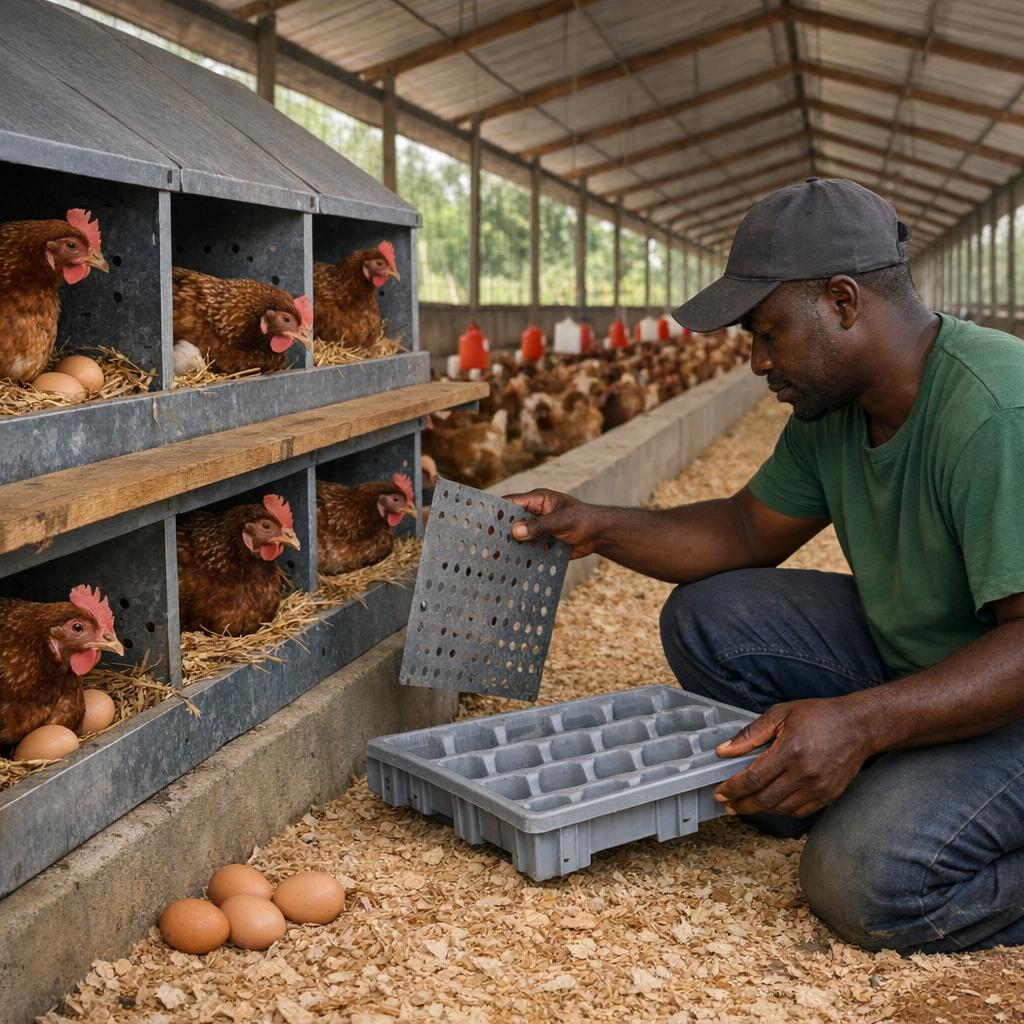
Spotting wear before failure
The bases and supports of nest boxes bear the weight of the hens, repeated movement and moisture from droppings and cleaning. In Côte d'Ivoire, insufficient ventilation or a poultry house that stays damp can accelerate the deterioration of certain materials. Rather than waiting for a base to give way, plan regular checks and note the items to monitor.
Inspect the nest boxes in daylight. Look for bases that sag, cracks, sharp edges, loose fixings and supports that move or lean. On wooden parts, check for softened areas or insect damage. On metal parts, look for corrosion and joints that are becoming deformed. An unstable or difficult-to-clean nest box needs prompt attention.
Keep a simple record
After each thorough cleaning, check the condition of the bases and fixings. Once a month, carry out a more thorough inspection and record your observations in a notebook: location, defect identified, planned action and inspection date. This record helps distinguish isolated wear from a problem affecting several rows.
Also check the surroundings. A leaking drinker, insufficient water drainage or poor air circulation can keep materials damp. Correcting these causes helps preserve the equipment. Keep the surrounding areas clean and avoid placing heavy objects on the nest boxes or their supports.
Plan the replacement
As soon as a part shows signs of weakness, assess whether it can remain in service safely while you prepare its replacement. If the base is sagging, a fixing no longer holds or an edge could injure a hen, secure the area and act without delay. Do not rely on a temporary repair for a structure that has become unstable.
Prepare the replacement parts before dismantling a row: check the dimensions, compatibility with the structure and ease of cleaning. If the poultry house has several areas, plan the work in stages, taking into account the periods when the flock’s organisation allows for simpler intervention. After installation, check stability, the absence of dangerous sharp edges and accessibility for maintenance.
Regular checks turn nest box replacement into a planned task rather than an emergency. This week, inspect one row, note the weakened parts and draw up your work schedule to keep the equipment in your poultry farm safe and functional.
--- *Source: NEXTEKCI — In-house expertise — summary and analysis by NEXTEKCI.*