
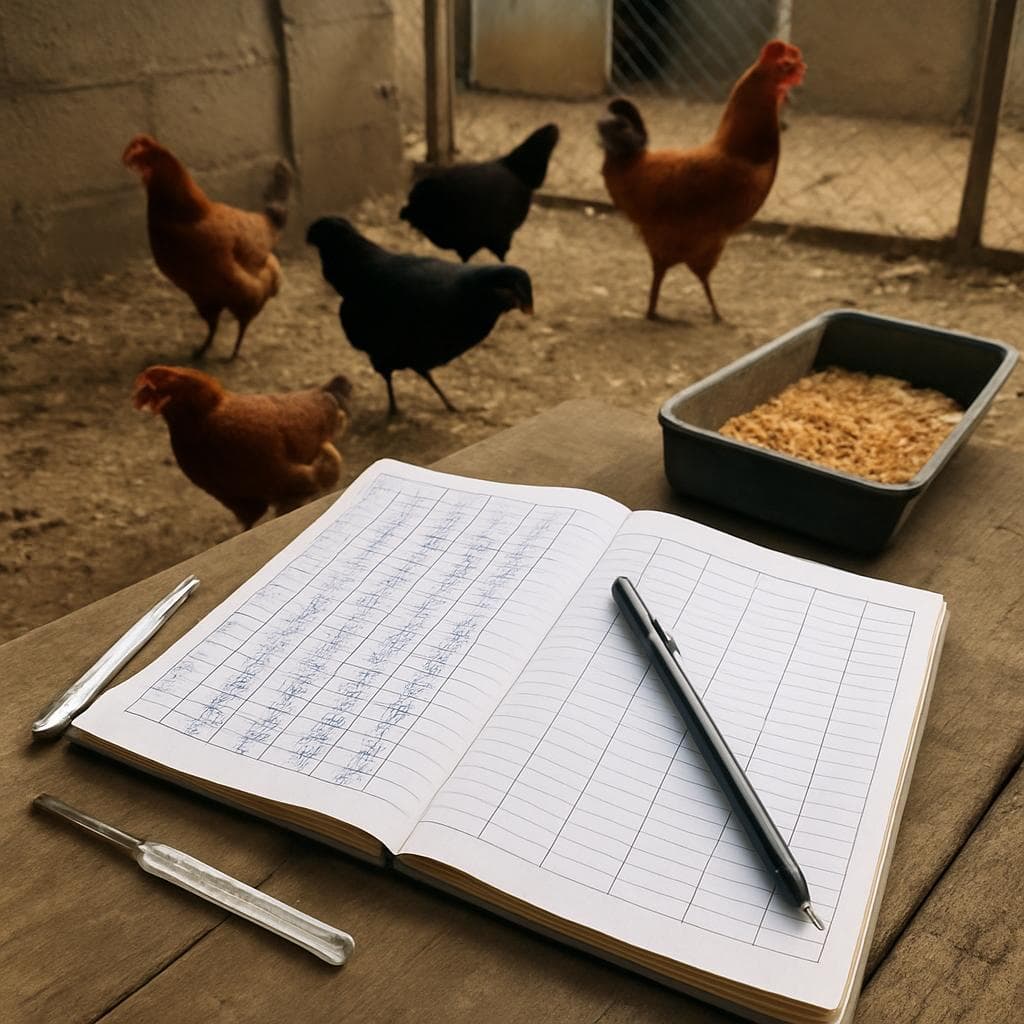
Managing a poultry farm requires particular attention to detail and good organisation. Keeping a farm record book is an indispensable tool for Ivorian poultry farmers wishing to effectively manage their flock. Here are the essential figures to note each day.
1. The number of poultry
It is crucial to start with the total number of poultry present in your farm. This figure should be updated daily, especially during the arrival of new day-old chicks or any potential losses. This will allow you to track the growth of your flock and anticipate the needs for feed and care.
2. Feed consumption
Note daily the amount of feed consumed by your flock. This will help you assess the appetite of your poultry and adjust the rations if necessary. Abnormal consumption can also be an indicator of health issues or stress.
3. Sanitary conditions
Record observations related to the health of your poultry. This includes the onset of diseases, treatments administered, as well as vaccinations carried out. A rigorous monitoring of sanitary conditions allows you to quickly detect problems and act accordingly.
4. Mortality
It is imperative to note any cases of mortality in your flock. Recording the causes of death, if identified, will help you understand risk factors and implement preventive measures. Accurate monitoring of mortality is essential for maintaining a profitable farm.
5. Growth and weight
Conduct regular weighings of your poultry to track their growth. Note these weights in your record book to assess whether your poultry are meeting the expected growth standards. This will allow you to adjust your feeding and farming practices if necessary.
6. Farming costs
Although we cannot discuss specific amounts, it is essential to keep a record of costs related to feed, veterinary care, and facility maintenance. This will help you better understand the profitability of your farm and identify areas where savings can be made.
7. Sales and income
Finally, note the sales made and the income generated from the sale of your poultry. This will help you assess the long-term performance of your farm and plan your future investments.
Conclusion
Keeping a farm record book is an essential practice for any poultry farmer in Côte d'Ivoire. By noting these key figures each day, you will be able to better manage your flock, anticipate problems, and optimise your farming practices. Commit today to establishing this routine to improve the management of your farm and maximise your success.
--- *Source: NEXTEKCI — In-house expertise — summary and analysis by NEXTEKCI.*