
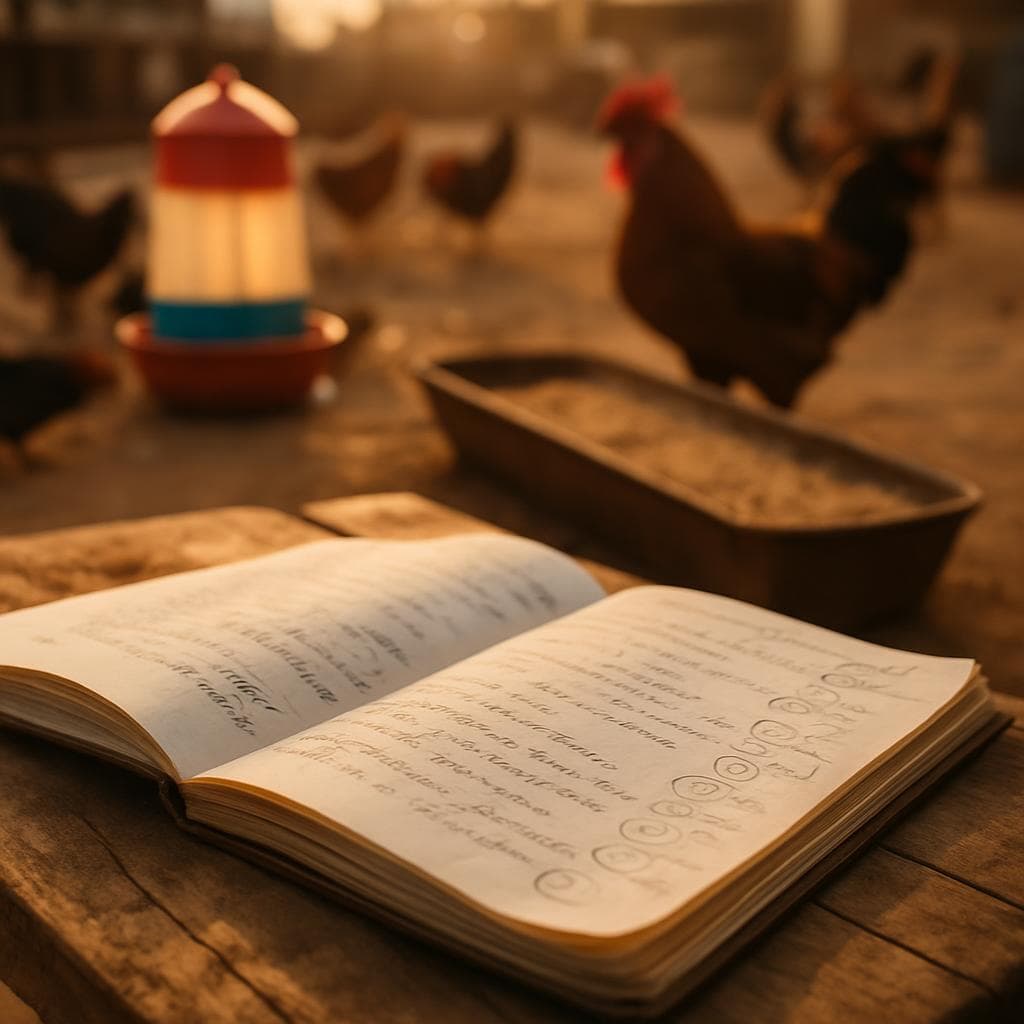
Poultry farming, whether for meat or egg production, requires rigorous and methodical management. One of the most valuable tools for a farmer is the farm record book. This allows you to track daily key performance indicators of the flock, anticipate problems, and optimise results. Here are some practical tips on the figures to note each day.
1. Monitoring mortality
It is crucial to note the number of dead birds each day. This figure allows for the quick detection of health problems within the flock. By recording the causes, if identifiable, you will better understand outbreaks or environmental issues that could affect your farming. High mortality can be a sign of disease, poor feed management, or environmental stress.
2. Feed consumption
The amount of food consumed by your birds should be noted daily. This helps you assess the health of your flock and adjust the feeding if necessary. A sudden decrease in consumption may indicate a health problem, while excessive consumption may be a sign of poor feed quality. By keeping an accurate record, you will also be able to calculate the cost of feeding and optimise your expenses.
3. Average weight of the birds
Measuring the average weight of your birds at regular intervals will allow you to track their growth. Note these weights in your record book and compare them with the growth standards for your type of poultry. This will help you adjust diets and plan sales at the right time, thereby maximising your profits.
4. Egg production (if applicable)
For laying hen farmers, monitoring egg production is essential. Note the number of eggs laid each day, as well as their quality. This will allow you to identify periods of optimal laying and detect any health or nutritional problems that could affect production.
5. Environmental conditions
The conditions in which your birds live are equally important. Note the temperature, humidity, and ventilation of your farm. These factors directly influence the health and productivity of your flock. A poorly controlled environment can lead to diseases and reduced production.
6. Treatments and vaccinations
Each time you administer a treatment or vaccination, note it down. This will allow you to keep track of health interventions and assess their effectiveness. In the event of an outbreak, this information is valuable for determining causes and appropriate solutions.
Conclusion
Keeping a farm record book is an essential practice for every poultry farmer in Côte d'Ivoire. By noting key figures daily, you will be able to manage your flock effectively, anticipate problems, and optimise your performance. Commit today to establishing this routine and observe the benefits it will bring to your farming. Rigor and organisation are key allies in ensuring the success of your poultry activity.
--- *Source: NEXTEKCI — In-house expertise — summary and analysis by NEXTEKCI.*