
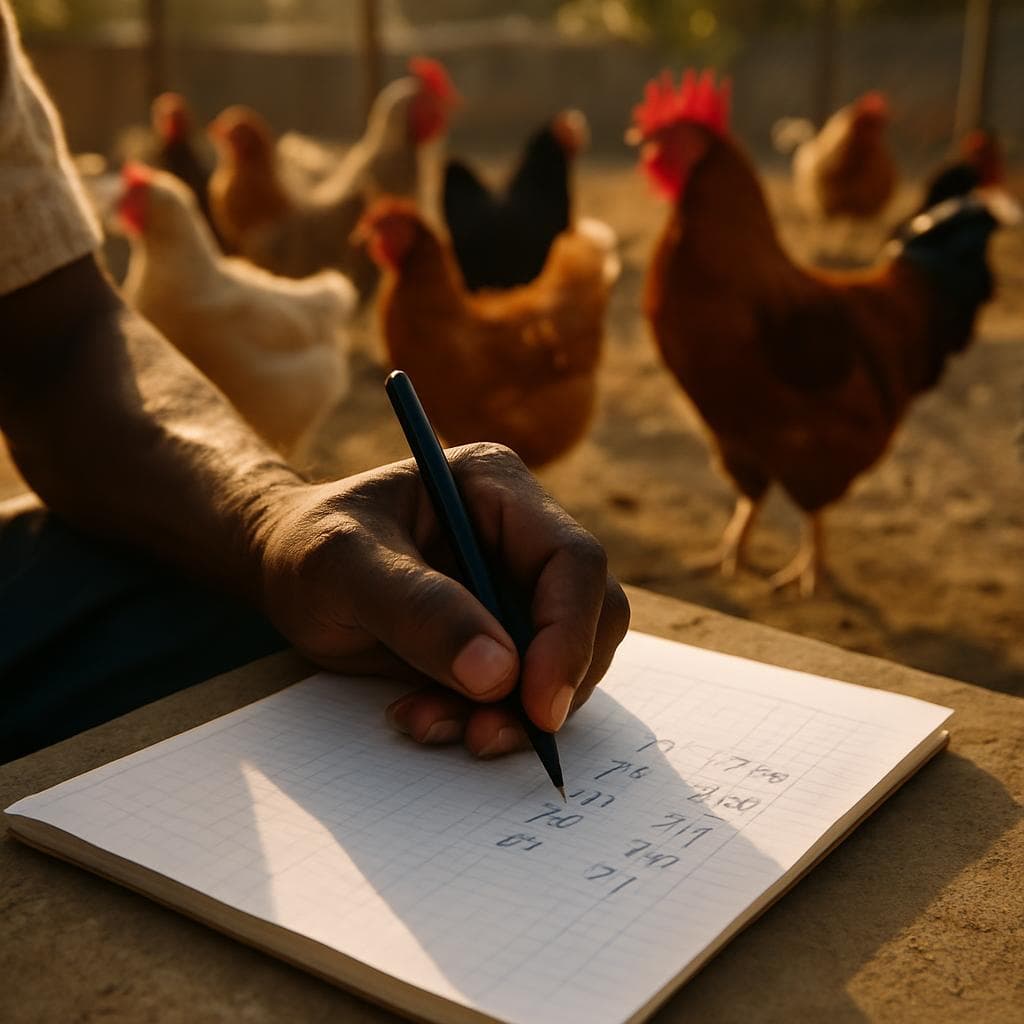
Managing a poultry farm requires particular attention to detail. Keeping a farm record book is an essential practice for poultry farmers, as it allows you to track the progress of your flock and quickly identify potential issues. Here are the essential figures to note each day to effectively manage your poultry farming.
1. Flock size
It is crucial to note the number of poultry present in your farm. This includes chicks, young poultry, and adults. Daily monitoring will allow you to quickly detect any losses due to diseases or mortality. It is also useful to track births and sales.
2. Feed consumption
The amount of feed consumed per day is a key indicator of the health of your poultry. Note the quantity of feed given and observe the variations. A sudden decrease in consumption may be a sign of a health issue or stress within the group. In parallel, you can also track water consumption, which is equally important.
3. Average weight
Regularly weigh a sample of your poultry to determine the average weight. This monitoring helps you assess the growth and performance of your flock. Significant variations from weight standards may indicate feeding or health problems.
4. Mortality rate
Good monitoring of mortality is essential for diagnosing health or management issues. Note the number of poultry that died each day and try to identify the causes. This will allow you to act quickly to prevent further losses.
5. Health and vaccination
Keep a record of treatments administered, vaccines received, and diseases observed. This will help you track the health history of your farm and plan future vaccinations and preventive care.
6. Environmental conditions
The living conditions of your poultry have a direct impact on their health and productivity. Note the temperatures, humidity, and other environmental factors. This will allow you to adjust the conditions of your farm according to the needs of your poultry.
7. Operating costs
Although we cannot go into financial details, it is essential to note the daily expenses related to feed, veterinary care, equipment, and other operating costs. This will help you manage your budget and assess the profitability of your farm.
Conclusion
Keeping a farm record book is an indispensable tool for any poultry farmer. By noting these key figures each day, you will be able to manage your flock more effectively, anticipate problems, and improve the profitability of your business. Don't wait any longer, start tracking these indicators today to optimise your farm and ensure the health and well-being of your poultry.
--- *Source: NEXTEKCI — In-house expertise — summary and analysis by NEXTEKCI.*