
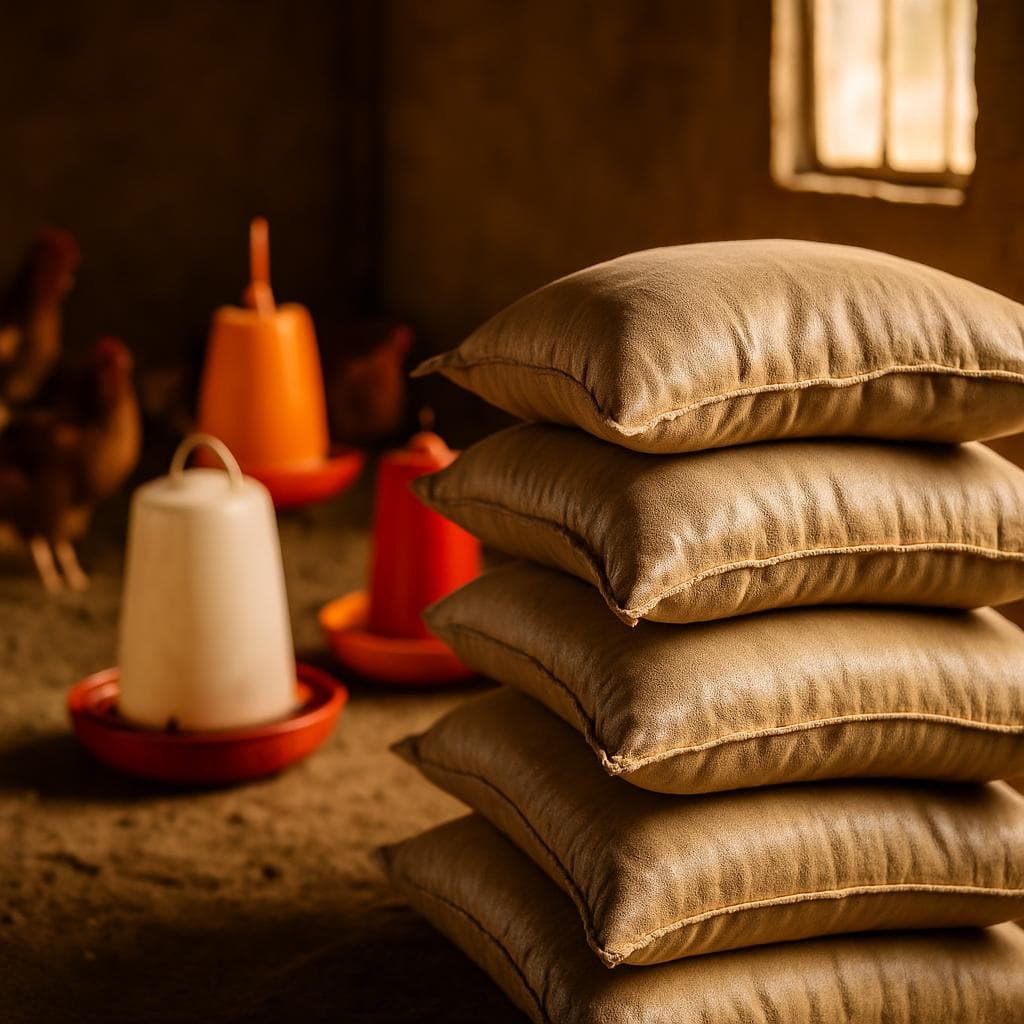
Côte d'Ivoire, with its tropical climate, presents specific challenges for poultry farmers, particularly regarding feed preservation. The ambient humidity promotes the proliferation of mould and the formation of mycotoxins, which can have disastrous consequences on poultry health and, consequently, on the profitability of farming.
Importance of feed quality
Contaminated feed can lead to diseases in poultry, a decrease in productivity, and economic losses. Mycotoxins, produced by certain moulds, are particularly concerning as they can accumulate in the tissues of animals and end up in animal products, posing risks to human health.
Practical tips for storage
- Choose an appropriate location: Store feed in a cool, dry, and well-ventilated place. Avoid areas where humidity is high, such as basements or poorly ventilated attics.
- Use appropriate containers: Opt for silos or airtight containers that protect feed from moisture and insects. Plastic bags can be used, but ensure they are of good quality and properly sealed.
- Monitor storage conditions: Regularly check the humidity and temperature of storage areas. Using hygrometers and thermometers can help maintain optimal conditions.
- Practice first in, first out (FIFO): This method involves using feed in the order it was stored. This helps prevent certain feed from remaining in stock too long and deteriorating.
- Add preservatives: Some natural additives can be used to extend the shelf life of feed and prevent mould formation. Consult a veterinarian or poultry nutritionist for tailored recommendations.
Identifying signs of contamination
It is essential to know how to recognise signs of feed contamination. Regularly inspect stocks for the presence of mould, bad odours, or colour changes. If you notice any anomalies, it is imperative not to use this feed and to dispose of it properly.
Education and awareness
Train yourself and your employees on good storage and handling practices for feed. Awareness of the dangers of mycotoxins and mould can prevent major problems on your farm.
Conclusion: Act now!
As a farmer, it is crucial to take proactive measures to ensure the quality of your poultry feed. By following these practical tips, you will contribute to the health of your flock and the profitability of your farming. Do not hesitate to consult experts for personalised advice and to share your experiences with other farmers to improve practices within your community.
--- *Source: NEXTEKCI — In-house expertise — summary and analysis by NEXTEKCI.*