
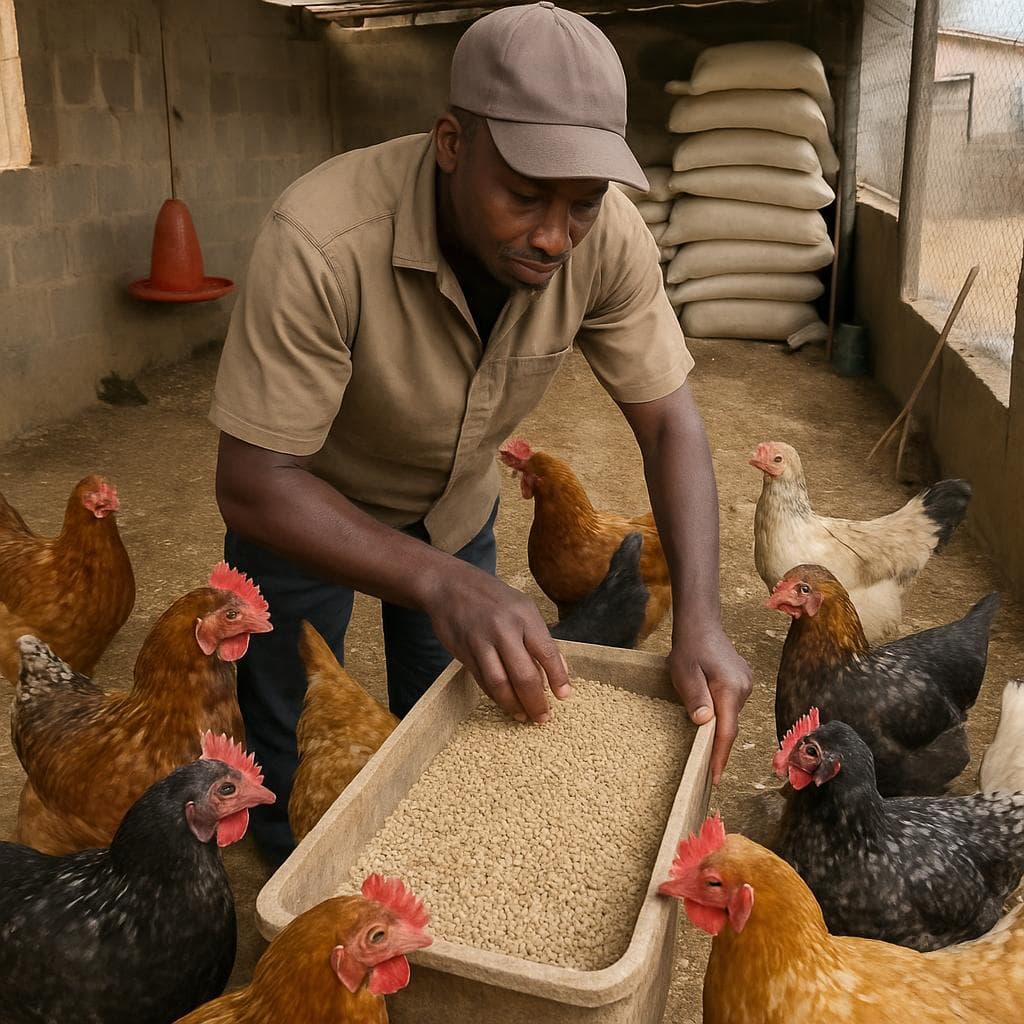
The feed transition is a key moment in poultry farming, as it can influence the growth, health, and productivity of your animals. A sudden change in feed can cause stress and digestive disorders. Here are some practical tips for successfully making this transition smoothly.
When to change feed?
It is essential to know when it is appropriate to change feed. In general, the feed transition can be considered in the following situations:
- Change of growth stage: The nutritional needs of poultry evolve with their age. For example, day-old chicks require a protein-rich feed to promote their rapid growth, while adult poultry need a more balanced feed.
- Change of feed type: If you are switching from starter feed to finisher feed, it is crucial to proceed with a gradual transition.
- Health issues: If your poultry show signs of digestive disorders, it may be necessary to change to a feed type that is more suitable for their health condition.
How to proceed with the transition?
To successfully transition feed without stress, follow these steps:
- Preparation: Before changing feed, ensure that the new feed is of good quality and suitable for the nutritional needs of your poultry.
- Gradual transition: Do not change feed overnight. Introduce the new feed gradually. For example, start by mixing 25% of the new feed with 75% of the old feed for 3 to 4 days. Then, gradually increase the proportion of the new feed until you reach 100%.
- Observation: During this transition period, closely monitor the behaviour and health of your poultry. Note any changes in their appetite, activity, or general condition.
- Hydration: Ensure that your poultry always have access to fresh, clean water. Good hydration is essential to facilitate the digestion of new feeds.
- Education: Educate yourself about the specific nutritional needs of your poultry based on their age and type. This will help you choose the right feed and adjust the transition accordingly.
Conclusion
Successfully transitioning the feed of your poultry is crucial for their well-being and performance. By following these practical tips, you will minimise stress and promote a smooth adaptation to their new feed. Remember to adjust the transition based on the specific needs of your farm. For any questions about available feeds, feel free to check the daily prices on WhatsApp. Take care of your poultry and ensure their success!
--- *Source: NEXTEKCI — In-house expertise — summary and analysis by NEXTEKCI.*