
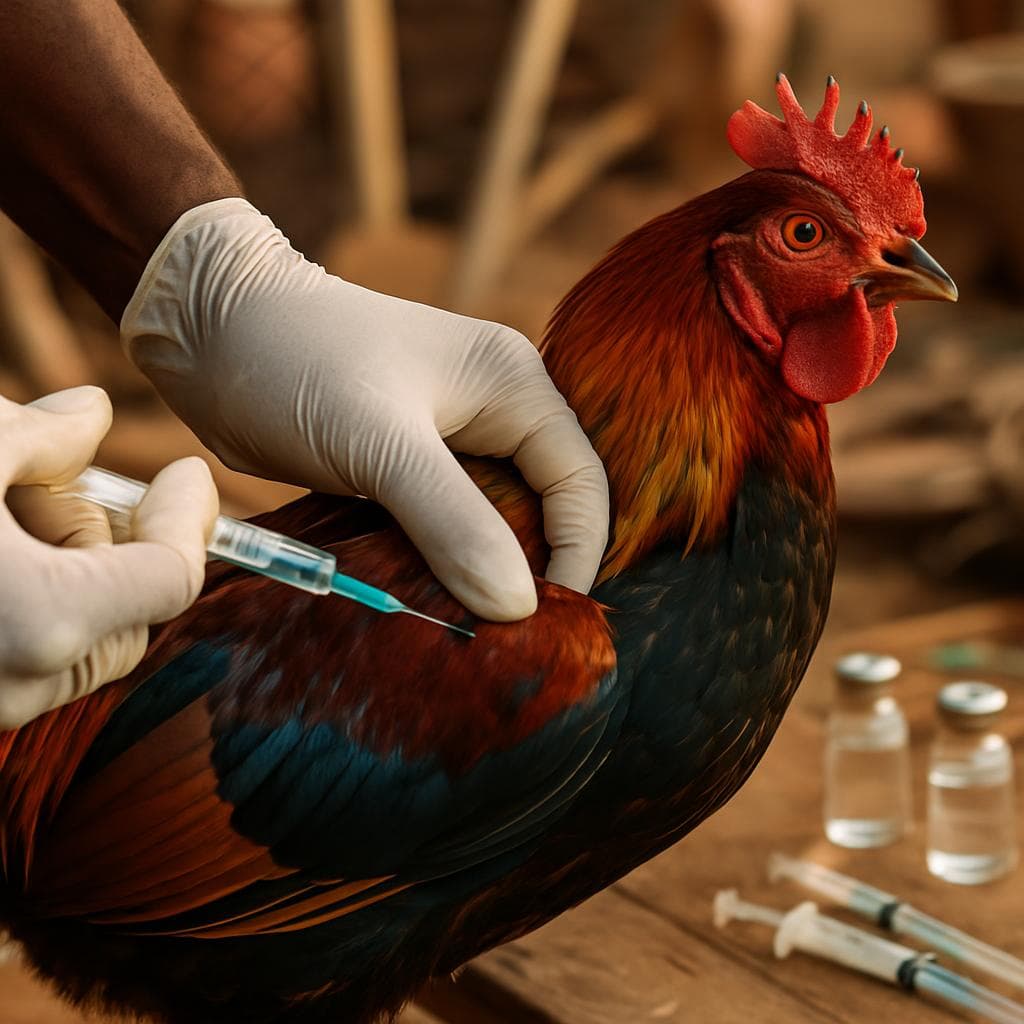
Vaccination of broilers is crucial to prevent diseases that can affect the health of poultry and, consequently, the profitability of farming. In Côte d'Ivoire, where climatic conditions and farming practices can promote the spread of certain diseases, a well-structured vaccination programme is essential.
Common diseases to prevent
Broilers are exposed to various infectious diseases, including:
- Newcastle disease: Highly contagious, it can lead to massive losses.
- Infectious bronchitis: Affects the respiratory tract and can reduce growth.
- Gumboro disease: A viral infection that weakens the immune system of birds.
- Infectious coryza: A bacterial infection that causes respiratory problems.
Recommended vaccines
To protect your poultry, it is advisable to adopt a vaccination programme including the following vaccines:
- Newcastle disease vaccine: Administered intranasally or by injection, it is often given from the age of 1 day.
- Infectious bronchitis vaccine: To be administered between 2 and 3 weeks of age, this vaccine is essential for the respiratory health of the chickens.
- Gumboro disease vaccine: This vaccine is generally administered from the 2nd week of life, to strengthen the immune system of young poultry.
- Coryza vaccine: To be administered according to veterinary recommendations, often based on the prevalence of the disease in the region.
Good vaccination practices
To ensure the effectiveness of vaccination, here are some practical tips:
- Follow the vaccination schedule: Ensure you vaccinate your poultry at the recommended ages for each vaccine.
- Prepare the equipment: Use sterilised syringes and needles to avoid any contamination.
- Monitor the temperature: Vaccines must be stored at appropriate temperatures to maintain their effectiveness.
- Observe the behaviour of the poultry: After vaccination, monitor your birds for any signs of adverse reactions.
Veterinary consultation
It is recommended to work closely with a veterinarian to establish a vaccination programme tailored to your farm. This professional can advise you on which vaccines to prioritise based on the endemic diseases in your area.
Action-oriented conclusion
As a broiler farmer in Côte d'Ivoire, it is crucial to implement a rigorous vaccination programme. By following the recommendations on vaccines and adhering to good vaccination practices, you will contribute to the health of your poultry and the profitability of your farming. Do not hesitate to consult your veterinarian for personalised advice and to stay informed of the latest health recommendations in the poultry sector.
--- *Source: NEXTEKCI — In-house expertise — summary and analysis by NEXTEKCI.*