
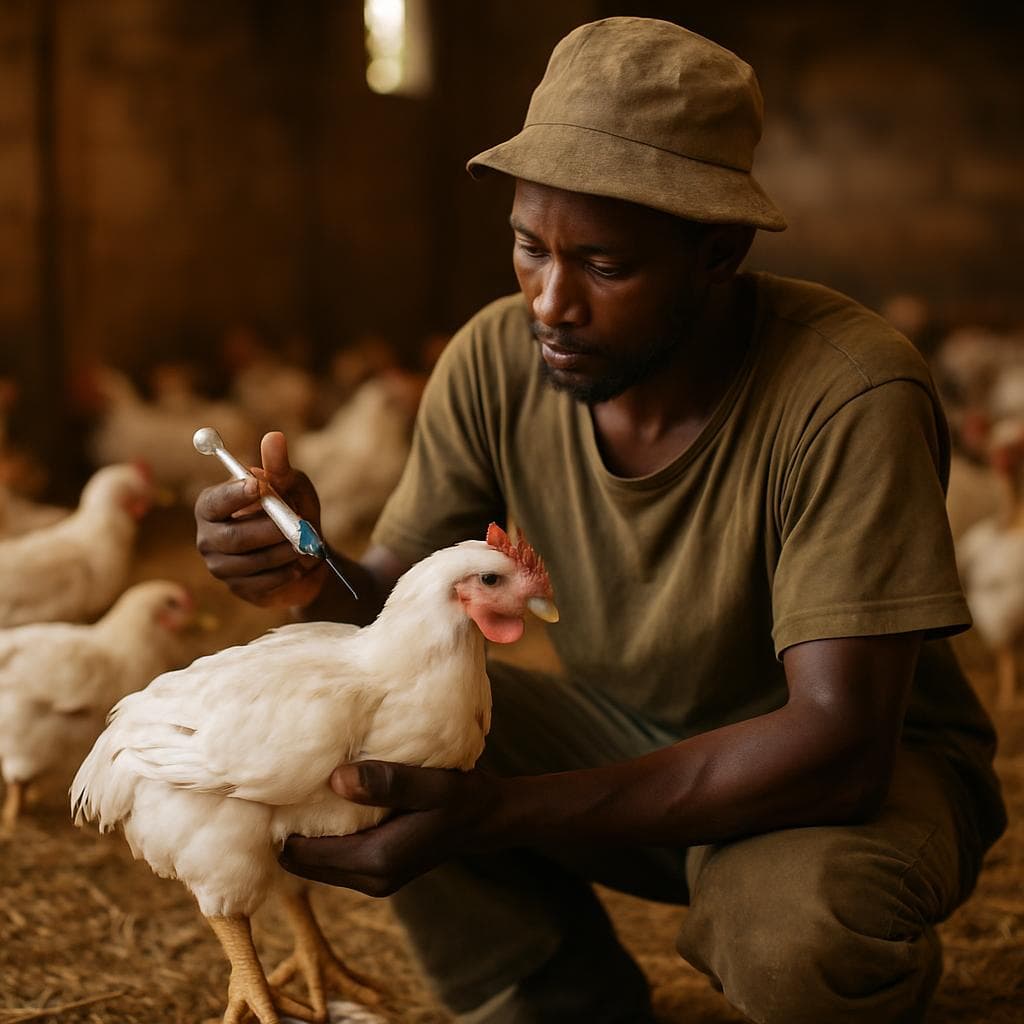
Vaccination of broilers is crucial to prevent diseases that can affect the health of poultry and, consequently, the profitability of your poultry farming. In Côte d'Ivoire, where climatic conditions and farming practices can promote the spread of certain diseases, it is essential to establish a suitable vaccination programme. Here are some practical tips for implementing such a programme.
1. Understand common diseases
Before starting the vaccination programme, it is important to be aware of the most common diseases that affect broilers. Among these are Newcastle disease, infectious bronchitis, infectious coryza, and Marek's disease. Each of these diseases can have serious consequences on the health of poultry and on your production.
2. Establish a vaccination schedule
A well-defined vaccination schedule is essential. Generally, vaccinations should begin as soon as the day-old chicks arrive on your farm. Here is an example of a vaccination schedule:
- At 1 day: Vaccine against Newcastle disease (often administered ocularly or nasally).
- At 7 days: Vaccine against infectious bronchitis.
- At 21 days: Booster for the Newcastle disease vaccine.
- At 28 days: Vaccine against infectious coryza.
This schedule may vary depending on veterinary recommendations and the specific conditions of your farming.
3. Choose the right vaccines
It is crucial to select quality vaccines that are suitable for your region. Consult a veterinarian for advice on the most effective and appropriate vaccines for your broilers. Also, ensure that you adhere to the storage conditions of the vaccines, as improper handling can reduce their effectiveness.
4. Monitor the health of the poultry
After each vaccination, closely monitor the health of your broilers. Note any adverse reactions or signs of illness. Regular monitoring will allow you to quickly identify problems and take corrective measures.
5. Train the staff
If you have employees, ensure they are trained on vaccination procedures. Proper training ensures that vaccinations are carried out correctly and at the right time, which is essential for the health of your poultry.
Conclusion
Implementing an effective vaccination programme is a fundamental step in ensuring the health and productivity of your broilers. By following these tips and staying informed about best practices, you can reduce the risks of diseases and improve the profitability of your farming. Remember to regularly consult a veterinarian and keep up to date with the latest vaccination recommendations. Take the necessary steps today to protect your farm and maximise your results.
--- *Source: NEXTEKCI — In-house expertise — summary and analysis by NEXTEKCI.*