
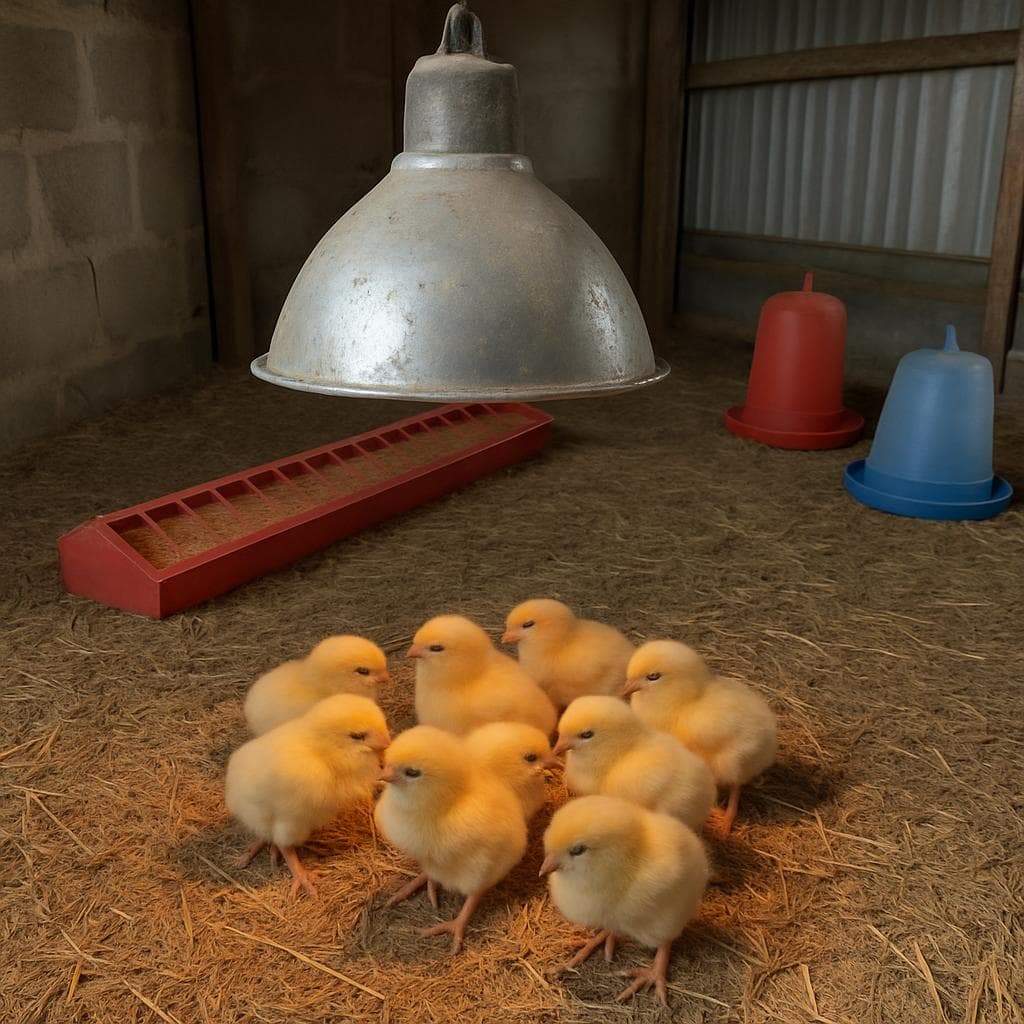
Heating of chicks is an essential step in poultry farming, especially in the first days of their lives. In Côte d'Ivoire, where climatic conditions can vary, it is crucial to choose an appropriate heating system to ensure the well-being and growth of young poultry. This article examines three commonly used heating methods: radiant heating, charcoal, and electric bulbs.
1. Radiant Heating
Radiant heating is a method that uses panels or infrared lamps to directly diffuse heat onto the chicks. This technique is effective as it heats the air around the chicks while providing targeted warmth. The advantages of radiant heating include relatively low energy consumption and uniform heat distribution. However, it is important to monitor the temperature to avoid overheating, which could harm the chicks.
2. Charcoal Heating
Charcoal heating is a traditional method that remains popular in many farms. It involves using braziers or coal-fed hearths to generate heat. This method is often appreciated for its relatively low cost and the availability of charcoal in many regions. However, it is crucial to ensure good ventilation to avoid the accumulation of toxic gases, which can be dangerous for the chicks. Additionally, temperature control may prove more difficult than with other methods.
3. Electric Bulbs
The use of electric bulbs is a simple and practical method for heating chicks. Farmers can install incandescent or LED bulbs in the chicken coop to provide constant warmth. This method allows for easy temperature control, and the bulbs are quite accessible. However, it is important to choose bulbs suitable for the available space and to place them at a sufficient distance to avoid burns. Moreover, electricity consumption can be a factor to consider, especially in areas where electricity is intermittent.
Comparison of Methods
Each heating method has its advantages and disadvantages. The choice will depend on several factors, including the size of the farm, the available budget, and local resources. It is advisable to carefully assess the specific needs of your farm before making a choice. For example, if you have a small number of chicks, bulbs may suffice, while a larger farm could benefit from a radiant or charcoal system.
Conclusion
To ensure the success of your poultry farming, it is essential to choose a heating method suitable for your local conditions and needs. Do not hesitate to test different solutions to find the one that best fits your situation. Also, consider inquiring about the prices and availability of heating equipment from your local suppliers. Good heat management in your chicken coop is an investment in the health and growth of your chicks. Act now to optimise the comfort of your poultry and improve your poultry production!
--- *Source: NEXTEKCI — In-house expertise — summary and analysis by NEXTEKCI.*