
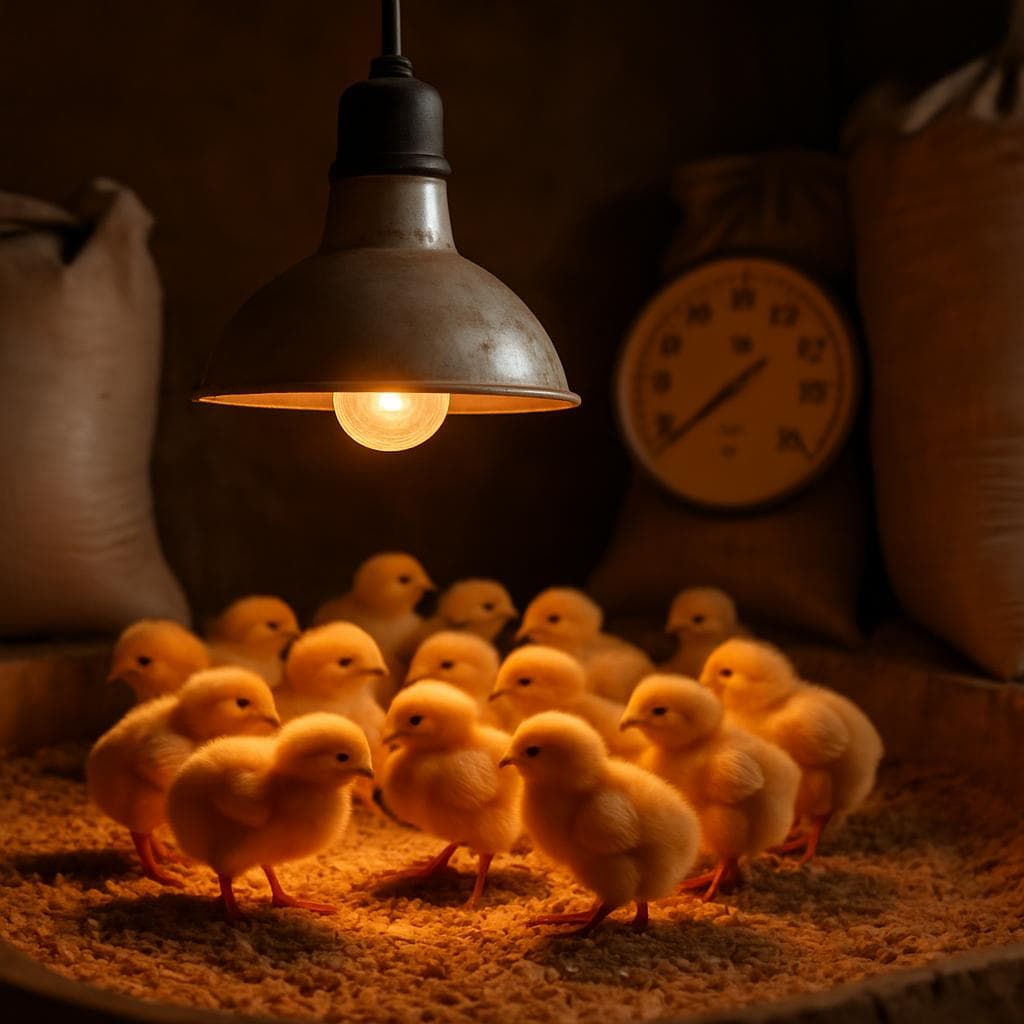
Heating day-old chicks is a crucial step in poultry farming, especially during their first weeks of life. Proper heating ensures not only their comfort but also their optimal growth. In this article, we will examine three commonly used heating solutions: radiant heaters, charcoal, and bulbs, highlighting their advantages and disadvantages in the Ivorian context.
1. Radiant Heating
Radiant heating is an effective method that uses infrared panels to distribute heat. This technique allows for direct heating of the chicks without warming the surrounding air.
Advantages:
- Thermal comfort: The chicks benefit from uniform heat, which reduces thermal stress.
- Energy savings: By targeting the animals directly, this method can be more energy-efficient.
Disadvantages:
- Initial cost: The initial investment may be higher compared to other solutions.
- Availability: The panels may not be easily accessible in certain regions.
2. Charcoal Heating
Charcoal heating is a traditional method that remains popular in many farms. It involves using braziers or charcoal stoves to generate heat.
Advantages:
- Affordable cost: Charcoal is often less expensive than other heat sources.
- Ease of access: Charcoal is widely available in many localities in Côte d'Ivoire.
Disadvantages:
- Health risks: Burning charcoal can produce harmful gases, necessitating good ventilation to avoid poisoning.
- Temperature control: It can be difficult to regulate the temperature, which may lead to fluctuations that can harm the chicks.
3. Bulbs
The use of bulbs, particularly incandescent or halogen bulbs, is also a common method for heating chicks.
Advantages:
- Ease of use: Easy to install and handle, bulbs can be adjusted as needed.
- Low initial cost: Bulbs are generally inexpensive to purchase.
Disadvantages:
- Energy consumption: They can consume a lot of energy, thus increasing operating costs.
- Limited lifespan: Bulbs have a relatively short lifespan and need to be replaced regularly.
Conclusion
The choice of heating method depends on several factors, including cost, availability of materials, and local climatic conditions. It is essential for farmers to carefully assess their specific needs and choose the solution best suited to their situation. Whether you opt for radiant heating, charcoal, or bulbs, be sure to regularly monitor the temperature and well-being of your chicks. For any questions or for additional advice, feel free to contact us via WhatsApp. Your success in poultry farming starts with a good start for your chicks!
--- *Source: NEXTEKCI — In-house expertise — summary and analysis by NEXTEKCI.*